
Last updated November 16, 2026
 Wrought iron
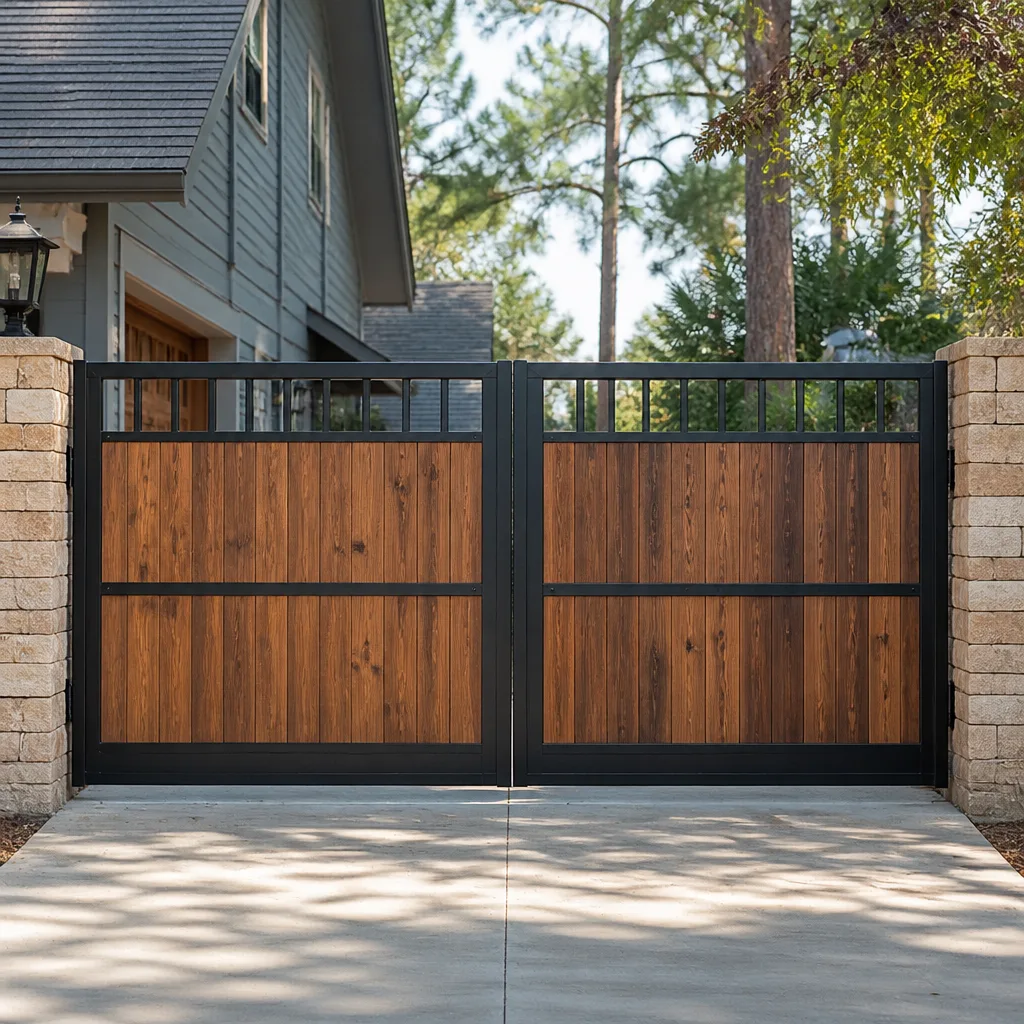 Wood & steel frame
 Farm & ranch
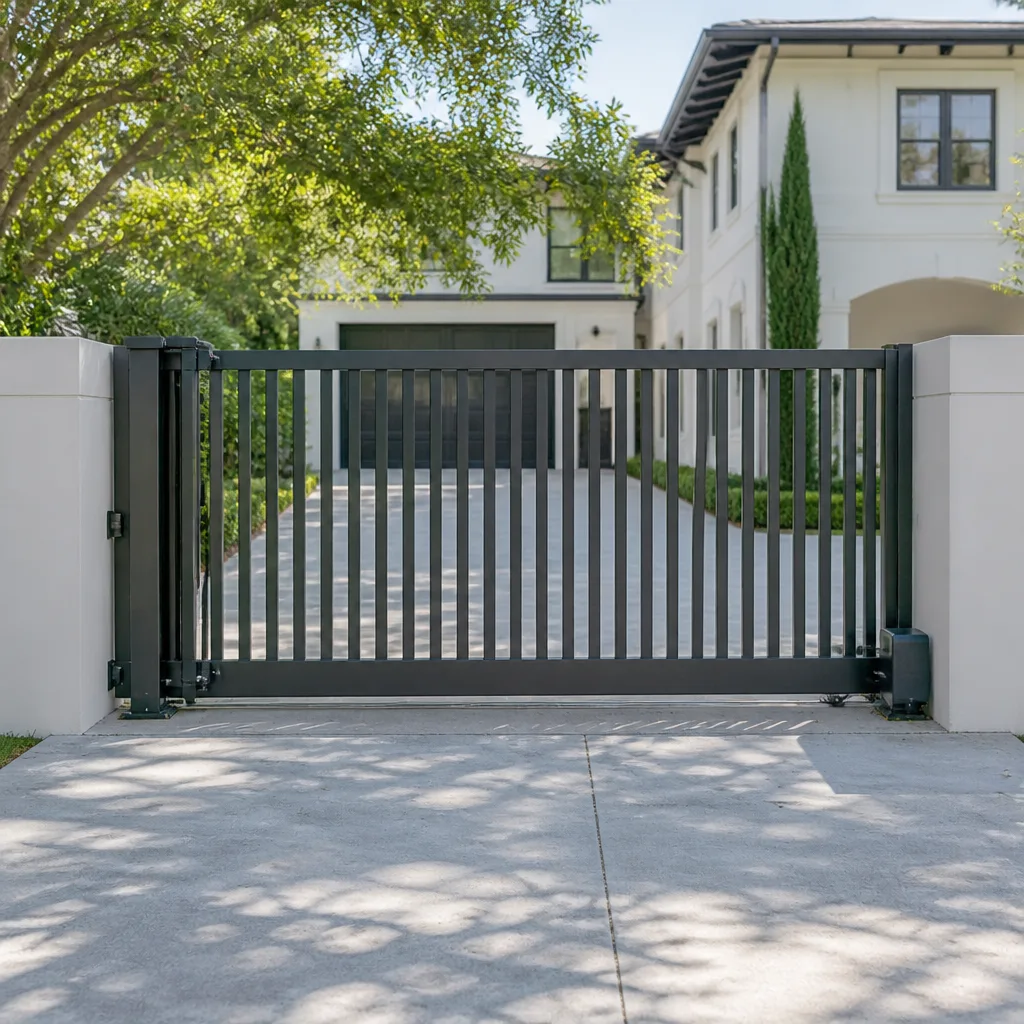 Sliding driveway gates
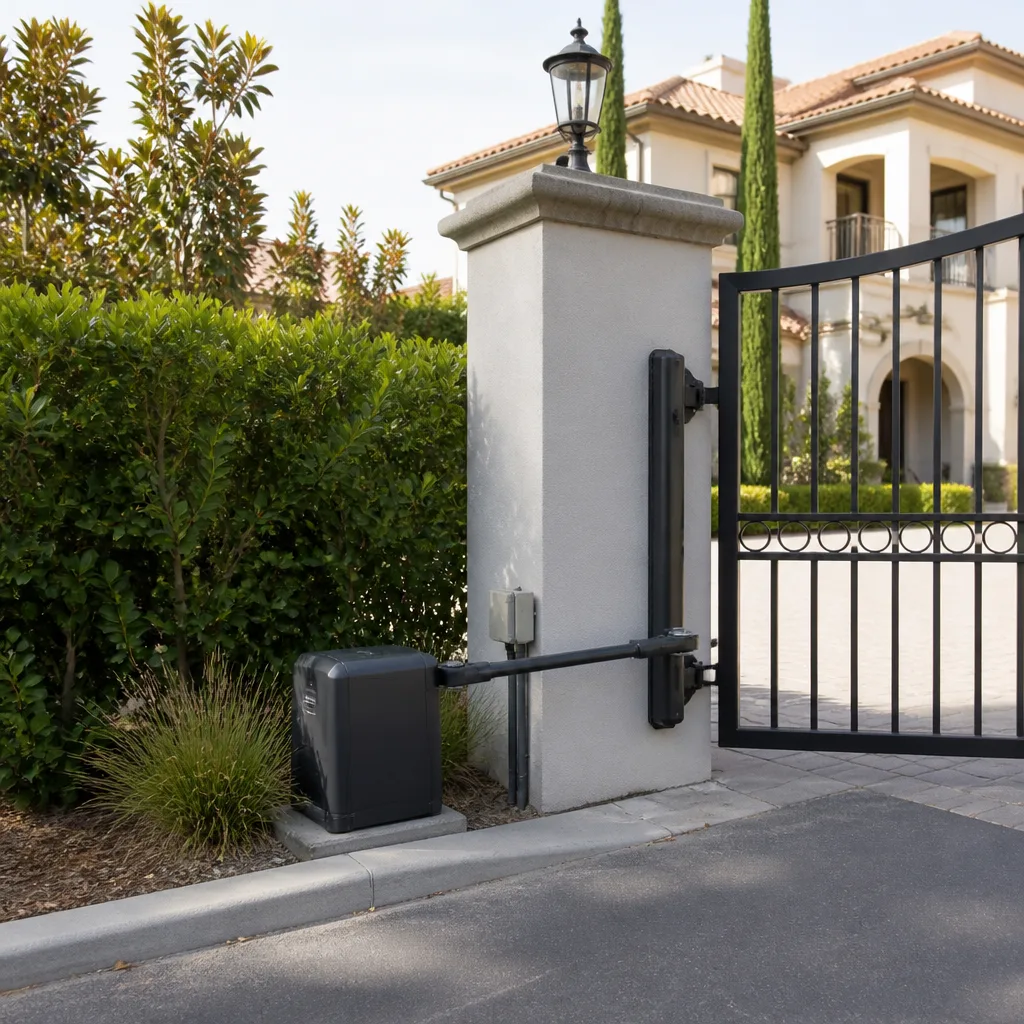 LiftMaster operators
Free on-site gate assessment - hinges, posts, and your LiftMaster or Nice gate operator checked before anything is quoted
The assessment is free and the quote is the invoice.
Get your free estimateGate Repair Maintenance Schedule: What to Do and When
The advice to lubricate gate hardware every 90 days travels well, but it was borrowed from garage doors in mild climates and it doesn’t hold up on a swing gate in Antioch’s summer heat. Follow it and you’ll spend your time re-oiling hinges that are already fine while the drive chain that actually wears out goes untouched. Automated gates don’t fail on a calendar. They fail at cycle counts, at weld points after the rainy season, and at control boards after a long, hot summer. This guide replaces the calendar with a condition-based maintenance framework tied to how your gate really wears, so you know what to check, when to check it, and what’s worth handing to a technician.
Quick Answer
Inspect an automated gate every 500 to 1,000 open-close cycles rather than on a fixed monthly schedule, and add two Antioch seasonal checks: a heat review of the control board and hydraulic fluid after summer, and a rust inspection at weld points after the rainy season. Grease hinges by condition, not by date, and clean and tension the drive chain based on squeal, sag and slack. The three components behind most preventable failures are the drive chain or gear set, the hinge pins and rollers, and the safety sensors and limit switches, which deserve more frequent attention than the rest of the system.
Styles & brands we work with
- Wrought iron
- Wood & steel frame
- Farm & ranch
- Sliding driveway gates
- LiftMaster operators
Table of Contents
- Why Usage Cycles Beat Calendar Dates
- Inspection Thresholds for Residential and Commercial Gates
- Antioch’s Two Seasonal Routines: Heat and Rain
- The Three Components Behind Most Preventable Failures
- Maintenance Tasks That Can Void a Manufacturer Warranty
- Building a Service Log That Makes Future Visits Faster
- What You Can Check Yourself and What You Shouldn’t
- A Yearly Calendar for Antioch Gates
Why Usage Cycles Beat Calendar Dates
A gate that opens twice a day and a gate that opens two hundred times a day are not the same machine, even though a calendar treats them identically. That’s the flaw in quarterly reminders. A residential driveway gate in Antioch on a quiet cul-de-sac might cycle four or five times a day, while an HOA entrance off a busy corridor can cycle several hundred times in the same period. The second gate is doing a month of work in a week, and its wear components show it.
Usage cycles are the honest measure of wear because they track actual movement. Every time your gate opens and closes, the drive chain or gear set turns, the hinge pins rotate, and the limit switches register a position. Those parts don’t care what month it is. They care how many times they’ve moved. When we diagnose a gate, one of the first things we ask is roughly how often it cycles, because that single detail tells us more about what to expect than the date on the last service record.
Here’s a practical way to think about thresholds:
- Low-cycle residential gates (a few cycles a day): inspect moving parts every few months and watch for slow changes in sound and speed rather than counting days.
- Medium-cycle residential gates (a busy household, a shared driveway): inspect roughly monthly, with a closer look at the drive chain and hinge pins.
- High-cycle commercial and HOA gates: inspection should follow cycles, not seasons, because the wear accumulates weekly. These are the gates where a loose chain or a drifting limit switch turns into a failure fast.
If you don’t know your cycle count, estimate it from use. Count how many times the gate opens on a typical day, multiply by the days it’s used, and you have a working number. That number is the schedule you should actually follow, regardless of what a generic maintenance card says.
Inspection Thresholds for Residential and Commercial Gates
Different parts wear at different rates, so a single inspection interval doesn’t fit the whole gate. Treat the following as condition-based triggers – check a component when it reaches its threshold or shows its warning sign, whichever comes first. This is how our technicians work through a system on site, and it’s the logic behind gate repair that lasts rather than a quick patch.
Drive gears and drive chain
The drive train takes the most load. On a chain-driven slider, look for slack, dry links and a metallic squeal. On a gear-driven operator, listen for grinding or a change in pitch. Threshold: inspect every 500 to 1,000 cycles for residential gates, and monthly for high-traffic commercial gates. Any slack or noise means it’s due now, not at the next appointment.
Hinge pins and rollers
Swing gate hinge pins carry the panel’s weight and rotate every cycle. Check for play, a sagging panel, or a hinge that groans. On rolling gates, check rollers for flat spots. Threshold: every few months on light residential use, monthly on shared or commercial gates.
Limit switch positions
The limit switches tell the operator where to stop. If the gate creeps past its stop, reverses late, or stops short, the limits have drifted. Threshold: verify position after any chain adjustment, any power interruption, and at every inspection. This is a settings check, not a repair, but a drifting limit is an early warning.
Safety sensors and loop detectors
Safety devices deserve the most frequent attention because they protect people, not just the gate. Threshold: test monthly on residential gates and weekly on commercial or HOA gates. A sensor that fails isn’t a convenience problem.
Antioch’s Two Seasonal Routines: Heat and Rain
Antioch’s climate gives gate systems two clear seasonal stress points, and both deserve their own routine. Summer delivers sustained heat that works on control boards, hydraulic fluid and the metal itself. The rainy season that follows delivers moisture that finds every weld point and bare fastener. A maintenance schedule built for this place has to account for both, which is why we plan electric gate repair around these two windows.
Post-summer heat check
After a hot summer, the control board and the operator’s power components are the first place to look. Heat stresses solder joints, capacitors and connectors, and a board that’s been running warm all season may start misbehaving in small ways before it fails outright: a relay that clicks a little late, an intermittent stop, a gate that hesitates. Hydraulic operators are also worth a look after summer, because fluid viscosity changes with temperature, and an operator that ran heavy in the heat may need a fluid check. If your system has hydraulic components, note any sluggishness or change in speed and have it checked.
Post-rainy-season rust inspection
Once the wet season passes, walk the gate with a focus on metal. Weld points, hinge pins, rollers, fasteners and any bare or scratched steel are where rust gets a foothold first. Look for orange staining, bubbling paint, or a joint that has started to look rough. Catch these early and they’re a clean-and-treat job. Leave them and a weld point becomes a structural problem. On gates around Antioch, this check matters most on older steel panels and on any spot where paint has worn through.
- After summer: control board review, operator speed and behavior, hydraulic fluid check where applicable.
- After the rainy season: rust inspection at weld points, fasteners, hinges and rollers; clean and treat any bare metal.
- Year-round: chain and hinge inspection driven by cycles, not the season.
The Three Components Behind Most Preventable Failures
Most gate failures that could have been avoided trace back to one of three components. It’s not a random spread across the whole system. The drive train, the hinge and roller hardware, and the safety and limit devices account for the large majority of preventable breakdowns, and they should get more frequent attention than everything else combined. Give these three the lion’s share of your inspection effort and you’ll catch most problems before they stop the gate.
- The drive chain or gear set. Load-bearing and constantly moving, it’s where slack, dry links and worn gears show up first. A chain that’s allowed to run loose wears faster and can jump or snap. Inspect for slack, clean it, and lubricate with the right product for a chain, not the wrong one for a hinge.
- Hinge pins, rollers and their mounting points. These carry the panel’s weight every cycle. Play in a hinge pin or a flat-spotted roller turns into a sagging, dragging gate, and that drag then loads the operator. Catch the hardware before the operator pays the price.
- Safety sensors and limit switches. Small parts with an outsized role. A sensor that’s knocked out of alignment or a limit switch that’s drifted will make a gate behave erratically even when the mechanical system is fine. These are the parts that cause “the gate opens halfway and stops” calls, and testing them takes a minute.
If you’re going to over-inspect anything, over-inspect these three. The rest of the gate – the panel finish, the post caps, the cosmetic hardware – can wait for its usual check. The moving and sensing parts can’t. We work on a wide range of automation, including systems from Ghost Controls, DoorKing and Viking, and the same three components are where we look first on all of them.
Maintenance Tasks That Can Void a Manufacturer Warranty
Some maintenance work is safe to do yourself, but some of it can void a manufacturer’s warranty if it’s done incorrectly, and that’s worth knowing before you pick up a wrench. The good news is you don’t have to memorize what each brand requires. The consistent rule across gate operators is simple: keep the parts the manufacturer specifies, don’t open sealed components, don’t force adjustments beyond their intended range, and keep a record of what was done and when.
The tasks most likely to cause a warranty problem when done wrong include:
- Opening the operator housing or control enclosure. Manufacturers often specify who may service sealed components. Opening a sealed operator and disturbing the internals can be grounds for a denied claim. Leave internal board and motor work to a technician.
- Using the wrong lubricant. The wrong grease on a chain or hinge can attract grit, degrade seals, or interfere with the manufacturer’s specified parts. Use only what the system calls for, and when in doubt, ask.
- Forcing limit switches or mechanical stops past their range. Adjusting a limit switch is fine done correctly. Forcing one, or bending a mechanical stop, can damage the operator and complicate a warranty claim.
- Replacing parts with non-specified substitutes. A safety sensor or control component swapped for a mismatched part can make a system unsafe and can affect warranty coverage.
The documentation side is just as important. Keep your receipts for any parts you buy, note the dates and details of professional service, and hold onto the original equipment documentation that came with the gate or operator. If you ever need a warranty claim, that paper trail is what makes it straightforward. If a task feels like it might be outside what’s clearly allowed, it’s worth a quick call before you start. One of the reasons homeowners call us is to keep warranty coverage intact while still getting a problem fixed.
Building a Service Log That Makes Future Visits Faster
A simple service log is one of the highest-value maintenance habits you can build, and it costs almost nothing. When we arrive at a gate, a good log tells us what’s been done, what’s been replaced, and what’s been changing – and that shortens the diagnostic time on every future visit. It also helps you spot patterns before they become failures.
You don’t need software. A notebook or a note on your phone works. Record the following after every inspection, service call or adjustment:
- Date and cycle estimate. Note the date and roughly how many cycles the gate has done since the last entry.
- What was checked or changed. Chain tension, hinge inspection, sensor test, limit adjustment, parts replaced – be specific.
- Who did the work. Your own check, or a technician visit, with the brand and model noted.
- Anything you noticed. A new noise, a slow spot, a gate that stopped short once. Small notes are gold.
- Parts and lubricants used. Brand and product name, so the next service uses the same compatible parts.
When you have this log, a technician can see at a glance whether a problem is new or developing, which components are due, and whether a parts change has held up. That reduces guesswork and keeps a visit focused on what’s actually needed. If you manage a commercial or HOA gate in Antioch, a shared log on site or in an office file does the same job for every property manager who touches the system.
What You Can Check Yourself and What You Shouldn’t
A lot of useful gate maintenance is safe to do yourself. Some of it isn’t, and knowing the line protects both you and the equipment. Here’s how we’d draw it for a typical automated gate, whether it’s a residential swing gate or a commercial slider.
Safe to do yourself: walk the gate and listen, check the chain for slack, look for rust at weld points and fasteners, clear debris from the track, test the safety sensors monthly, keep the service log, and wipe down and inspect hinge pins for obvious play.
Leave to a trained technician: opening the operator or control enclosure, adjusting internal limit mechanisms beyond the basic check, working on the motor or control board, and diagnosing intermittent electrical faults. There’s real danger in gate automation – the operator’s wiring and power carry live voltage, heavy gate panels can crush or pinch, and a slide gate that comes off its track can fall. These are not tasks to improvise. If a gate is behaving unpredictably, or a heavy panel feels loose on its track, stop using it and call someone who works on gate systems.
We work on both manual and automated systems, and the operator brands you’re likely to have – including Elite and Viking alongside the rest – are ones we deal with regularly. You don’t have to know which part is failing to get help; describing what the gate does is enough to start. For a full look at what we handle, see Gate Repair Antioch.
A Yearly Calendar for Antioch Gates
Here’s how the condition-based framework maps onto a year in Antioch. The point isn’t to slavishly follow months – it’s to use the seasons as natural checkpoints while still letting cycles drive the important decisions. Adapt these to your gate’s actual use.
- After summer (heat review). Check the control board and operator behavior, note any sluggishness, and review hydraulic fluid where applicable. This is the window for catching heat-related issues early.
- After the rainy season (rust review). Walk weld points, hinges, rollers and fasteners for rust and treat anything bare. This is the Antioch moisture check.
- Ongoing (cycle-based inspections). Every 500 to 1,000 cycles for residential gates, monthly for high-traffic commercial gates, focus on the drive train, hinge hardware and limit switches.
- Monthly (safety check). Test sensors and the reverse function. Weekly for commercial and HOA systems.
- Log a note after every check so the next person who looks at the gate has context.
That’s the whole schedule, and it’s shorter than a generic maintenance card because it puts effort where wear actually happens. If you’d rather have a technician walk your gate and set up a schedule tailored to it, we serve homeowners and commercial property managers across Antioch and can map the right intervals to your system.
Common Mistakes to Avoid
- Following the 90-day rule blindly. A busy commercial slider and a quiet residential swing gate shouldn’t share an inspection interval. Base the schedule on cycles and conditions, not the calendar.
- Lubricating everything with the same product. Chain, hinge pins and rollers want different lubricants. The wrong grease attracts grit and wears parts faster, so match the product to the component.
- Ignoring the drive chain until it squeals. Slack and dry links are early warnings. Addressing them when they first show up is far cheaper than waiting for a snapped chain. This is the most common preventable failure we see.
- Skipping the safety sensor test. Sensors protect people and the gate. A misaligned or failed sensor can cause erratic behavior and a real safety problem, and testing takes a minute.
- Skipping the post-summer board and fluid check. Antioch’s hot summers are hard on control boards and hydraulic operators. A quick review after the heat catches issues before they strand the gate.
- Skipping the rust walk after the rainy season. Weld points and bare fasteners are where rust starts. Treating early prevents a structural repair later.
- No service log. Without a record, every visit starts from zero. A short log saves time, money and guesswork on future visits.
See the difference
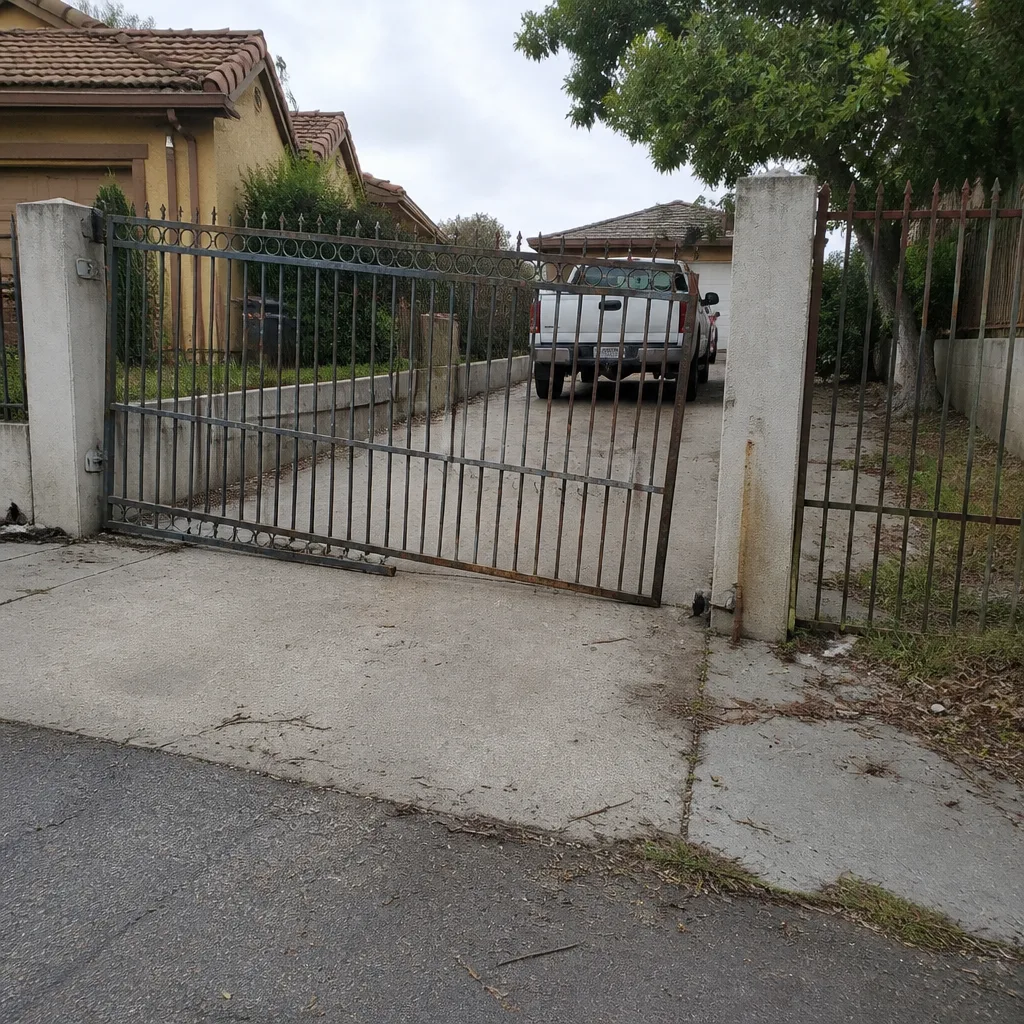 Before
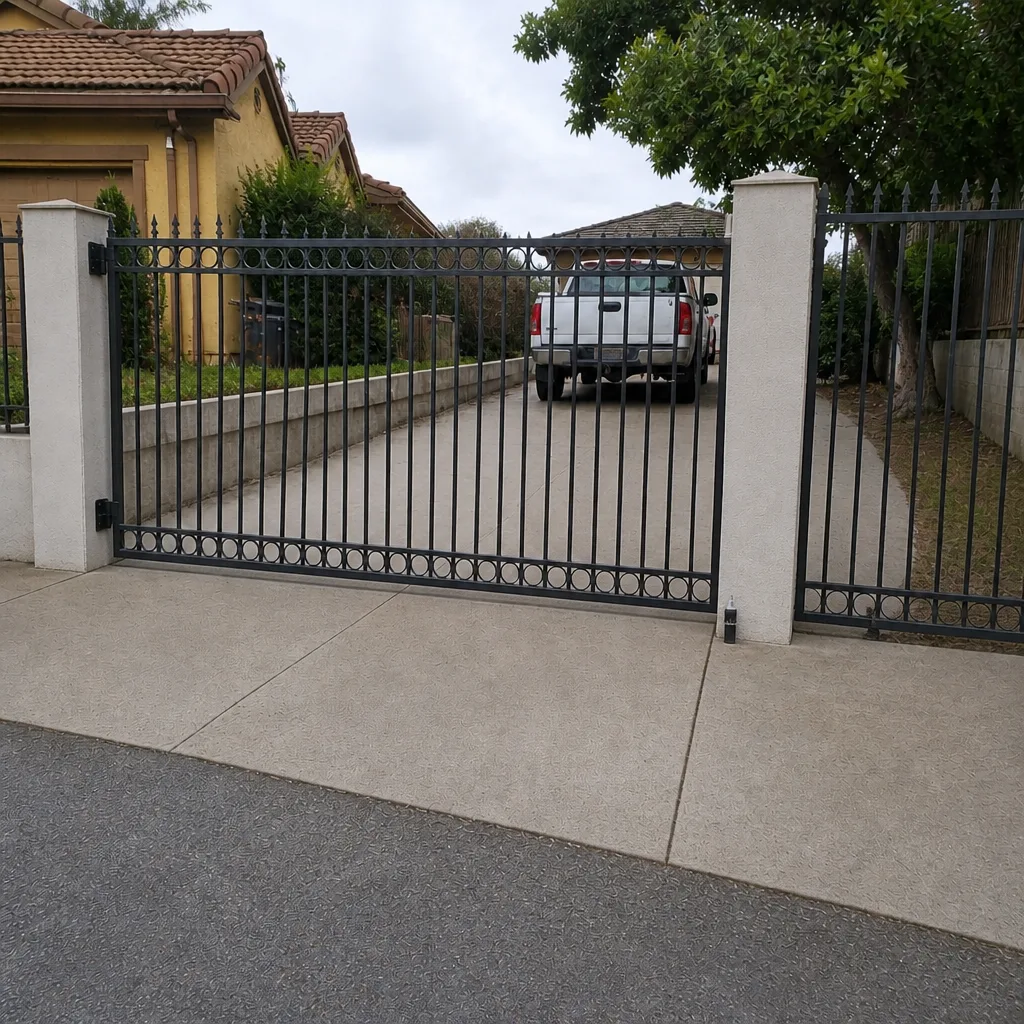 After
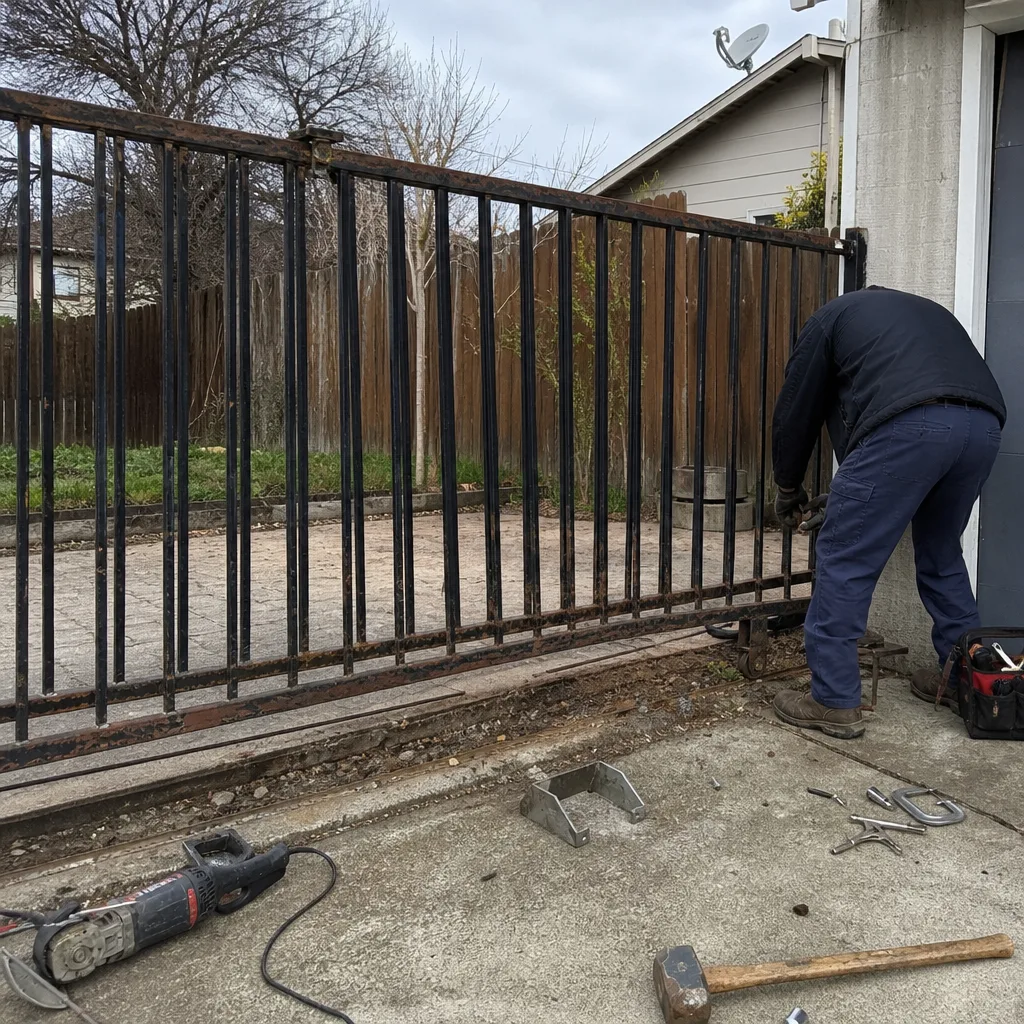 Before
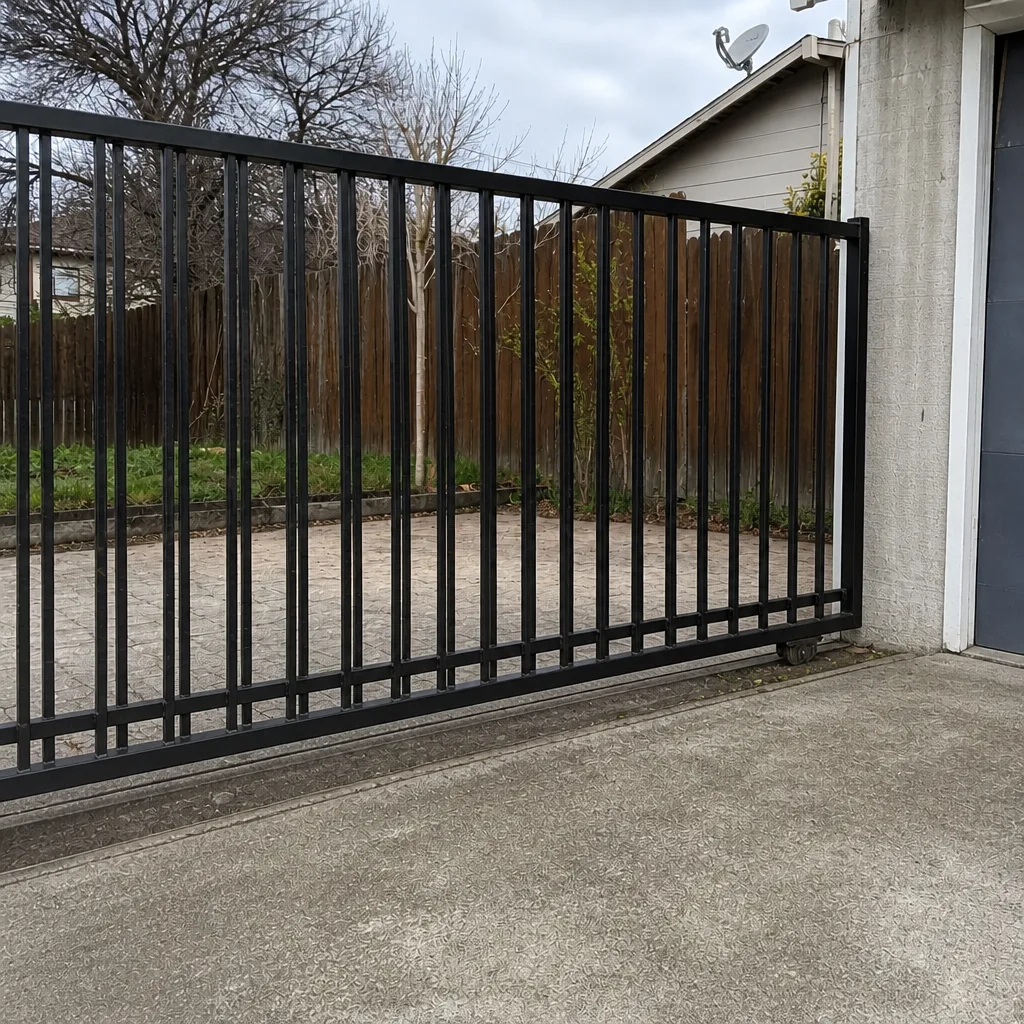 After
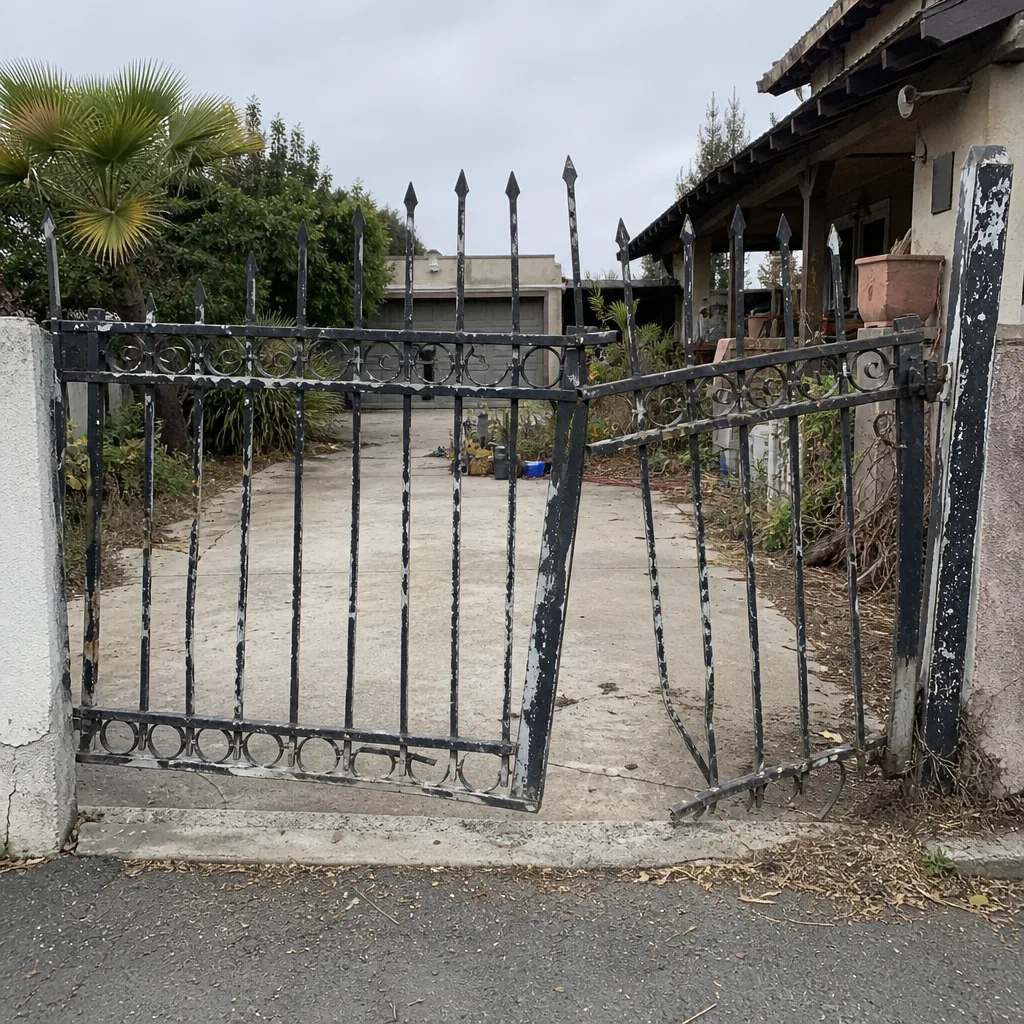 Before
 After
When to Call a Professional
Some gate problems call for a trained eye rather than a DIY check. Call a technician if the gate behaves unpredictably – opens halfway, reverses for no reason, or stops short. Call if the drive chain or a gear is damaged, if a hinge pin is worn enough that the panel sags, or if a sensor won’t stay aligned after a basic adjustment. Call if the operator housing needs to come off or a control board is suspect, and call right away if a slide gate comes off its track or a heavy panel feels unstable. Those are safety matters, and they shouldn’t wait. Gate Repair Antioch offers free estimates in Antioch – call (855) 799-8573. We work on the brand you already have, diagnose first, then fix.
Frequently Asked Questions
Inspect an automatic gate based on how many cycles it does, not on a fixed monthly reminder. For most residential gates, a full inspection every 500 to 1,000 cycles works well, with monthly safety sensor tests and two seasonal checks (heat after summer, rust after the rainy season). High-traffic commercial gates need monthly attention. Call (855) 799-8573 for an exact assessment – estimates are free.
The drive chain or gear set, the hinge pins and rollers, and the safety sensors and limit switches cause the large majority of preventable failures. Each fails gradually, with warning signs like a squealing chain, a sagging panel or a drifting stop. Catching these early is the whole point of a condition-based schedule. Call (855) 799-8573 to have yours checked.
You can lubricate a chain and hinge pins yourself, as long as you use the right product for each component. Opening the operator housing or working inside the control enclosure should be left to a trained technician, and getting the lubricant wrong can affect warranty coverage. When in doubt, call (855) 799-8573.
Yes – they’re the most important single check you can do, because sensors protect people and the gate. Test the reverse function monthly on residential gates and weekly on commercial or HOA gates, and call right away if a sensor won’t stay aligned or the gate doesn’t reverse. Call (855) 799-8573 for help.
Yes. Hot summers stress control boards, power components and hydraulic fluid, so a post-summer heat check is worthwhile. The rainy season drives rust at weld points, fasteners, hinges and rollers, so a rust inspection after the wet season catches it early. Between the two, your cycle-based inspections handle the moving parts. Call (855) 799-8573 to set up a schedule.
Record the date, cycle estimate, what was checked or changed, who did the work, any noises or quirks you noticed, and the parts or lubricants used. That short record shortens future diagnostic time and helps you spot problems early. Call (855) 799-8573 for a professional inspection that builds on your log.
The Bottom Line
A gate maintenance schedule built on a calendar is a guess. One built on usage cycles and Antioch’s two seasonal stress points – summer heat and rainy-season moisture – is a plan. Focus your effort on the drive train, the hinge and roller hardware, and the safety sensors and limit switches, because that’s where preventable failures come from. Test sensors monthly, check rust after the wet season, review the board and fluid after the heat, and keep a simple service log. Do that and most failures get caught before they stop the gate, and any technician visit starts with context instead of guesswork.
Call (855) 799-8573 for a free estimate. We answer 24/7. Fast dispatch from 7am to 7pm, Sunday through Friday.
Written by the team at Gate Repair Antioch.