
Last updated November 16, 2026
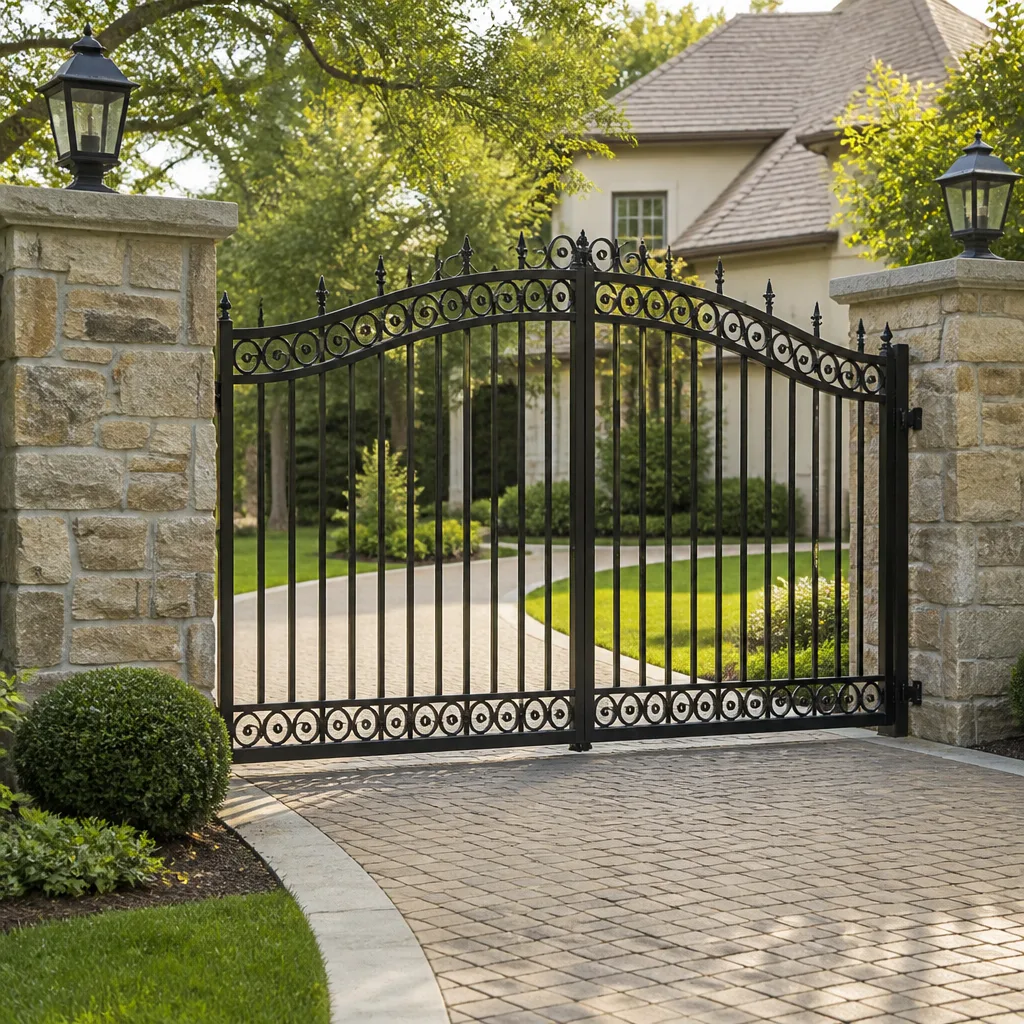 Wrought iron
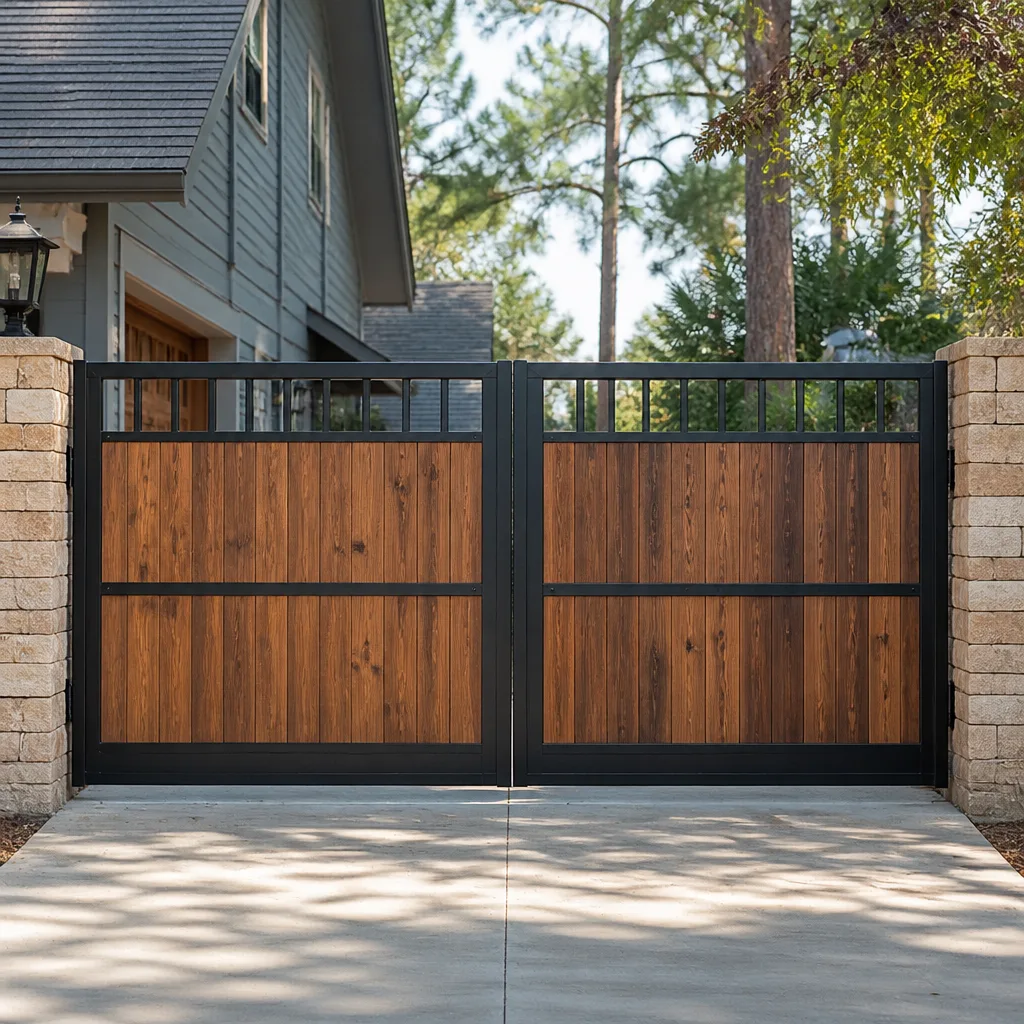 Wood & steel frame
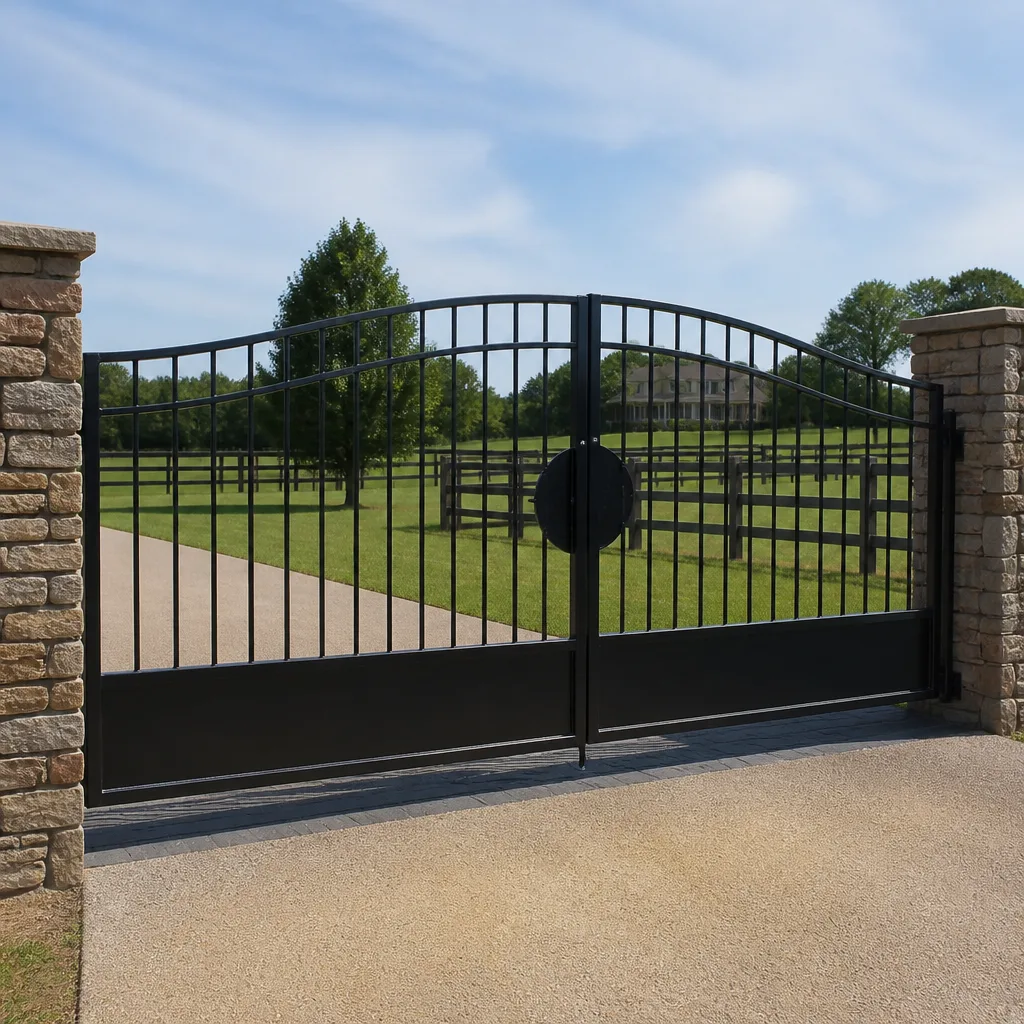 Farm & ranch
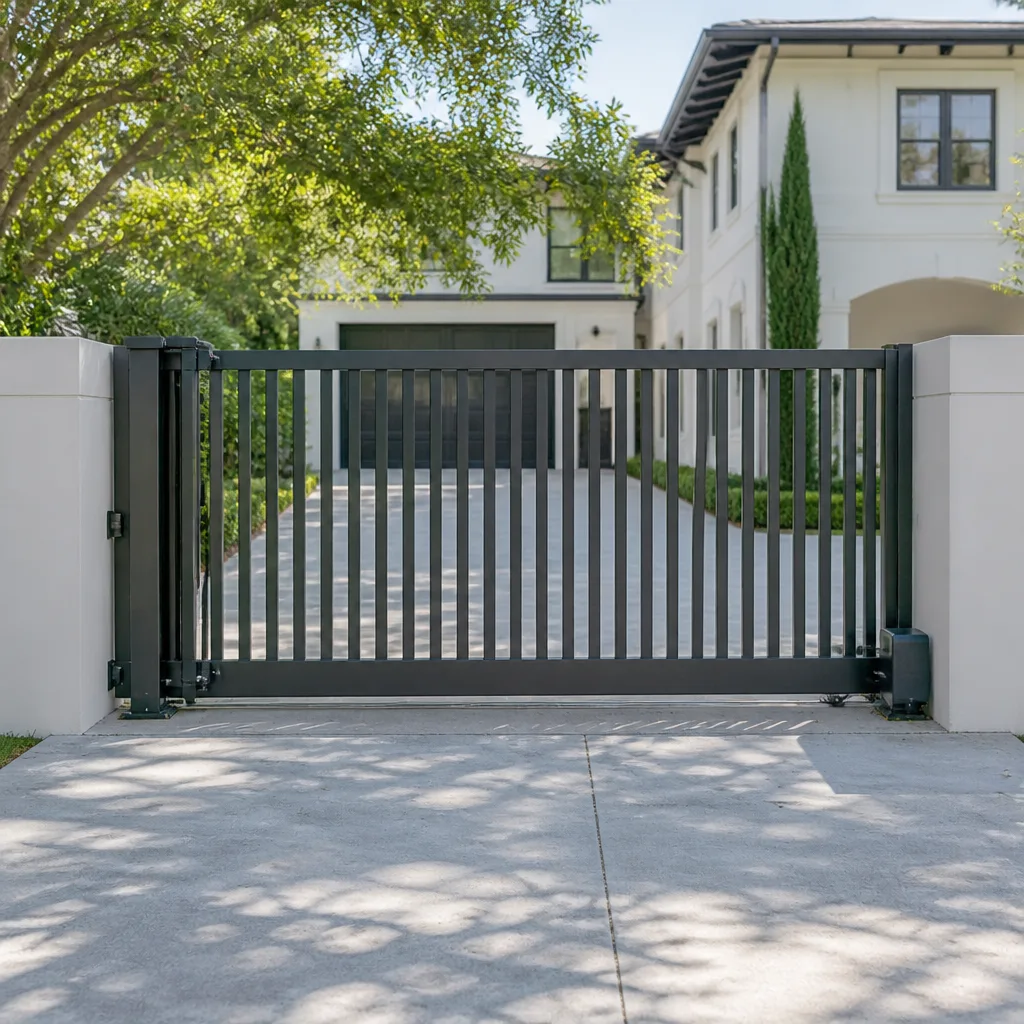 Sliding driveway gates
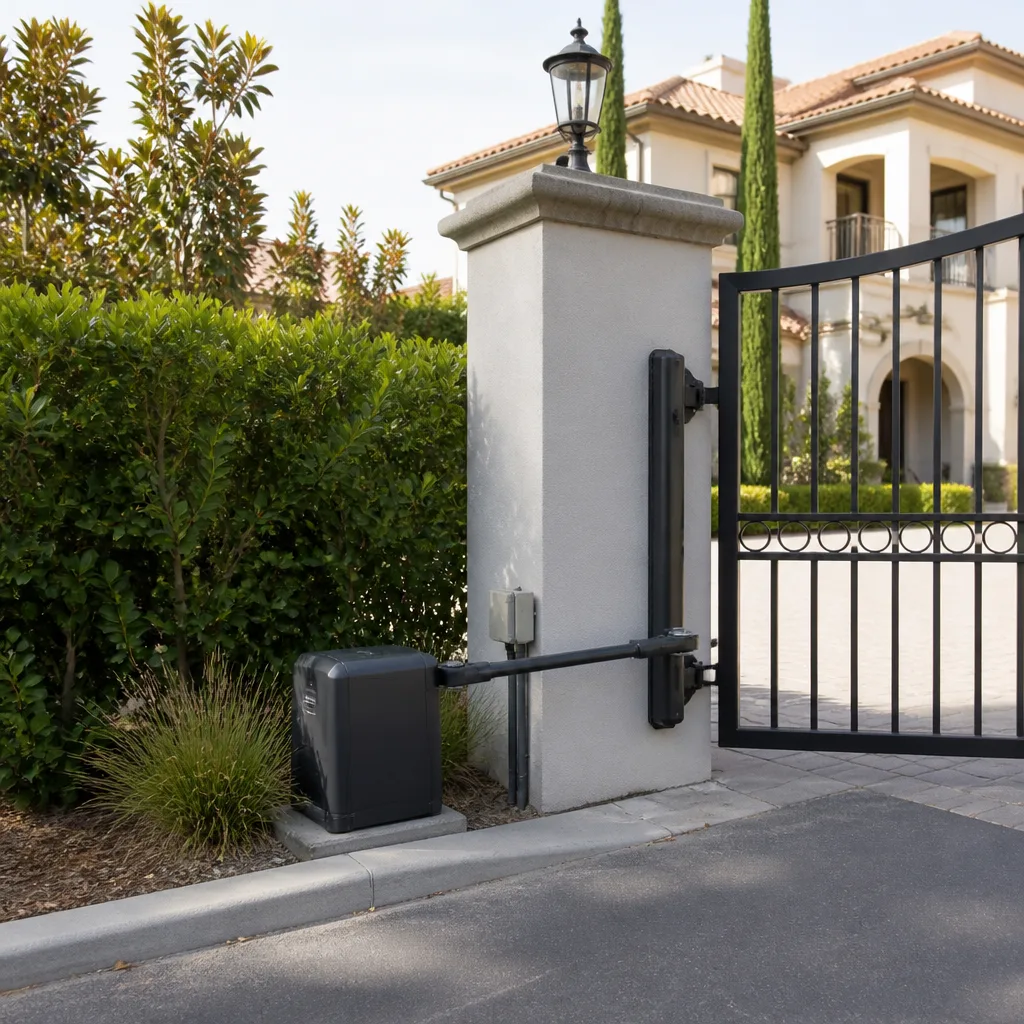 LiftMaster operators
Free on-site gate assessment - hinges, posts, and your LiftMaster or Nice gate operator checked before anything is quoted
The assessment is free and the quote is the invoice.
Get your free estimateGate Repair Permits, Codes & Inspections in Antioch, CA: What You Need to Know
Most gate repairs in Antioch never touch a permit. Swapping a failed operator, replacing a hinge, rebuilding a sagging latch, even replacing a whole gate leaf on existing posts – none of that normally requires a building permit, and homeowners who assume otherwise aren’t wrong as often as they think. The trouble starts the moment a repair crosses a line the paperwork cares about: new post footings poured into the ground, new electrical service run to an operator location that never had power, or any change to a gate sitting on a fire access route that the fire department depends on. Cross that line without a permit and you haven’t just skipped a fee. You’ve created an unpermitted structure on your property record, and “the contractor said it was fine” holds no water with a buyer’s inspector, a title company, or an insurance adjuster. This guide covers where Antioch’s permit line actually falls, how UL 325 entrapment rules interact with inspections, what fire access gates need, and how HOA approval and city permits differ.
Quick Answer
In Antioch, most repairs to an existing gate – operators, hinges, latches, sensors, control boards, replacing a gate leaf on existing posts – don’t require a building permit. A permit is typically triggered when the work adds or replaces structural footings, pulls new electrical service to a gate location, or modifies a gate or fence on a designated fire access route. Entrapment protection under UL 325 is a safety standard rather than a permit rule, but it matters in inspections, insurance claims, and resale. Before any stamped plan crosses a counter, confirm with Antioch’s Building Division and your HOA.
Styles & brands we work with
- Wrought iron
- Wood & steel frame
- Farm & ranch
- Sliding driveway gates
- LiftMaster operators
Table of Contents
- What triggers a permit for gate work in Antioch?
- Who has jurisdiction: Antioch, Contra Costa County, or both?
- UL 325 entrapment protection and why it reaches your insurance
- Fire access gates, Knox key switches, and fail-safe operation
- HOA architectural approval versus a city permit
- What an unpermitted gate looks like on a home inspection report
- Selling a home in Antioch with an unpermitted gate
- How the permit and inspection process usually runs
What triggers a permit for gate work in Antioch?
For most homeowners, the honest answer is: less than they fear and more than a handyman will tell them. Applying the same general standards that most California cities use, gate work in Antioch falls into two buckets – work that’s treated as maintenance and work that’s treated as construction.
Routine repair that almost never needs a permit:
- Replacing a swing or slide gate operator on existing posts and existing concrete
- Repairing or replacing hinges, rollers, tracks, latches, and strikes
- Replacing a control board, receiver, loop detector, or safety sensor
- Swapping a gate leaf or panel onto footings and posts that are already sound
- Repairing wiring inside existing conduit to an existing operator location
Work that typically crosses into permit territory:
- Pouring new concrete footings, or replacing a footing the old gate swung from
- Running new 120V power from a panel to a gate location that never had electrical service
- Adding a new gate where none existed, including a new opening in a fence or wall
- Increasing the size, weight, or travel of a gate enough that the supporting structure changes
- Any modification to a gate or fence serving a designated fire access route
Two things decide the answer for your specific job. First, is the structure changing, or is only the equipment changing? Second, does new electrical work enter the picture? If you can answer no to both, you’re almost certainly in the maintenance bucket. If either comes back yes, treat the job as a construction project and line up the paperwork before the concrete gets poured. We’ve watched plenty of “we don’t need a permit for that” jobs turn into headaches at appraisal, and it’s a lot cheaper to ask first.
Who has jurisdiction: Antioch, Contra Costa County, or both?
For a typical single-family residence inside Antioch city limits, the City of Antioch is normally the building department that issues the permit and sends the inspector. Contra Costa County governs unincorporated land outside the city, and it also has a say on certain fire access and road-related improvements even when the property itself is inside a city. You can run into both.
Here’s how to figure out which one applies to your address:
- Look up your property on the county assessor’s map. If the address is inside Antioch city limits, the city is normally your permit authority.
- If you’re on unincorporated land – some parcels along the edges of the city and up the surrounding roads – call Contra Costa County’s building department instead of the city.
- If your gate controls access to a road, driveway, or easement that the fire district relies on, call the fire district early. Their review may apply regardless of who issues the building permit.
- If your property is in an HOA, ask the architectural committee before you ask the city, because the HOA can approve something the city later rejects (and the reverse is also true).
Two phone calls and an email usually settle the question. Call the Antioch Building Division with your address and the scope of work, and ask two direct questions: “Is this repair or construction?” and “Does this require a permit?” Get the answer in writing if you can. If the answer is yes, you’ll want to know the plan check timeline before you schedule the work, because most gate installations and footing jobs are measured and scheduled rather than squeezed into a single afternoon. The same discipline applies across the trade – diagnosing first, then fixing – and it applies just as much to paperwork as it does to a misbehaving operator from Linear or Viking.
UL 325 entrapment protection and why it reaches your insurance
UL 325 is the safety standard for automatic gate operators, and its core rule is simple: any automated gate has to be designed so it can’t crush or trap a person, an animal, or a vehicle. In practice that means the operator needs working entrapment protection – typically a combination of inherent force sensing and one or more external devices such as photo-eye sensors or edge sensors – and the installation has to keep it functioning.
Here’s where most Antioch homeowners get surprised. UL 325 isn’t something a city inspector pulls out to check your residential gate repair. It’s a product and installation standard. Where it bites you is in three other places:
- Insurance claims. If someone is injured by a gate that has bypassed, disconnected, or failed entrapment protection, the insurer can argue the gate was altered in a way that removes a required safety device. That can complicate or jeopardize the claim. We aren’t your insurer and can’t promise how a claim will be handled, but the exposure is real enough that we flag it to every customer.
- Liability. A gate that closes on a child or a delivery driver without reversing is a serious hazard, and it’s a hazard you own as the property owner.
- Commercial and multi-family properties. Property managers and HOAs in Antioch often have insurers who ask directly about operator safety compliance when they review policies or claims.
The practical takeaway: never accept a repair that “just needs the photo eyes bypassed.” A technician who tells you that is telling you they don’t know how to fix the real problem. The safety sensors on DoorKing, LiftMaster, and BFT systems are there because gates are heavy pieces of equipment, and the correct fix is to get them working again – not eliminated. If your gate’s sensors keep tripping, the answer is diagnosing the cause (faulty sensor, misalignment, damaged loop, control board fault) rather than cutting a wire.
Fire access gates, Knox key switches, and fail-safe operation
Properties in and around Antioch’s wildland-urban interface, and any property whose driveway is used as a secondary fire access, face their own set of requirements. Fire access gates exist so emergency crews can get in – which means they have to work without power, without a key fob, and without waiting for the resident to open them.
What fire access gates in this area typically need:
- Knox compatibility. Many fire agencies use the Knox rapid access system, where a standardized key or key switch lets crews open the gate without cutting it. If your gate is on a designated access route, ask the fire district whether a Knox key switch or equivalent is required.
- Fail-safe operation. Fire access gates often need to fail open – meaning if the operator loses power or a component fails, the gate releases to an open position rather than trapping responders on the wrong side. This is the opposite of a security gate that fails secure, and the two use different operators and different hardware.
- Positive opening and stand-by power. Depending on the fire district’s requirements, a gate may need a battery backup or a release mechanism that lets it swing free.
- Clear signage and access markings. Fire districts may require the gate and any key switch to be marked so arriving crews can find them quickly.
If you’re planning any modification – replacing an operator, changing a control board, adding a keypad, changing a gate opener – the fire district needs to know before the change happens, because swapping a fail-safe operator for a security operator is a serious safety problem even when the gate still “works.” This is also the area where a routine electric gate repair can quietly turn into a permit question, and it’s worth a call to the fire district to confirm what your gate was originally approved to do.
HOA architectural approval versus a city permit
These are two different approvals, and neither one replaces the other. A city permit is about life safety, structural adequacy, and code compliance. An HOA architectural approval is about appearance and community rules – height, style, finish, color, and placement. Homeowners routinely assume one covers both, and then get caught a year later when the HOA board asks why the new gate doesn’t match the community standard or the city asks why a permit was pulled without approval.
When both apply, here’s the order most HOAs and cities expect:
- Check your HOA’s architectural rules and get the architectural committee’s written approval first. Many HOAs require this before work begins and before you apply for a permit.
- Take the approved plan to the City of Antioch Building Division and apply for the permit if the scope requires one.
- Schedule the installation or footing work only after both approvals are in hand.
- Keep the HOA approval, the permit, and any inspection sign-offs with your property records – you’ll want them when you sell.
The reverse scenario happens too – an HOA approves a gate that the city later flags for a fire access or electrical issue. That’s why we always ask whether a property is in an HOA before recommending a gate style or operator, and it’s why we’re careful not to promise a timeline until both approvals are settled. The best new gate is the one that clears every approval it needs on the first pass.
What an unpermitted gate looks like on a home inspection report
An unpermitted gate doesn’t announce itself. It looks exactly like a permitted one until an inspector starts pulling the pieces apart. Here’s what tends to show up in an inspection report when a gate modification was done without permits:
- Footings with no visible permit inspection record, which can lead to a note that the structural adequacy wasn’t verified.
- New electrical conduit or a new circuit running to a gate location with no permit record to match – the electrician’s work gets flagged even if it looks clean.
- An operator installed on a gate that its manufacturer’s instructions don’t match, sometimes flagged as a safety concern under UL 325.
- Entrapment protection that’s been bypassed, disconnected, or partially installed, which inspectors and insurers treat as a hazard.
- A fire access gate with no record of fire district sign-off, which can hold up a sale.
- A gate that violates an HOA architectural standard, which inspectors often note as a “buyer to verify” item.
What happens next depends on your situation. If you’re the seller, you may be asked to produce documentation (which you won’t have) or to have the work reviewed and retroactively permitted. If you’re buying, you inherit the problem and the cost of resolving it. A retroactive permit means opening up and inspecting the work – sometimes a quick sign-off, sometimes a partial rebuild. Rarely cheap, always slower than doing it right the first time.
If you’ve recently moved into a property in Antioch with a gate you didn’t install and you’re not sure whether it was permitted, that’s the moment to check. A call to the Building Division with your address is free and fast, and it lets you decide whether to fix the paperwork before a buyer’s inspector raises the question. When the gate starts misbehaving, our gate repair service is what gets it functioning again, but we can’t untangle permit history for you – that’s a question for the city.
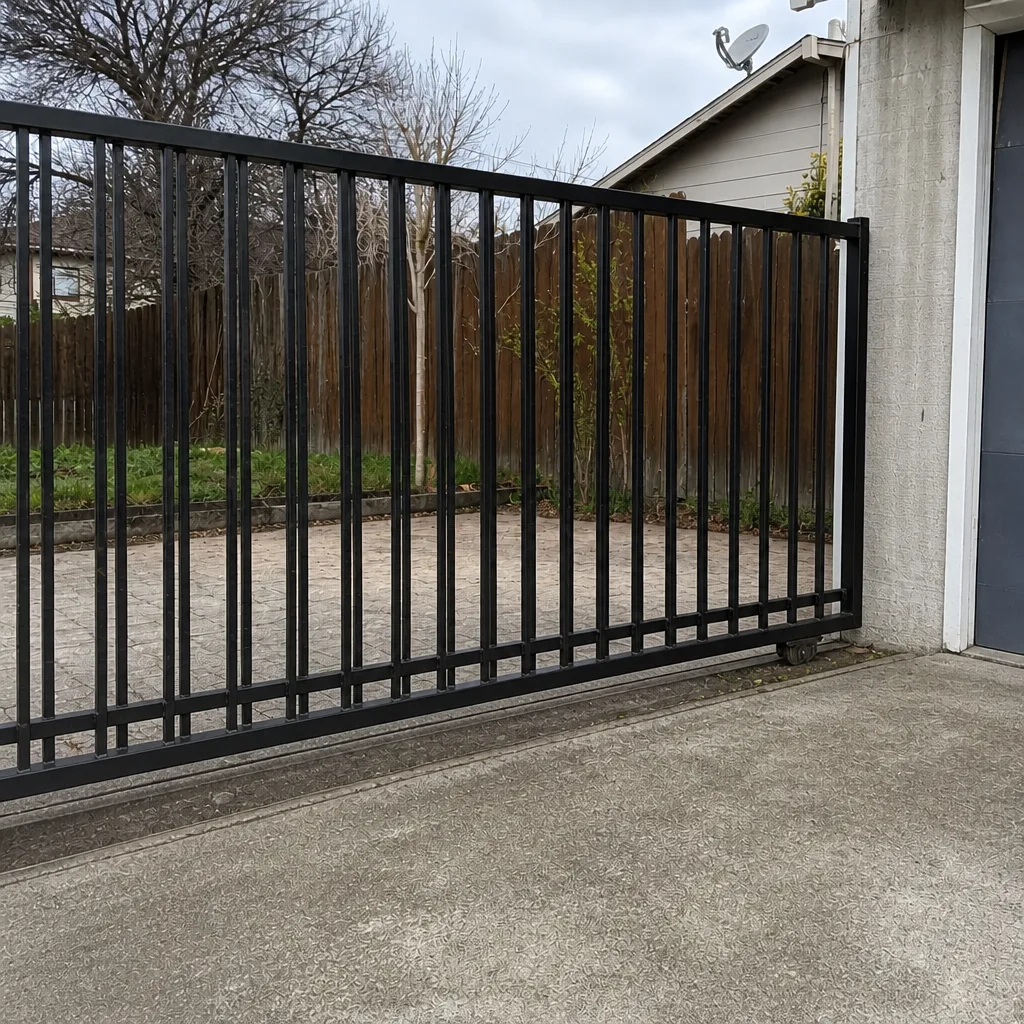
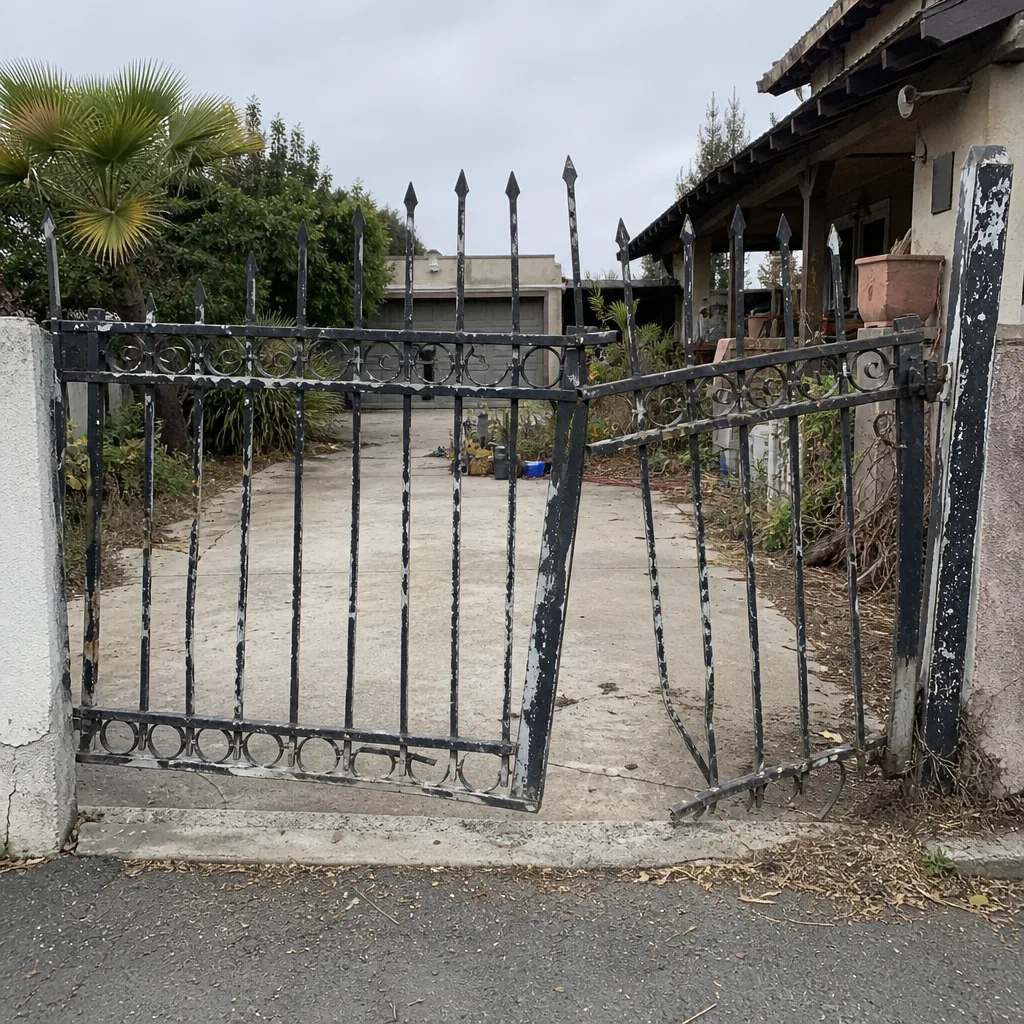
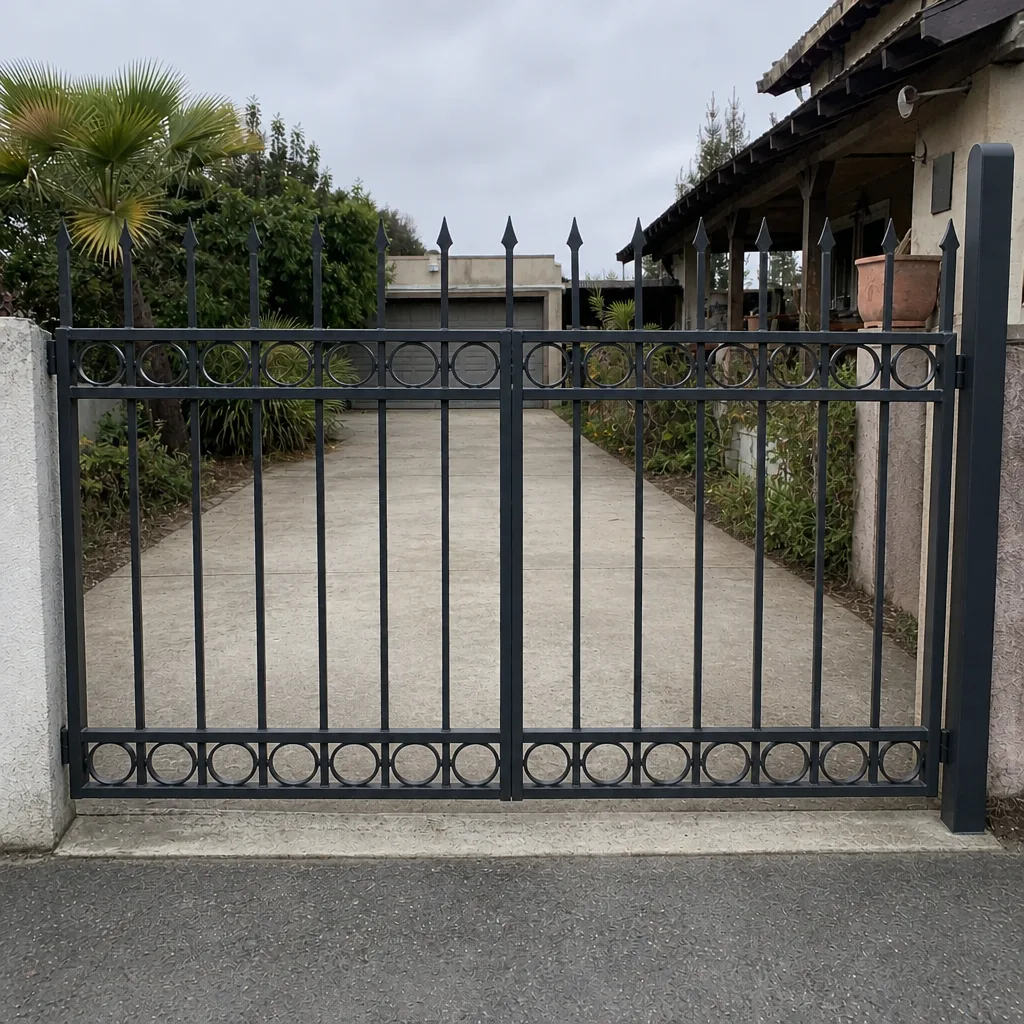
See the difference
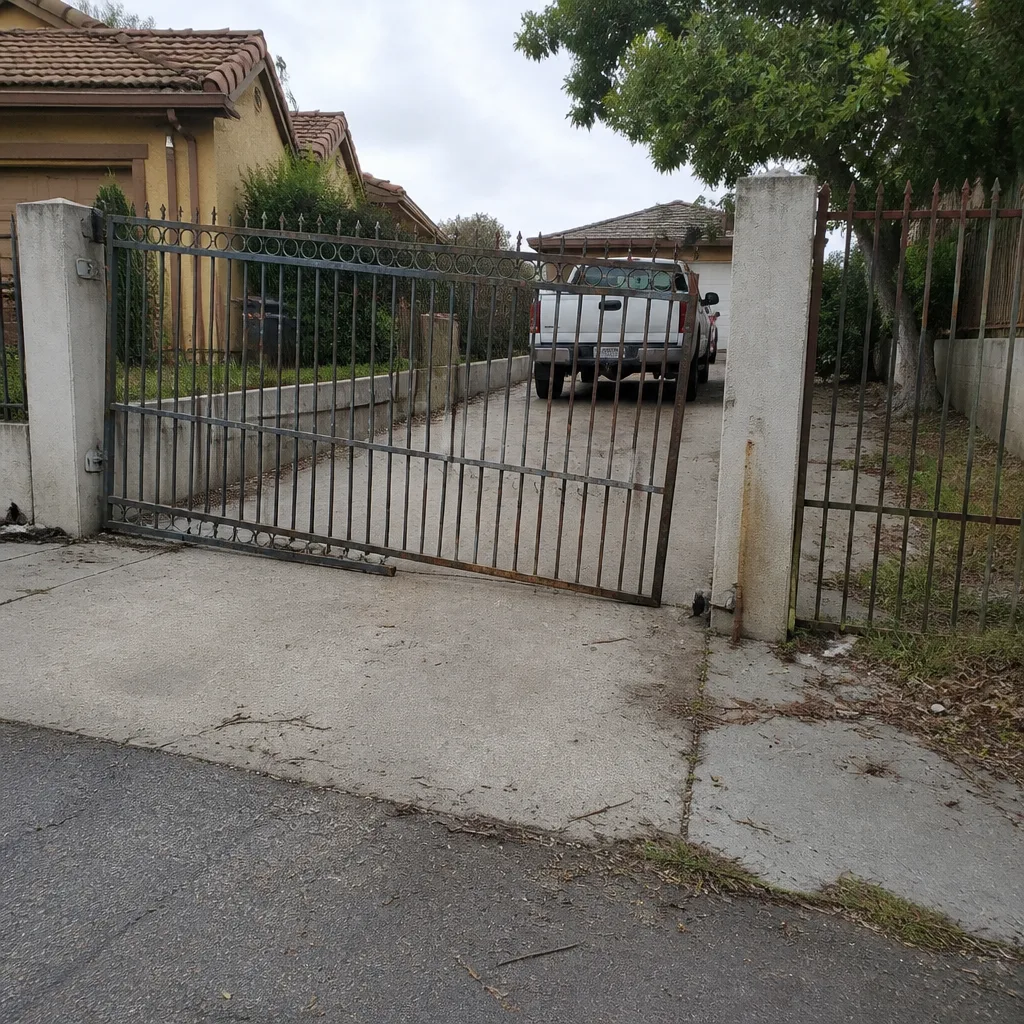 Before
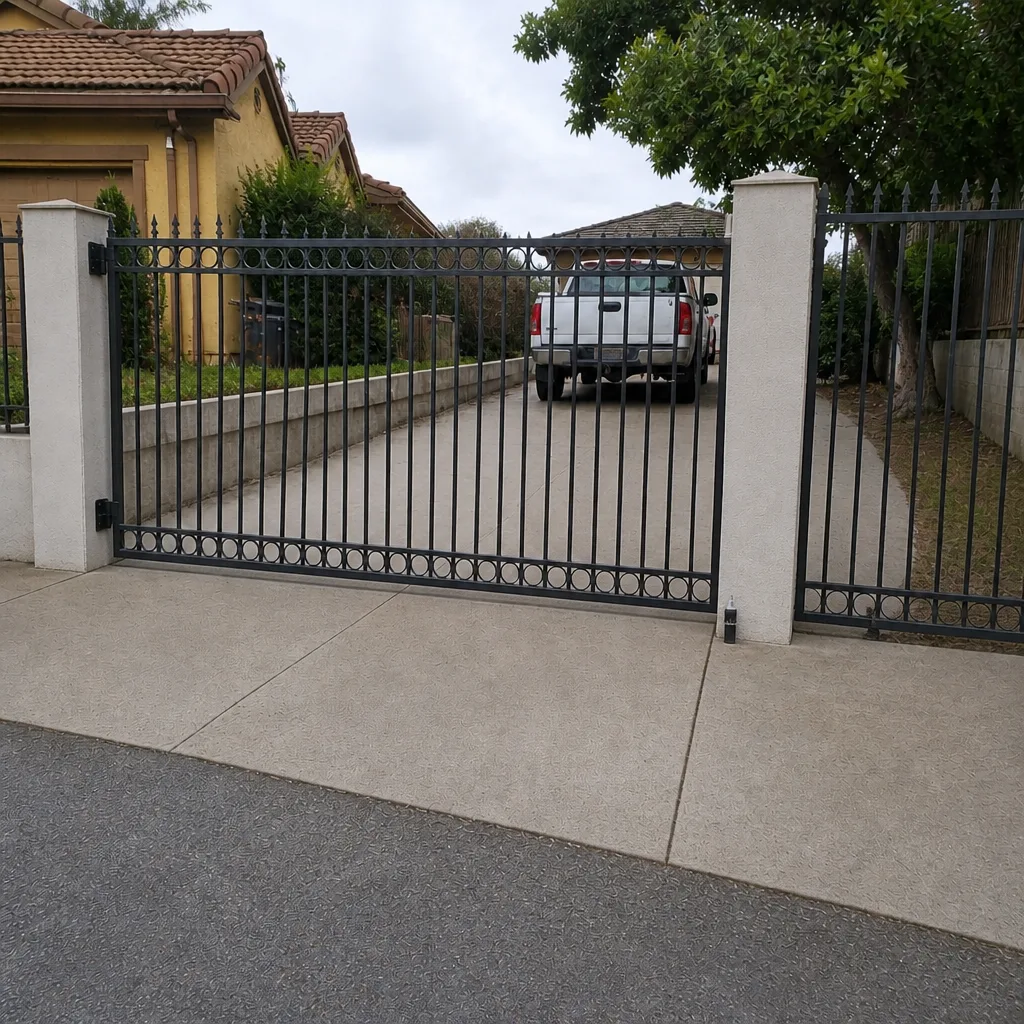 After
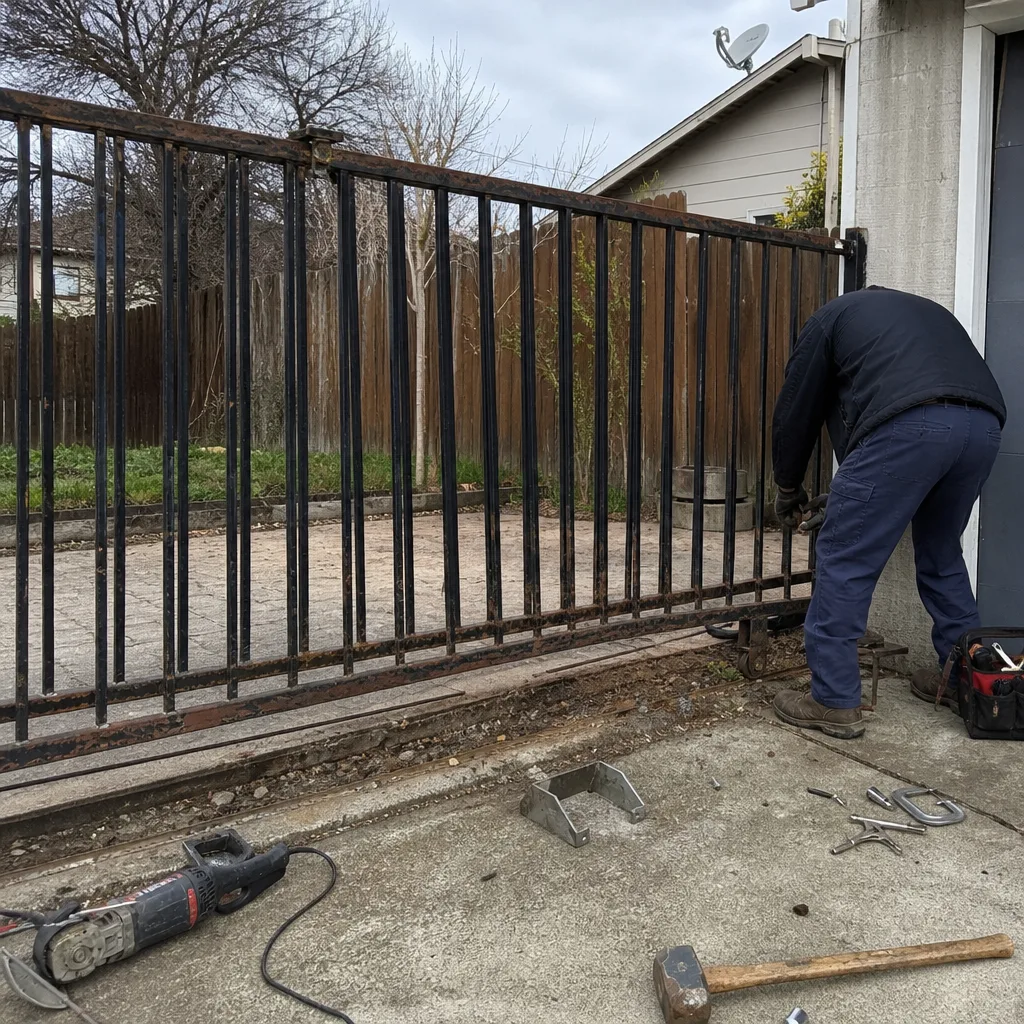 Before
 After
 Before
 After
Selling a home in Antioch with an unpermitted gate
Real estate transactions are where unpermitted work comes home to roost. It isn’t a disaster – plenty of properties close with an unpermitted gate – but it does add steps, and the buyer’s agent will almost certainly ask about it if the inspector flags it.
Here’s how it usually plays out:
- The buyer’s inspector notes the gate and, if they suspect unpermitted work, recommends a permit search.
- The title company or the buyer’s agent pulls the permit history from the City of Antioch (or Contra Costa County for unincorporated properties).
- If nothing shows up, the buyer may ask for a credit, ask the seller to obtain a retroactive permit, or accept the property as-is with a written disclosure.
- If it’s a fire access gate, the fire district may need to sign off – which can delay closing.
- If entrapment protection is non-compliant, the buyer’s insurer may make coverage of the gate conditional, and your agent will need to negotiate.
The most common outcome when the seller has documentation: the sale proceeds. When the seller has no documentation: negotiation, a price concession, or both. The lesson is not that every gate needs a permit, but that the paperwork matters as much as the hardware. If you’re within a couple of years of selling in Antioch, spend an afternoon confirming that your gate’s history is clean. It’s a lot easier to fix now than during escrow.
How the permit and inspection process usually runs
If your gate project does require a permit, the process is straightforward when you know the sequence. Here’s the typical path for gate work in Antioch:
- 1
Define the scope. Write down exactly what’s changing – new footings, new power, new gate, new operator. This is what you’ll describe on the phone and on the application.
- 2
Ask the city. Call the Antioch Building Division (or Contra Costa County for unincorporated addresses) and ask whether your scope requires a permit. Get the answer in writing if possible.
- 3
Check the fire district. If your gate serves a fire access route, or you’re in an area the fire district cares about, confirm what’s required before you design or order equipment.
- 4
Check the HOA. If you’re in one, submit for architectural approval in parallel with the city process – many HOAs want approval on file before they’ll sign anything else.
- 5
Assemble the plan. For footing or structural work, you’ll usually need a drawing or plan showing post size, footing depth, gate dimensions, and operator location. For electrical work, a licensed electrician’s scope.
- 6
Submit and wait for plan check. Plan check time varies by scope and current workload. Ask when you submit how long to expect.
- 7
Schedule the work once approved. This is where the patience pays off – operators and gate panels need to be measured, ordered, and scheduled, so nothing benefits from rushing the approval.
- 8
Call for inspections. Footings are typically inspected before concrete is poured. Electrical is inspected after rough-in and again after the work is complete. Final inspection closes the permit.
The whole thing usually runs several weeks from first call to final sign-off, longer if plan check has a backlog. If you’re hiring a contractor for the automation side, ask them up front what they need from the permit before they start. That’s part of how we run Gate Repair Antioch – we’d rather turn down a rushed install than rush a permit.
Common Mistakes to Avoid
- Assuming “repair” means “no permit.” Replacing an operator usually isn’t a permit job. Pouring new footings usually is. The distinction is structural, not verbal, and the wrong assumption is expensive to undo.
- Taking a handyman’s word for it. A handyman can’t authorize a permit exemption, and their promise won’t protect you when the buyer’s inspector asks questions. Get the answer from the Building Division.
- Bypassing photo eyes or edge sensors to “fix” a gate that keeps stopping. Bypassing safety sensors is the single most dangerous shortcut in this trade, and it can void an insurance claim. Diagnose the fault instead.
- Changing a fire access gate without telling the fire district. Swapping a fail-safe operator for a security one is a safety problem even if the gate still opens and closes. Confirm with the fire district before you order parts.
- Getting city approval without HOA approval (or vice versa). They don’t substitute for each other, and having one without the other can stall your job mid-installation.
- Not keeping the paperwork. The permit, the HOA approval, the inspection sign-offs – file them with your property records. A future buyer will ask.
- Skipping the permit search before you buy. It’s a free call to the city and a two-minute check. Skipping it means inheriting someone else’s problem.
When to Call a Professional
Call a professional gate contractor when the problem isn’t obvious – an operator that cycles on its own, a control board with no visible fault, a sensor that keeps tripping, or a gate that’s sagging on one side and dragging. Call us before you order parts for an unfamiliar brand, because a Viking or Ghost Controls operator that gets the wrong receiver wastes a week and a return. Call us before you pour concrete. And call us when you’re planning a new installation and want the mechanical and automation side handled by one contractor instead of coordinating a fence company, an electrician, and an operator installer across three calendars. Gate Repair Antioch offers free estimates in Antioch – call (855) 799-8573. We answer 24/7. Fast dispatch from 7am to 7pm, Sunday through Friday.
Frequently Asked Questions
Most gate repairs in Antioch do not require a permit when the work is maintenance on an existing gate – replacing an operator, hinges, latches, sensors, or a gate leaf on existing posts. A permit is typically required when the work adds or replaces footings, adds new electrical service to a gate location, adds a new gate, or changes a fire access gate. Call the Antioch Building Division with your address and scope to confirm for your property. If the repair crosses into permit territory, we can’t approve the exemption for you, but we can point you in the right direction. Call (855) 799-8573 for an exact scope review – estimates are free.
UL 325 is the safety standard for automatic gate operators requiring entrapment protection, such as force sensing plus working photo-eye or edge sensors, on any automated gate. It matters for you because non-compliant or bypassed safety devices can complicate insurance claims and create liability if someone is injured. It isn’t normally a permit item for a residential repair, but it is a real safety requirement that inspectors and insurers ask about. If you suspect your gate’s safety sensors have been bypassed, that’s worth fixing before anything else. Call (855) 799-8573 to have your gate’s entrapment protection reviewed.
You need to talk to the fire district before you change anything. Fire access gates typically need Knox-compatible access for emergency crews and often need to fail open rather than fail secure, so the operator and hardware selection is different from a standard security gate. Swapping a fail-safe operator for a security one is a serious safety problem even if the gate still opens. Confirm what your gate was approved to do, and get any required sign-off in writing. Call (855) 799-8573 for a free estimate on the mechanical side – we’ll tell you what we find and what needs fire district review.
No. HOA architectural approval and a city permit are separate approvals and neither substitutes for the other. The HOA cares about appearance, height, style, and placement; the city cares about safety, structural adequacy, and code. Many Antioch HOAs want architectural approval before the city process; the city usually wants the scope documented separately. Keep both records with your property paperwork for when you sell. Call (855) 799-8573 – estimates are free.
It can, but it usually doesn’t kill the deal. An unpermitted gate typically shows up as a “buyer to verify” note in the inspection report, and the buyer may ask for a credit, a retroactive permit, or a written disclosure. Fire access gates that lack fire district sign-off tend to slow closing the most. The fix is to pull your permit history from the city now and, if it’s clean, keep the documentation. If it isn’t, ask about retroactive permitting before you list. Call (855) 799-8573 for an exact repair estimate once any permit question is settled.
Yes – we work on the gate you have, not the paperwork. Our technicians have up to 11 years of experience across nine major operator brands, so unfamiliar equipment doesn’t slow us down. We repair what’s broken and tell you honestly if the fix requires something the permit process should review first, such as a footing, an electrical service, or a fire access safety device. Some jobs are simple repairs; some need the city or fire district. Call (855) 799-8573 to sort out which one yours is – estimates are free.
The Bottom Line
Gate repair in Antioch sits on a line – not a gray one, once you know where it is. Routine maintenance on existing equipment, sensors, hinges, latches, operators – that’s repair. New footings, new electrical service, new gates, and any change to a fire access route – that’s construction and gets a permit. UL 325 isn’t a permit rule, but non-compliant entrapment protection can void an insurance claim and create liability, so never bypass safety devices. HOA approval and city permits are separate, and both matter when you sell. When in doubt, call the Antioch Building Division, then call us. Our technicians have up to 11 years of experience across brands including Linear, Viking, Ghost Controls, and DoorKing, covering repair, electric gate repair, and installation in Antioch. One call covers it – (855) 799-8573 for a free estimate. We answer 24/7. Fast dispatch from 7am to 7pm, Sunday through Friday.
Written by the team at Gate Repair Antioch.