
Last updated November 16, 2026
 Wrought iron
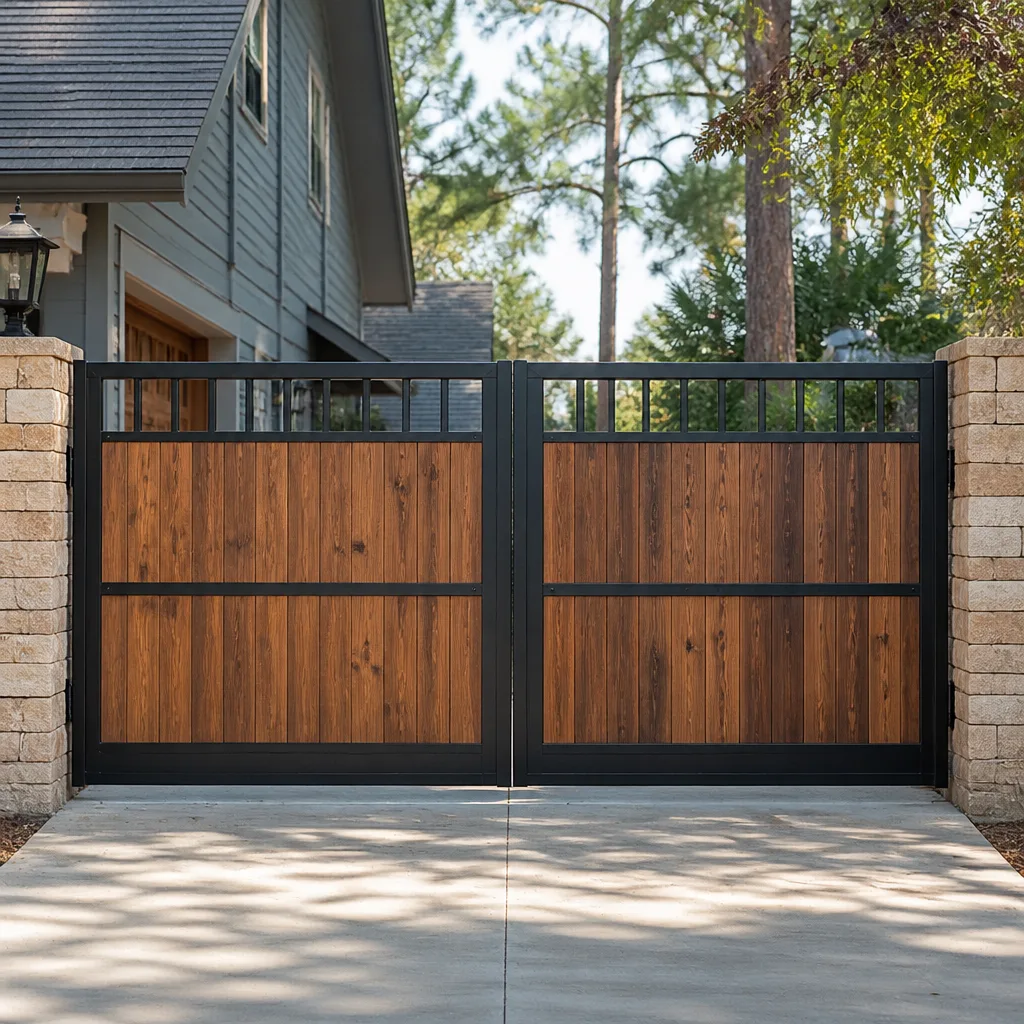 Wood & steel frame
 Farm & ranch
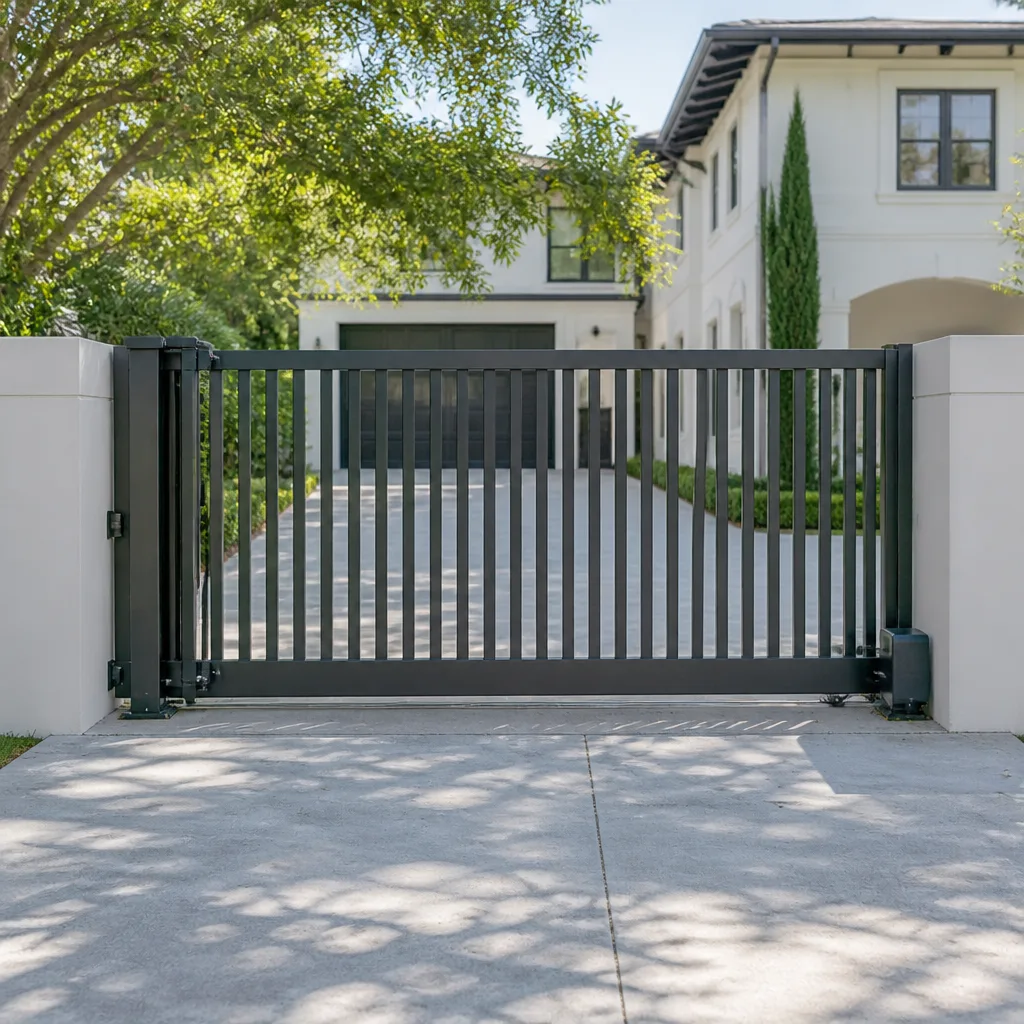 Sliding driveway gates
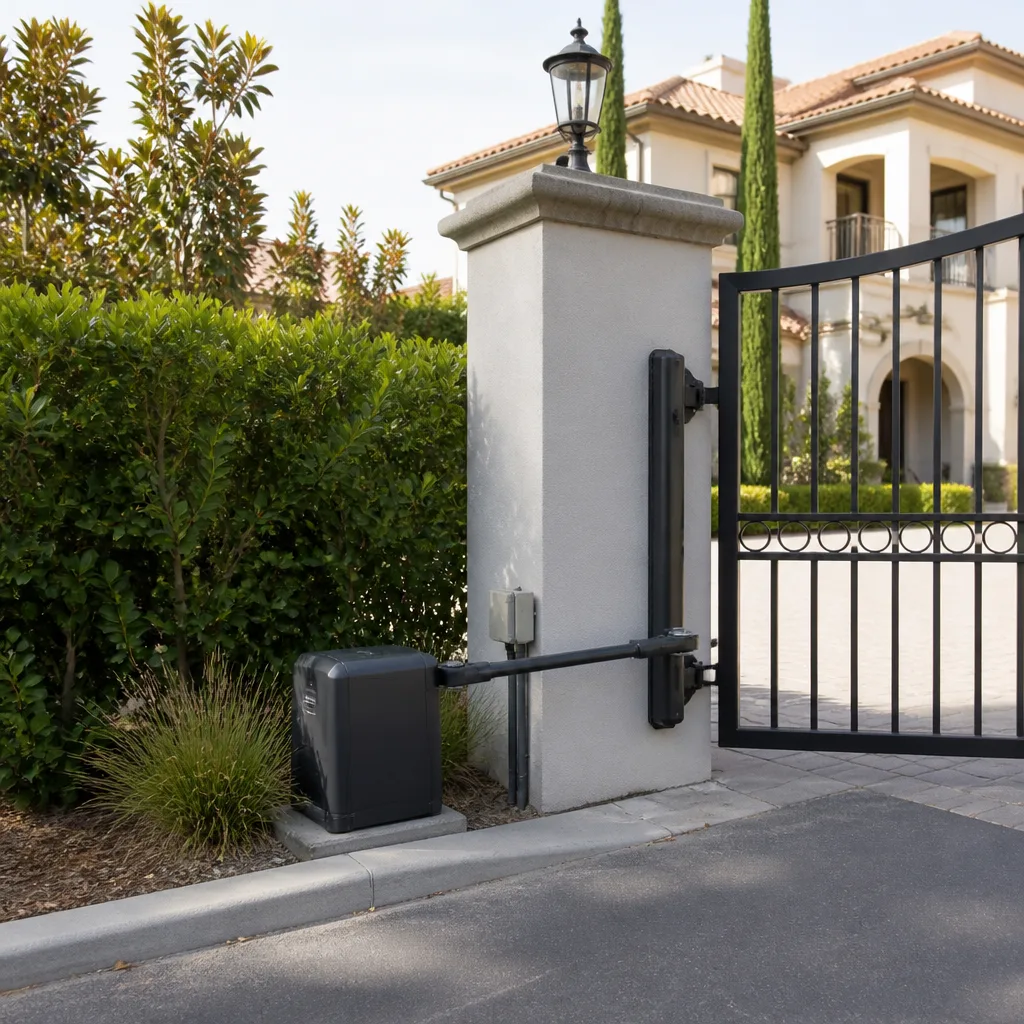 LiftMaster operators
Free on-site gate assessment - hinges, posts, and your LiftMaster or Nice gate operator checked before anything is quoted
The assessment is free and the quote is the invoice.
Get your free estimateGate Repair Warning Signs: An Antioch Homeowner’s Reference Guide
A gate that hesitates for two seconds before it moves isn’t “a little slow.” In most cases it’s an operator drawing high current to push through mechanical resistance that is actively wearing out the motor board, and it may only have a few dozen operating cycles left before it stops altogether. That gap between “acting strange” and “dead” is where almost every homeowner loses money: the symptom was visible for weeks, and nobody decoded it. Gates almost never fail without warning. They send signals through sound, timing, and small visual changes you can learn to read. This guide walks through each warning sign, what it points to mechanically, and when a cheap repair is still on the table.
Quick Answer
Gate repair warning signs in Antioch usually show up as hesitation before movement, grinding or squealing noises, random reversing, sluggish battery backup, sagging hinges, or an intermittent keypad. Each symptom maps to a specific mechanical or control cause, and catching it early keeps a small fix from becoming an operator replacement. If your gate is already showing two or more of these signs, get it looked at before it fails.
Styles & brands we work with
- Wrought iron
- Wood & steel frame
- Farm & ranch
- Sliding driveway gates
- LiftMaster operators
Table of Contents
- The Symptom Map: What Each Warning Sign Actually Means
- Random Reversing vs. Consistent Reversing: Two Very Different Repairs
- Decoding the Noises: Grinding, Squealing, and Clicking
- How to Spot a Failing Battery Backup Before It Fails You
- Visual Signs on Hinges, Rollers, and the Gate Frame
- Why an Intermittent Keypad or Intercom Is Usually a Wiring Problem
- What Antioch Conditions Do to Gate Hardware
- When to Call a Professional
The Symptom Map: What Each Warning Sign Actually Means
Start with the symptom, not the brand. The most common mistake we see is a homeowner deciding the operator is bad because it’s the most expensive part to replace, when the actual cause is a worn hinge or a misaligned track. When we arrive on-site, we diagnose first and then fix – the operator brand matters far less than what the gate is physically doing. Here’s the map we use, and it holds across residential and commercial systems.
- Hesitation before movement. The operator is drawing extra current to overcome friction. Usually a binding hinge, dry roller, or a track that’s out of alignment. The board runs hot every time the gate moves.
- Gate stops halfway and reverses. Obstruction sensor, safety edge, or loop detector. Something is telling the operator “obstacle present.”
- Gate moves but doesn’t fully close. Limit switch out of adjustment, a physical obstruction in the track, or a failing sensor that stops the swing a few degrees short.
- Grinding or clicking. Gear wear, a stripped drive sprocket, or a chain that’s jumped its track.
- Squealing. Metal-on-metal contact that needs grease, typically a hinge pin or roller axle. Ungreased long enough, it wears through to the pin.
- Gate runs slowly but sounds fine. Motor winding or capacitor starting to fail. This one is easy to ignore right up until it stops.
- Keypad or intercom works intermittently. Usually wire, not electronics.
Two or three of these showing up together points to a mechanical origin. One of them alone, especially hesitation or random reversing, can also be electrical. Either way, the answer is diagnostic work, not a parts swap.
Random Reversing vs. Consistent Reversing: Two Very Different Repairs
A gate that reverses randomly has a safety or obstruction problem. A gate that reverses at the same point every time has a limit switch, track, or physical blocking issue. Same visible behavior, completely different fix.
Random reversing is what we call an “obstruction sensor event.” Something in the safety chain believes the gate has contacted an object it shouldn’t have. That chain includes the photo-eye safety beams, the safety edge on the leading edge of the gate, and – on slide gates – the loop detector buried in the driveway. A loop detector can fail without any visible damage; the wire under the driveway can be nicked by a shifted slab, or the detector card in the operator housing can degrade over time. On residential systems we frequently find the issue in one of the safety photo-eyes: sun glare at the wrong angle of day, a spider web across the lens, or a lens knocked slightly off alignment by a lawn mower.
Consistent reversing at the same point – say, two-thirds closed, every single time – is a limit switch problem. The operator’s internal logic thinks the gate has reached the closed position before it actually has, or a physical obstruction is stopping the gate at the same spot every cycle. On swing gates, that obstruction is often a misaligned track or a sagged hinge where the gate leaf has dropped a quarter-inch. On slide gates, it’s frequently a piece of debris caught in the rail or a roller that’s seized at a specific position.
The good news: limit switch failures are usually cheap to fix, and loop detector issues are diagnosable with the right equipment. What you don’t want to do is assume the operator is bad and start pricing a replacement motor before anyone’s looked at it.
Decoding the Noises: Grinding, Squealing, and Clicking
Noise is the single most informative symptom a gate gives you, and it’s the one most often dismissed as normal. Gates are supposed to glide quietly. If your gate has an audible sound it didn’t have six months ago, that sound is pointing at something specific.
Grinding
Grinding is metal-on-metal wear inside the operator or across the drive chain. On chain-driven slide gates, a dry chain on a dry sprocket will grind before it snaps. On swing and slide arms – including lift-arm operators from Viking and similar brands – grinding usually means the gear teeth are wearing, or the arm’s pivot is dry. Grinding sounds like a gravel pit inside the housing. If you hear it only at the start or end of travel, it’s likely a limit gear; if it runs through the whole cycle, the main gear is the suspect.
Squealing
Squealing is a lubrication problem, usually a hinge pin or a roller axle that’s dry. A high-pitched squeal during the swing or slide is nearly always fixable with a proper greasing – and if it’s been squealing for months without greasing, the pin will wear through its housing, and you’re replacing the hinge. Squealing is a cheap symptom to catch and an expensive one to ignore.
Clicking
Clicking is almost always a relay in the control board engaging or the motor struggling to start because the starting capacitor is failing. On Ghost Controls and similar residential operators, a rapid click-click-click with no movement is a strong signal the capacitor has reached end of life. That’s a small part, and a small repair, but only if you don’t ignore it until the board takes the strain.
Any noise that appears suddenly and repeats every cycle is a warning. Take a short video from a safe distance if you want to show a technician exactly what you’re hearing when you call.
How to Spot a Failing Battery Backup Before It Fails You
A backup battery fails gradually. You’ll see the gate lose its “snap” during normal AC operation weeks before the battery gives out entirely, and it will fail on the one day the power goes out. On most modern operators – including DoorKing systems with battery backup and comparable residential units – the battery is a sealed lead-acid pack that ages quietly. Here’s what to watch for:
- Slower gate travel on AC power. When battery voltage is dropping, the operator compensates by drawing more from AC. A gate that’s noticeably slower than it was last season is telling you something.
- The operator “chirps” or beeps when it cycles. Many brands use a service alert or low-battery tone. If you hear a beep you don’t remember, look it up in the manual or have a technician decode it.
- The control board LED flashes a fault pattern after a cycle. Count the flashes and note the pattern. Different brands use different codes, but the pattern tells a technician which sub-system is complaining.
- The gate works fine, then hesitates right after the operator has been idle for a day. Lead-acid packs lose surface charge when idle, then recover under load. That hesitation is the pack telling you it’s on the way out.
- Simulate a power outage. With the gate fully closed and the operator in normal mode, switch off its breaker for 30 seconds. The gate should open once at roughly normal speed and then stop. If it barely moves or doesn’t move at all, the backup pack is dead – replace it before an outage forces the issue.
Batteries have a predictable service life, and replacing one is far cheaper than being locked out during an outage. If your gate is more than a few years old and you’ve never tested the backup, do it.
Visual Signs on Hinges, Rollers, and the Gate Frame
You can catch a gate failure months before it happens by walking the perimeter once a month. Operator problems get all the attention, but the mechanical parts give you the most lead time. Here’s what to look at, in order:
- Hinges. Look for rust bloom on the pin, a visible gap that wasn’t there before, or a hinge leaf that’s pulled away from the post. A hinge that’s cracked at the weld is a gate that will eventually come off the post under load.
- Rollers. On slide gates, every roller should contact the rail evenly. A roller that’s worn flat, seized, or sitting a fraction off the rail is dragging and will seize entirely within weeks.
- Frame straightness. Stand at the gate’s closed position and sight along the top rail. A visible bow or sag means the frame has bent, which throws off the whole swing geometry and stresses the operator.
- Post lean. A post that has tilted even slightly will eventually pull the gate out of alignment. On slide gates, a leaning post is often what causes the gate to come off its track.
- Weld cracks. Any hairline crack in a weld is a structural warning. Catch it early and it’s a weld repair; catch it late and it’s a new frame section or a full gate replacement.
- Paint bubbling or metal scale. Surface rust underneath paint signals the metal is thinning. That matters most at the hinge points where the load sits.
On automated systems, these mechanical faults eventually show up as operator faults too – the operator fights the resistance until it gives. Which is why we always inspect the gate mechanically before we assume the electronics are the problem.
Why an Intermittent Keypad or Intercom Is Usually a Wiring Problem
If your keypad or intercom works sometimes and not other times, the fault is usually in the wire, not the device. This is one of the most misdiagnosed issues on residential and commercial gates, because the symptom looks electrical, so homeowners replace the keypad or intercom first. In our experience, that almost never solves it.
The keypad and intercom both run on low-voltage wiring buried in the ground, run through a conduit, or stapled to a post. Several things kill that wire: a garden tool, a shifted slab, water intrusion at the connection point, corrosion in the splice, or a rodent chewing through a buried run. The wiring is also susceptible to moisture at any junction – and any junction that’s not properly sealed will corrode over a season or two.
Here’s the diagnostic routine a technician runs:
- Test at the keypad terminals. If the keypad’s internal logic is failing, the terminals may read normal voltage but the device won’t respond. That points to the keypad.
- Test at the operator end of the same wire run. If the voltage drops significantly over the run, the wire is the problem.
- Check every splice or junction. Corrosion, moisture, or a loosened wire nut will all cause intermittent behavior.
- Trace any buried section for pinches or damage. This is where a trained eye matters most – a pinched wire still reads correct voltage until the ground shifts, and then it fails.
- Only after the wire is ruled out does the device get replaced.
If you’ve replaced a keypad once and it’s failed again, stop replacing devices and get the wiring tested. One call covers the diagnostics and the repair.
What Antioch Conditions Do to Gate Hardware
Antioch’s climate is mild by California standards, but it puts a specific set of stresses on gate hardware that homeowners should be aware of. Winters are wet. The rainy season brings weeks of consistent moisture, which is hard on metal-to-metal joints that don’t get greased – hinge pins, roller axles, and any place where two painted surfaces touch. Corrosion at those points shows up as a stiff hinge first and a seized roller later.
Summers bring heat and very dry air, which does a different kind of work. Lubricant on dry hinges and chains thins out or evaporates. Springs – and any spring-loaded counterbalance on a gate’s mechanism – work harder in heat. A gate that ran smoothly through winter but starts dragging by July is often telling you the lubrication has dried up, which is why greasing late in spring, ahead of the hot months, does a lot of preventive work.
Wind is the third factor. Antioch’s exposure to seasonal wind loads means heavier gate panels face more torque at the hinge points and more load on the operator over time. A gate that’s slightly loose at the hinge is a gate that gets slammed more often during a windy stretch, which is exactly when a marginal hinge fails.
The mix – wet winters, dry summers, and seasonal wind – means mechanical wear on gates in neighborhoods like the older residential sections near downtown, in the newer subdivisions along the Highway 4 corridor, and on the commercial properties along Lone Tree Way tends to show up as hinge and roller issues first, before the operator becomes the problem. Catching the hardware early is what keeps the operator alive.
If you’re anywhere in the Antioch area and notice any of the symptoms in this guide, we can look at the gate and give you a clear picture of what’s actually failing. Our technicians have up to 11 years of experience with both residential and commercial gates, and we work on the brand you already have – LiftMaster, FAAC, BFT, Linear, Viking, Ghost Controls, DoorKing, Elite, or Mighty Mule. If you want the full scope of what we handle, see gate repair, and if the issue is electrical or automated, our electric gate repair covers the motor, board, and control work. Our technicians have up to 11 years of experience across manual, automated, and new installation work, so one call covers the diagnostic, the repair, and anything the gate needs structurally.
For a broader look at how we approach gate service in the area, the main Gate Repair Antioch page walks through our services. For current lead times and to book a diagnostic visit, see Gate Repair Antioch or call (855) 799-8573.
Common Mistakes to Avoid
- Replacing the operator before diagnosing the gate. Two-thirds of the “failed” operators we see are reacting to a mechanical problem – a binding hinge, a misaligned track – that a technician can spot in five minutes. Replacing the operator without fixing the gate just wears the new operator out faster.
- Ignoring a slow gate. A gate that’s slower than it used to be is a gate whose operator is drawing extra current. That’s a warning, not a personality trait.
- Replacing a keypad before testing the wire. Intermittent keypads are almost always wiring. Replacing the device twice in a row costs more than one diagnostic visit.
- Waiting for the battery to fail during a power outage. Test the backup once a year. It’s a two-minute test, and it’s the difference between a working gate and a locked-in driveway.
- Greasing a hinge that needs replacement. Grease helps a healthy hinge. It does not fix a hinge with a cracked weld or a worn pin. That hinge needs a repair before it fails completely.
- Assuming a fault code means the board is bad. Fault codes point to a sub-system. On a DoorKing or Elite system, the code tells you what the board is complaining about – usually a sensor, a limit switch, or a wiring fault, not the board itself.
- Leaving a slide gate off its track “for now.” A gate that has come off its track is a gate that will eventually fall or injure someone. It needs to be repaired properly, not pushed back into place and left.
See the difference
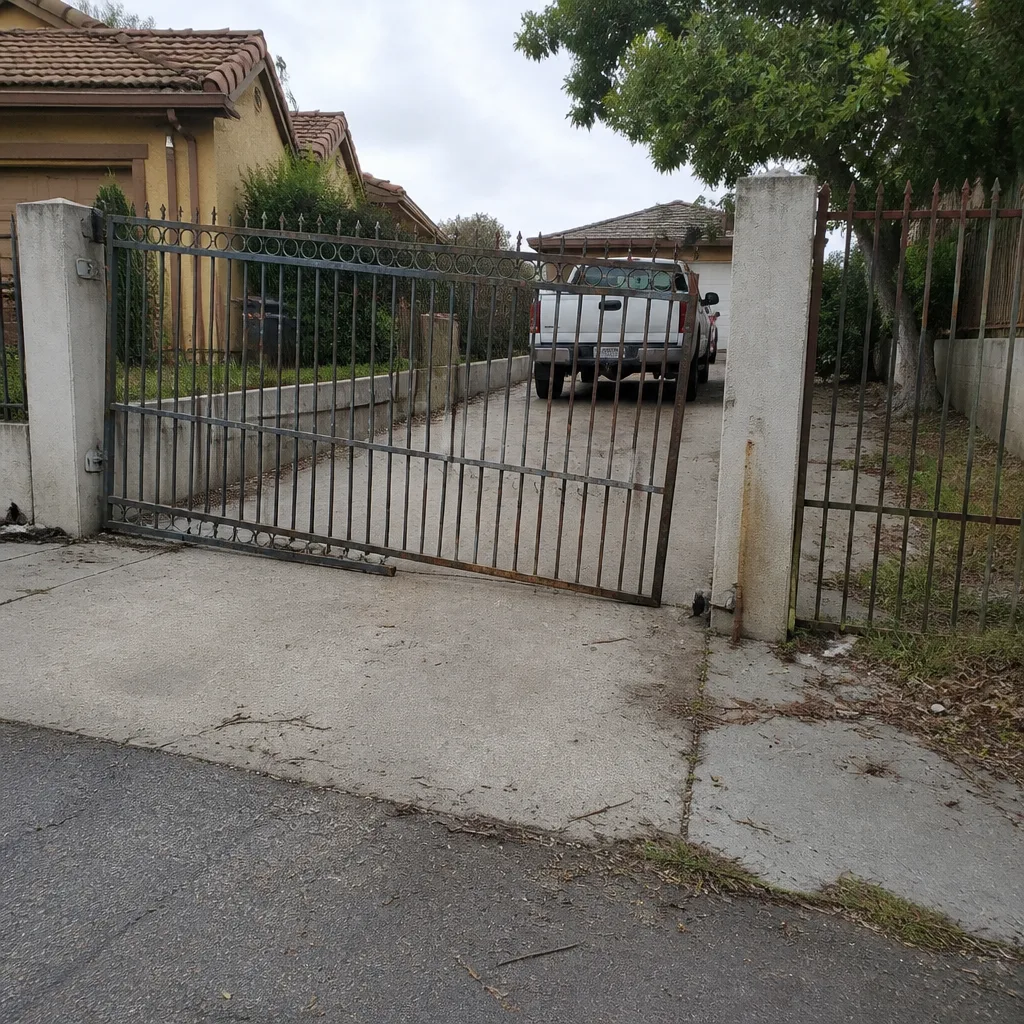 Before
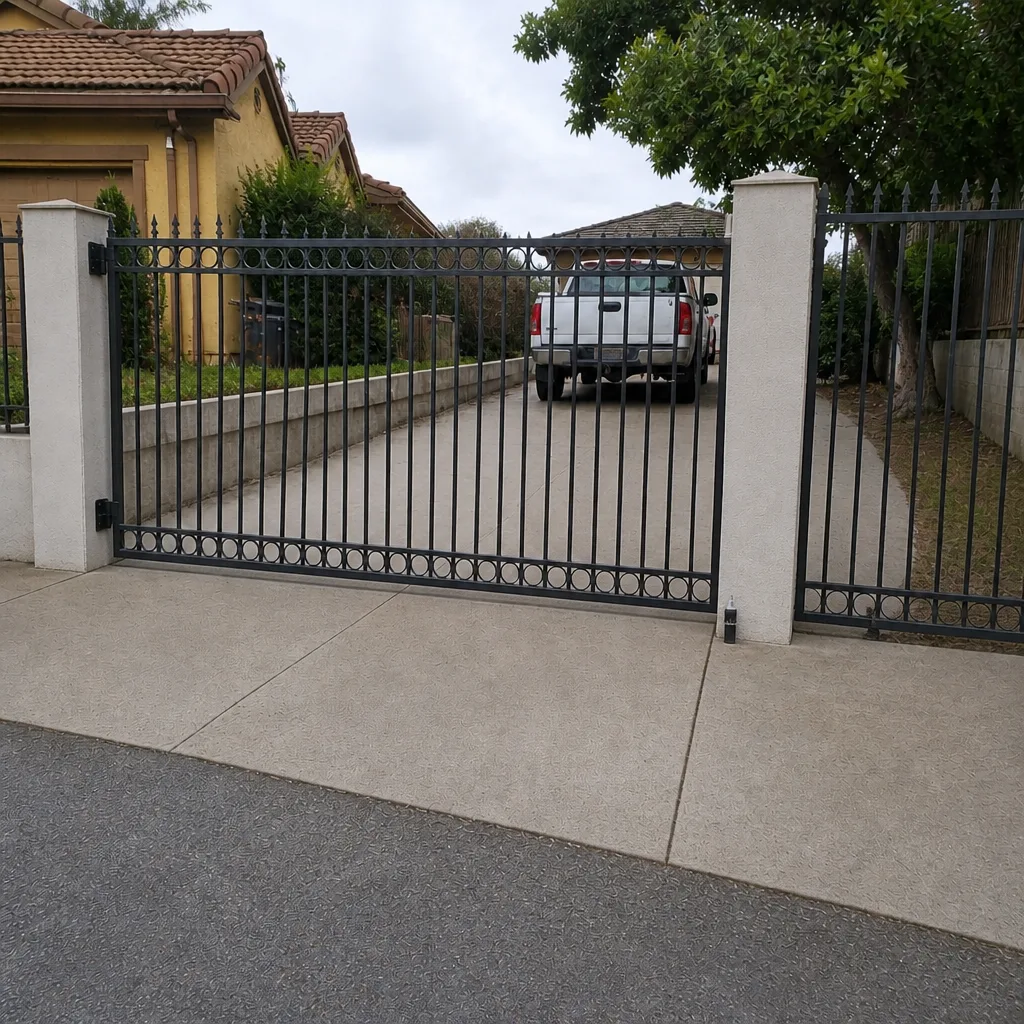 After
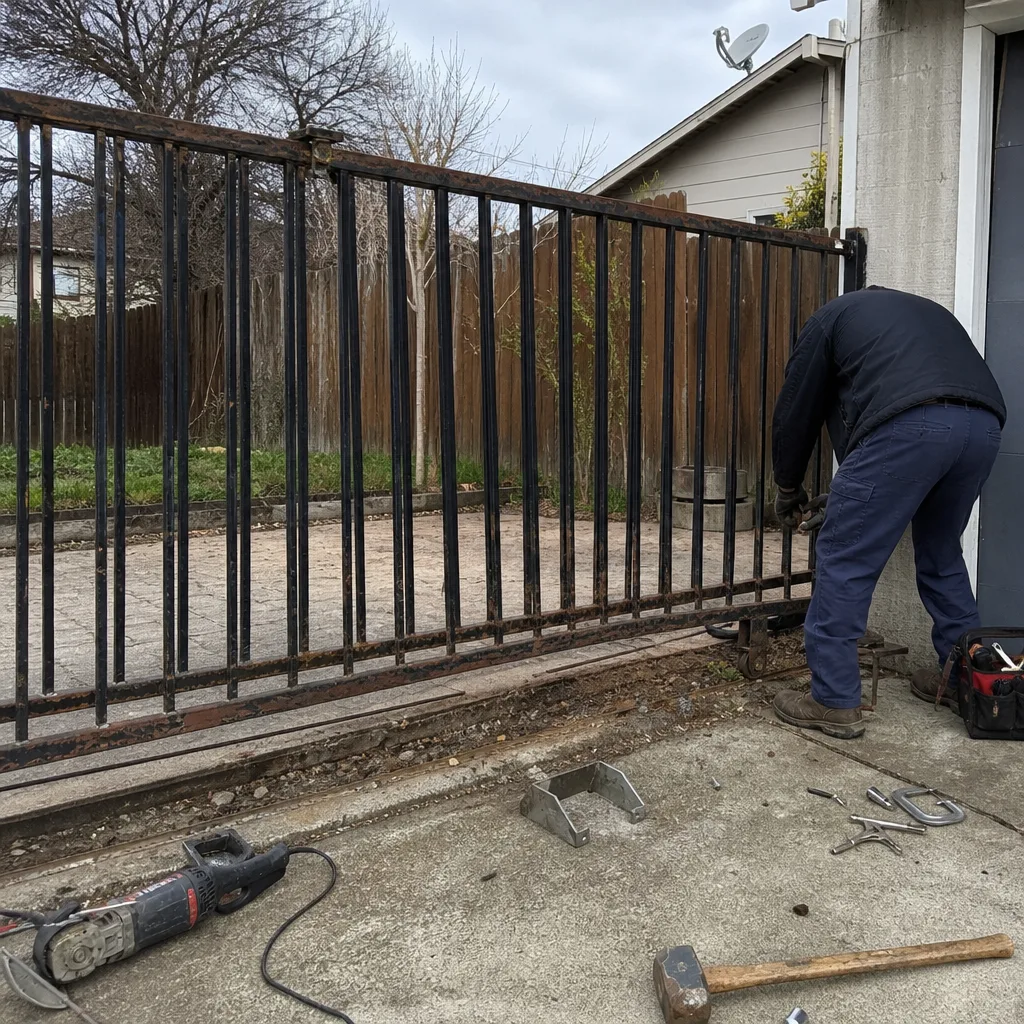 Before
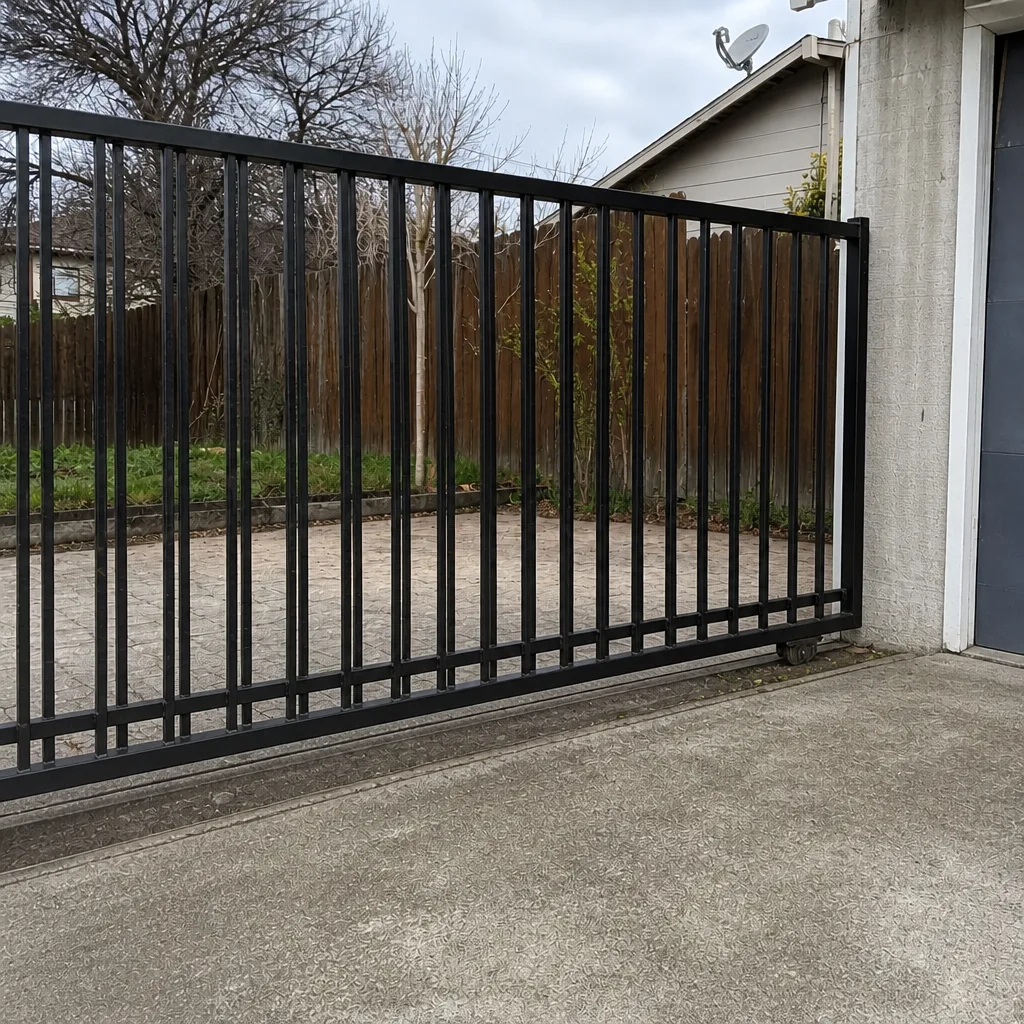 After
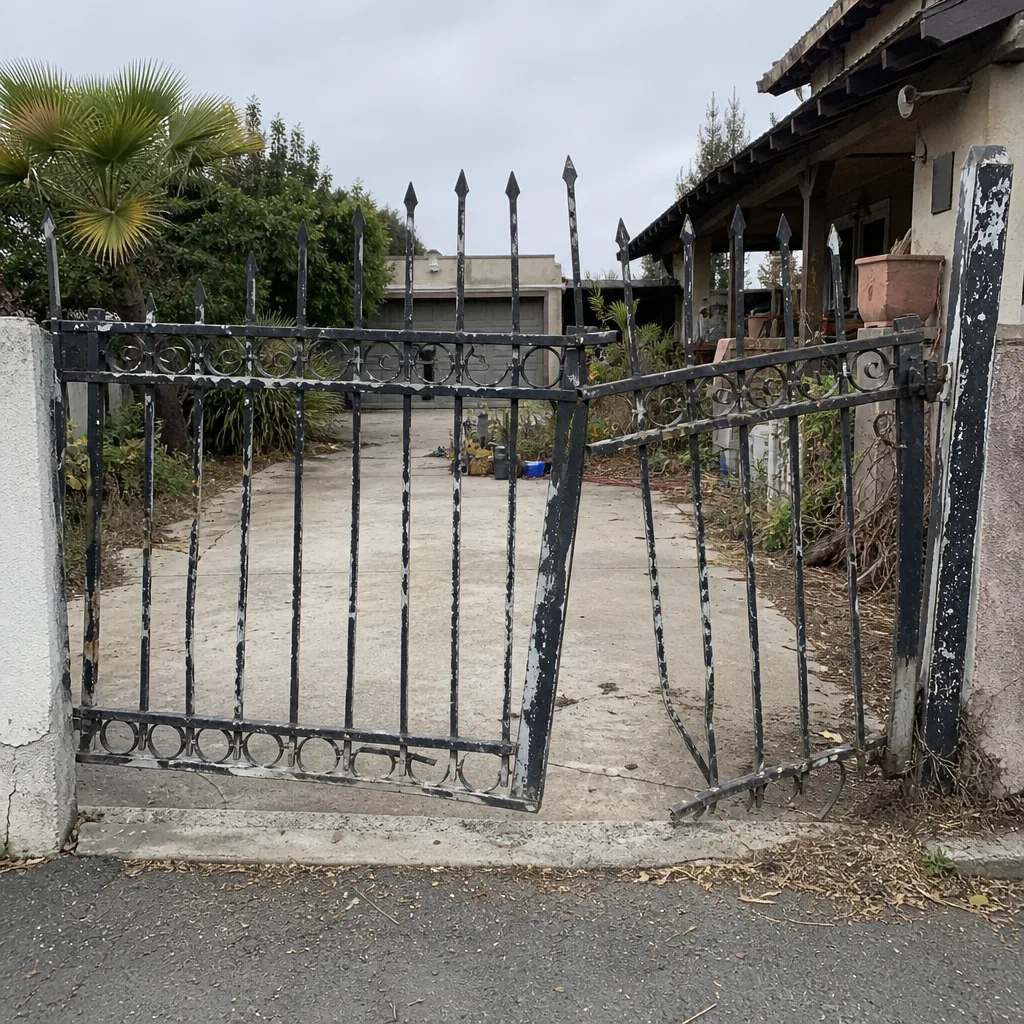 Before
 After
When to Call a Professional
Call a professional when the symptom is electrical – the operator hesitates, the gate reverses randomly, the keypad or intercom is intermittent, or the battery backup test fails. Also call when you see structural warnings: a cracked weld, a bent frame, a leaning post, or a gate that’s come off its track. These are load-bearing problems on heavy panels, and the risk of a gate failing while someone is walking through it is real. Electrical work on 120V-powered operators, and diagnostic work on control boards and loop detectors, is best left to someone trained on that equipment. Gate Repair Antioch offers free estimates in Antioch – call (855) 799-8573. We answer 24/7. Fast dispatch from 7am to 7pm, Sunday through Friday. If you’d rather start with a general service overview, the team’s main page walks through everything from hinge repairs to full installations.
Frequently Asked Questions
Diagnose the gate before replacing the operator. If the gate is binding, sagging, or dragging, the operator is likely working overtime to compensate – fix the mechanical issue and the operator is fine. If the operator itself is failing – the motor windings, the control board, or the starting capacitor – the operator needs attention. In our experience on Antioch gates, most “failed” operators are still functional and just reacting to a mechanical problem the homeowner didn’t spot.
Random reversing is a safety sensor event, usually a photo-eye, safety edge, or loop detector falsely triggering. The obstruction sensor chain believes something is in the gate’s path, even when nothing is there. The most common residential culprits are misaligned safety beams, sun glare at a specific time of day, or a loop detector with a wiring fault. Call (855) 799-8573 for a diagnostic – estimates are free.
Consistent reversing at the same position points to a limit switch, a track obstruction, or a physical block at that specific point in the travel. This is a different repair from random reversing, and it’s usually a cheaper fix than a sensor issue – a limit switch adjustment or a track alignment. Have a technician look at the gate in the position it’s reversing to make the cause obvious.
On most residential operators, yes, in principle – the battery is a sealed pack that’s accessible in the operator housing. But you should verify the operator’s specific requirements first, because installing the wrong battery type can damage the charging circuit. If you’re not confident, a technician can handle it during a diagnostic visit alongside the other checks.
Grinding points to gear wear or a dry chain. Squealing points to a dry hinge pin or roller axle. Clicking points to a failing starting capacitor or the control relay engaging without a successful motor start. Any noise that’s new and repeats every cycle is worth diagnosing. A short video helps a technician identify the noise before arriving on-site.
Intermittent keypad behavior is almost always a wiring issue, not a keypad issue. A buried or conduit-run wire that’s been pinched, water-damaged, or corroded at a splice will still read correct voltage until the conditions change, which is why the behavior feels intermittent. Testing the wire end-to-end before replacing the device saves both time and parts.
Diagnostic visits are booked through the on-site estimate, and estimates are free – there’s no service-call fee quoted for the visit. The repair itself is priced per job once we’ve identified the cause. Call (855) 799-8573 for a free estimate and a written price before any work begins.
The Bottom Line
A gate failure is rarely sudden. Hesitation, noise, random reversing, sluggish battery backup, loose hinges, and intermittent keypads are all specific signals pointing at specific causes – and each one is cheaper to fix when it’s caught before it becomes an operator failure or a structural collapse. If your gate in Antioch is showing even one of these signs, get eyes on it. Our team works on all major gate brands and handles everything from hinge repair to control board diagnosis in one visit, with estimates that are free and prices that are written down before any work starts. Call (855) 799-8573 for a free estimate. We answer 24/7. Fast dispatch from 7am to 7pm, Sunday through Friday.
Written by the team at Gate Repair Antioch.