
Last updated November 16, 2026
 Wrought iron
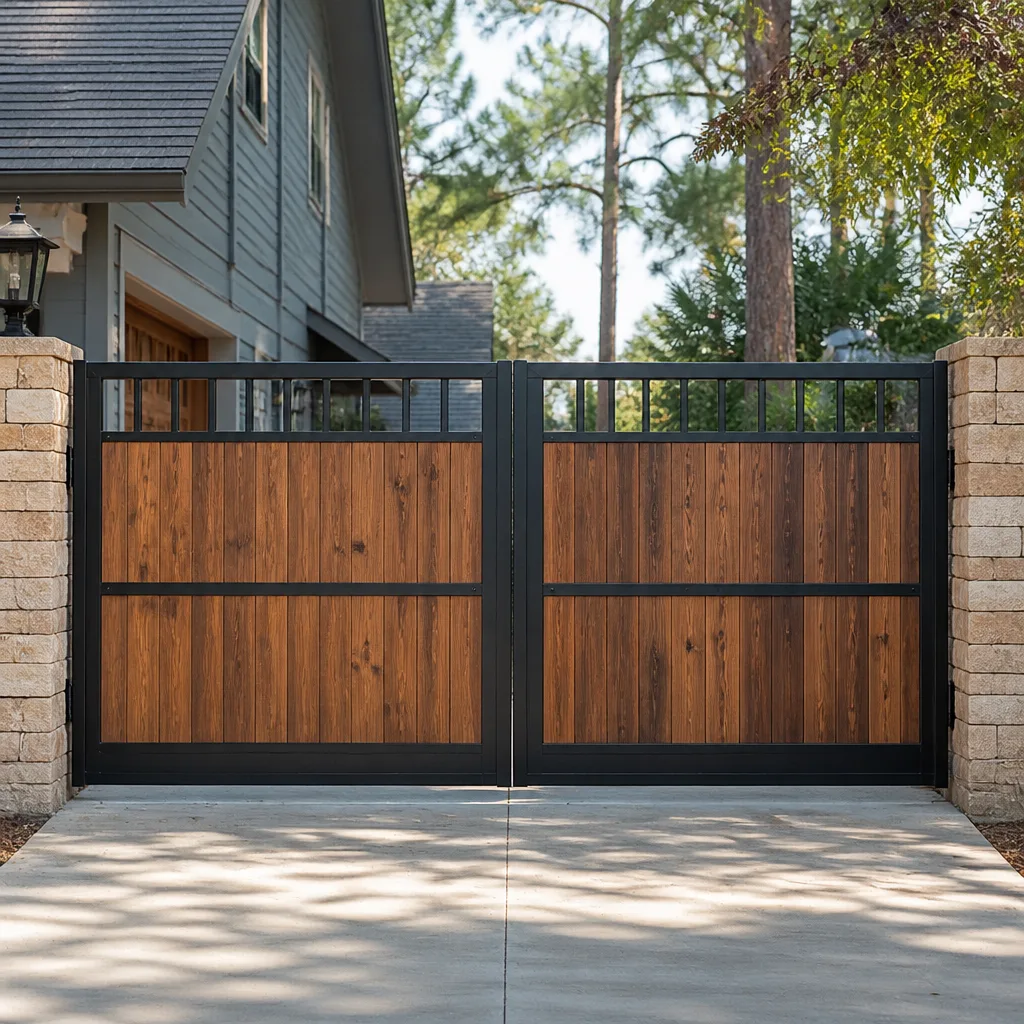 Wood & steel frame
 Farm & ranch
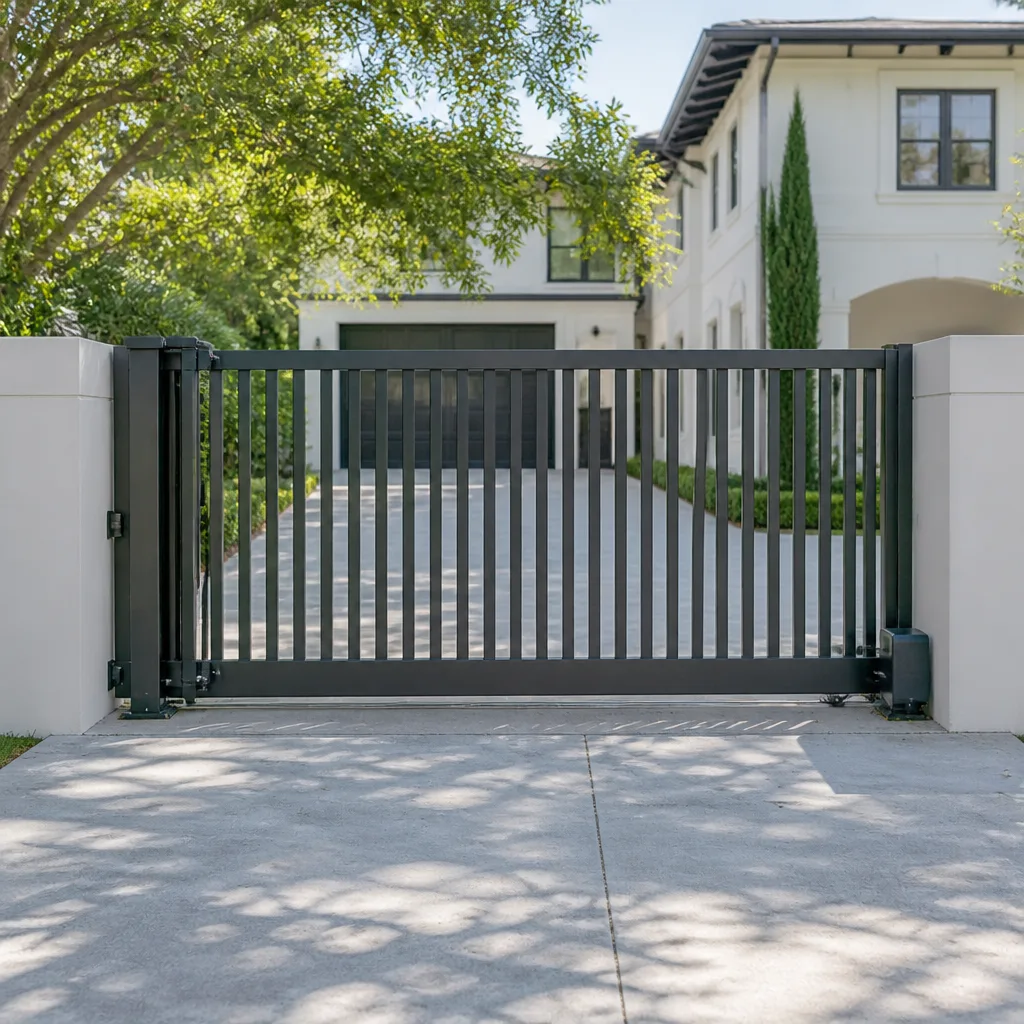 Sliding driveway gates
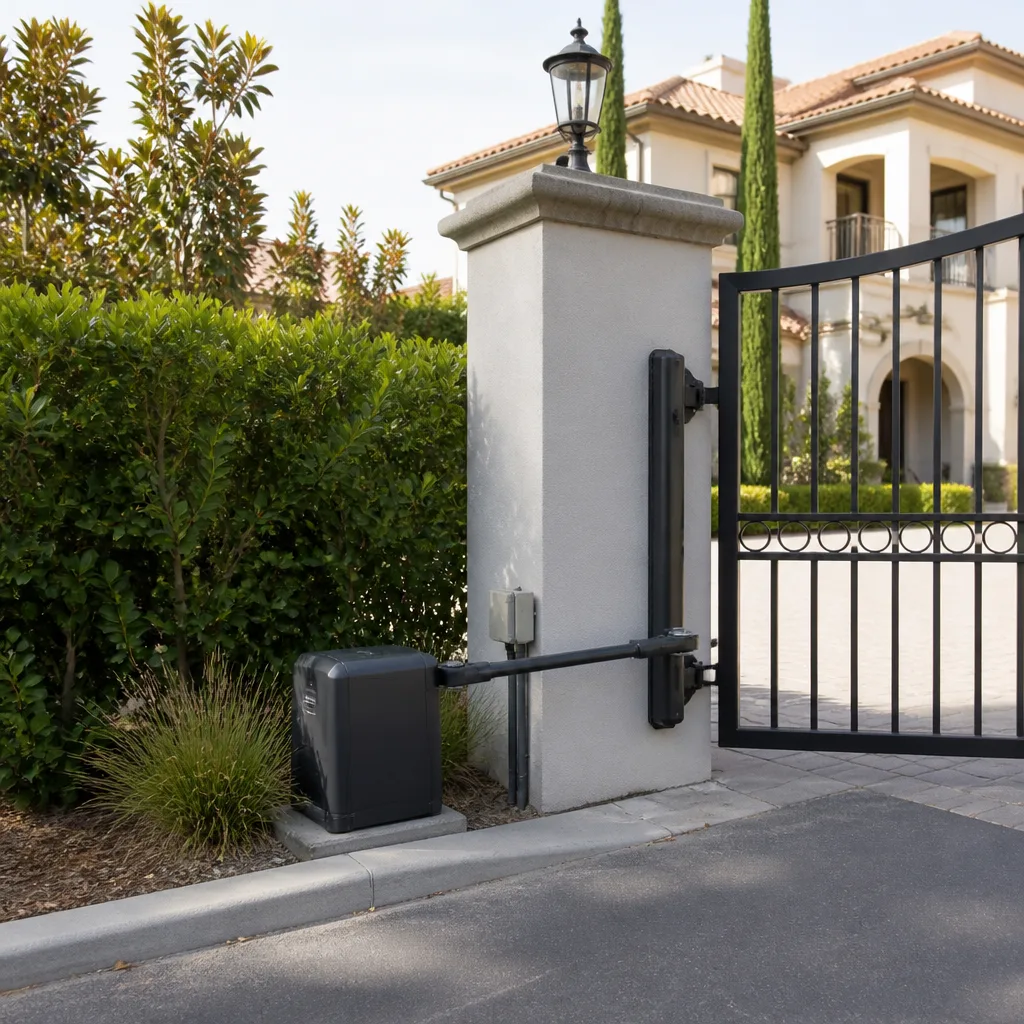 LiftMaster operators
Free on-site gate assessment - hinges, posts, and your LiftMaster or Nice gate operator checked before anything is quoted
The assessment is free and the quote is the invoice.
Get your free estimateGate Repair Maintenance Checklist for Antioch Homeowners
Lubricating a gate chain every six months sounds responsible. On a gate exposed to Antioch’s summer dust and the moisture swings that roll in each fall, that interval usually means you’re spreading fresh grease over grit that’s already grinding the links. The schedule that matters isn’t the one printed on a laminated card at the hardware store. It’s the one built around what actually degrades fastest on your gate type, your operator brand, and the conditions on your side of town. This guide lays out a checklist organized by what fails first in Antioch – drive type, footing stability, battery health, corrosion points, and the records that help a technician diagnose a problem instead of guessing at it.
Quick Answer
A useful gate maintenance checklist in Antioch is organized by gate type and operator, not by a single generic calendar. Roller chains on slide gates need cleaning before re-lubrication every few months in dusty season, rack-and-pinion drives need different treatment than chains, swing gate arms need joint inspection rather than chain lube, and solar or AC battery backups need load testing rather than voltage readings. Concrete footings, the five fastest-corroding contact points, and a simple maintenance log round out the schedule.
Styles & brands we work with
- Wrought iron
- Wood & steel frame
- Farm & ranch
- Sliding driveway gates
- LiftMaster operators
Table of Contents
- Why Generic Checklists Fail Antioch Gates
- Lubrication by Drive Type: Chains, Rack-and-Pinion, and Swing Arms
- Inspecting Concrete Post Footings for Early Heave
- Battery Backup Health: Why Voltage Lies and Load Testing Doesn’t
- The Five Fastest-Corroding Contact Points in Antioch
- Building a Maintenance Log That a Technician Can Use
- A Seasonal Walkthrough for Antioch Conditions
- Safety Edges, Loops, and Operator Checks
Why Generic Checklists Fail Antioch Gates
Most maintenance checklists are written for a climate that doesn’t exist here. They assume a stable, moderate environment where dust is minor and humidity is steady. Antioch doesn’t cooperate with that assumption. Summers dry the ground and load the air with dust that settles into every moving surface on a gate system, and the fall moisture swing pulls that grit into paste inside chain links and pivot joints. A gate that’s been through a full seasonal cycle without a targeted clean-and-relube is already behind, even if the calendar says the interval was met.
The second problem is gate type. A slide gate on a rack-and-pinion drive, a slide gate on a roller chain, and a swing gate on an articulated arm all fail in completely different ways. Treating them with the same checklist and the same single product wastes effort on parts that aren’t the failure risk and skips the ones that are. We’ve seen gates where the homeowner faithfully lubricated the chain for years while the footing underneath quietly heaved and threw the alignment off by a half inch.
Operator brand adds another layer. The nine brands we work with – LiftMaster, FAAC, BFT, Linear, Viking, Ghost Controls, DoorKing, Elite, and Mighty Mule – have different battery systems, different board protections, and different tolerances for dirty power. A maintenance schedule that works for a Mighty Mule residential arm may not apply to a DoorKing commercial operator running loop detectors on a shared entry. The checklist in this guide is built to be adapted, not laminated.
Lubrication by Drive Type: Chains, Rack-and-Pinion, and Swing Arms
The single biggest maintenance mistake on Antioch gates is applying the same lubricant, on the same interval, to every drive type. Each has different needs. Here’s the breakdown we work from on site.
Roller Chains (Slide Gates)
Roller chain needs cleaning before it gets lubricated, and in Antioch’s dust that means a wipe-down or brush-out is part of every lube pass, not a separate task. The correct lubricant is a chain-specific product that penetrates the rollers rather than sitting on top of them. Thick grease traps grit and accelerates wear. During the dusty season, plan on cleaning and re-lubricating more often than the generic six-month card suggests; a chain that’s been in service through summer will typically need attention before fall moisture arrives.
Rack-and-Pinion Drives (Slide Gates)
The rack is a steel gear strip along the gate’s bottom rail, and the pinion is the drive gear that rides it. The failure here isn’t usually the rack – it’s the pinion gear teeth collecting grit that eats the rack. Clean the rack with a stiff brush and inspect for worn or chipped teeth at every service. Lubrication should be light and applied to the pinion contact rather than the full length of the rack, which would collect dust. Alignment between pinion and rack matters more than lube on this drive type; a pinion set too tight shaves teeth no amount of lubrication will save.
Swing Gate Arms (Articulated Arm Operators)
A swing arm operator doesn’t have a chain or rack, so chain lube doesn’t apply. What matters is the arm’s pivot joints, the connection to the gate leaf, and the hinge points on the gate itself. Those joints need inspection for play, then targeted lubrication at the grease fittings or pivot pins per the operator’s specification. Ghost Controls and similar residential arm operators are usually straightforward to check, but any worn bushing at the pivot will translate into the operator working harder than it should and failing sooner.
- Chain: clean first, then chain-specific penetrating lubricant; frequent during dust.
- Rack-and-pinion: brush clean, inspect teeth, light lube at pinion contact.
- Swing arm: inspect pivot play, lubricate hinges and arm joints; no chain lube.
- All types: wipe excess after lubing so grit has nothing to stick to.
Inspecting Concrete Post Footings for Early Heave
Before dust and lubrication enter the picture, the concrete footing is the most important element to watch, and the one most homeowners never inspect. A gate that’s drifting out of alignment, dragging at one corner, or stopping short on the operator isn’t always an operator problem – often the post footing has moved. In Antioch’s dry-soil summers, water loss in the surrounding soil can cause subtle movement, and the fall moisture return can push things back. Over a few cycles, that’s enough to throw a gate leaf out of square.
What to look for on a visual inspection:
- Visible cracks radiating from the post base. Hairline cracks may be normal settling; cracks that widen between seasons are a signal.
- Gaps or voids between the concrete and the surrounding soil. Pull-back at the edges, especially on the side facing the sun, suggests the soil has shrunk away.
- Cracks in the post itself or between the post and the slab. If the post is pulling away from the concrete, the anchor has lost grip.
- Changes in gate travel. If the gate used to close flush and now needs a nudge, the footing has likely moved.
- Water pooling or runoff directed at the footing. Check downspouts, sprinkler heads, and drainage paths nearby.
We use a spirit level against the post on site to check plumb, and we compare it to the gate’s rails. If the post is out of plumb by more than a small amount, correcting the alignment through the operator alone won’t solve the underlying problem. Posts should sit on proper footing depth for the gate and soil, but heave can still happen over time, and when it does, the fix is usually to reset or reinforce, not to keep adjusting the operator.
Battery Backup Health: Why Voltage Lies and Load Testing Doesn’t
A healthy battery reading of 12.6 volts tells you very little. We’ve tested batteries reading full voltage that collapse the moment the operator pulls real current. Voltage is the resting state; what matters is the battery’s ability to deliver current under the load of an actual gate cycle. That’s why load testing is the only battery check worth doing at maintenance time. A multimeter resting reading is a starting point, not an answer.
Batteries in automated gate systems – whether solar-assisted or AC-charged – degrade quietly. The system may keep working during normal operation and only reveal the failure when the power drops. That’s the worst possible time to discover a dead backup. Here’s how a load test works in practice:
- Disconnect the charging source (solar panel or AC transformer) or isolate the battery.
- Attach a load tester or a known resistive load matched to the operator’s specification.
- Measure voltage under load. A battery that reads well at rest but sags under load is failing.
- Check the charging system separately. A good battery connected to a failed charger will drain.
- Record the reading in the maintenance log (see the log section below) so future tests have a baseline.
Solar batteries deserve extra attention in Antioch. The angle of the panel, dust accumulation on the panel surface, and shade from trees or fences all change how much charge the system receives through the year. A panel that worked well in spring may underperform through summer dust and shorter fall days. Check the panel’s surface and mounting as part of the same visit as the battery test.
The Five Fastest-Corroding Contact Points in Antioch
Corrosion on a gate system isn’t uniform. It clusters where moisture sits, where two metals touch, and where protective coatings break down. In Antioch, gate systems near the agricultural edges of town and in areas where tidal air moves inland get more of the conditions that accelerate corrosion. The five points we check first on any on-site diagnostic:
- The operator control board terminals. Small-gauge wiring at low voltage corrodes at the screw terminals first. A single green terminal can cause erratic opening or random shutdowns.
- The safety edge wiring at the gate edge cap. The rubber edge cap and its internal wiring are exposed to dust, moisture, and the mechanical action of every cycle. Wire connections at the cap end corrode from the inside.
- The loop detector housing and splices. Buried loop wire, the splice, and the detector enclosure at grade are constant moisture targets. A failing loop often shows as a gate that won’t close or opens unprompted.
- The gate hinge weld points and pivot pins. Hinge welds and pivot pins on swing gates take the most mechanical stress and collect the most debris. Corrosion here causes binding before the operator ever shows the symptom.
- The battery and charging terminals. Battery posts and the charger connections corrode from the charge current and moisture cycling. It’s the most frequently missed corrosion point on a maintenance visit.
Cleaning these points with a proper contact cleaner and resealing where appropriate is part of every maintenance pass we do. Corrosion caught early is a ten-minute fix. Corrosion caught late means replacing a control board, a loop, or a length of safety edge – jobs that don’t need to happen if the inspection is on schedule.
Building a Maintenance Log That a Technician Can Use
A maintenance log is the single most valuable thing a homeowner can keep, but only if it captures what a technician actually needs. Most logs people start are just a date and a check mark. That tells the next technician nothing. This is the format we recommend because it’s the one that lets us diagnose from history instead of starting from scratch.
Keep a simple notebook or spreadsheet with these columns for every entry:
- Date and time of service. Include the day, since failures cluster around specific cycles.
- What was done. Lubricated, cleaned, adjusted, replaced – be specific about which drive type and which component.
- Symptom observed. “Chain noisy,” “gate slow to close,” “operator beeped and stopped” – record the actual behavior, not your diagnosis.
- Battery test reading under load. The number, not just “good” or “weak.”
- Footing or alignment notes. Any change in how the gate travels or closes.
- Weather conditions at the time. “After a week of dry heat” or “day after heavy rain” are useful clues.
- Who did the work. Whether it was a self-maintenance pass or a professional visit.
The pattern that emerges over a couple of seasons is often more diagnostic than any single reading. A battery that sags more each test, a gate that drifts a little more each month, or a symptom that only appears in one season tells a technician which system to examine first. Without the log, that same problem looks like a random failure and the diagnostic starts from zero. When you do call for gate repair, having the log in hand saves time and points the technician to the right subsystem immediately.
A Seasonal Walkthrough for Antioch Conditions
Antioch’s year splits into a few recognizable phases for gate maintenance, and each one asks different things of the system. This isn’t a rigid schedule – it’s a framework. Match it to what your gate actually experiences, and adjust based on the log.
Late spring and summer (dry, dusty, hot)
This is the season that drives the most frequent lubrication attention. Dust collects on chain, on rack-and-pinion drives, and on hinge pivots. Clean and re-lube chains more often than you would in a moderate climate. Check the solar panel for dust accumulation. Watch for footing soil pulling away from the concrete at the sun-facing edge.
Fall (moisture return)
When the moisture returns, grit in the moving parts becomes paste. This is the season to do a full clean-and-relube on every lubricated surface rather than a top-up. It’s also when footing heave from the dry summer becomes most visible through the gate’s travel. Run the load test on the battery and inspect the panel angle.
Winter (mild, wet periods)
Winters here are mild, so there’s less risk of frozen mechanisms and more risk of prolonged moisture at the corrosion points. Check the control board terminals, safety edge splices, loop detector enclosure, and battery posts. This is also a good time to check the operator’s ground connections and confirm the safety edges are still reading correctly.
Spring (transition)
Pre-summer inspection window. Check the full drive system, confirm the operator cycles cleanly, and review the maintenance log for any pattern that started showing in the previous season. If a bearing or pivot shows play, spring is better than summer to address it.
Safety Edges, Loops, and Operator Checks
The parts of a gate that protect people – safety edges, photo eyes, and loop detectors – deserve their own pass at every maintenance interval. They’re the components most likely to fail silently, because a gate that opens and closes still looks functional even when its safety systems are dead. If you’re not comfortable inspecting the operator’s wiring and control board, stop there and call a technician. High-voltage connections at the operator, moving arms, and heavy gate leaves that can swing or slide with force are genuinely dangerous to work around without training.
What we check on a safety pass:
- Photo eyes: aligned, clean lenses, no obstruction. Break the beam manually to confirm the operator reverses or stops.
- Safety edges: test the reversal by pressing the edge while the gate is closing. If it doesn’t reverse, the edge or its wiring has failed.
- Loop detectors: confirm a vehicle triggers open and stops closing with a DoorKing or similar commercial operator, which typically has more sensitive loop logic than residential systems.
- Warning signs and lights: visible and functional.
- Manual release: the keyed manual release works and can be operated by an adult.
- Force limits: the operator’s sensitivity is set to stop the gate on reasonable resistance, not so stiff that it pushes through.
Electrical gate systems carry line voltage at the operator and control enclosure. A trained technician should handle anything beyond a visual check. The electric gate repair part of the job belongs to someone who knows what they’re looking at – a board that’s failing due to dirty power, a loop that’s failing due to corrosion at a splice, or a battery that’s failing because the charger no longer charges. Diagnose first, then fix.
Common Mistakes to Avoid
- Lubricating without cleaning first. Adding grease or oil on top of grit turns a chain or pinion into grinding paste. Clean before you lube, every time.
- Using one lubricant for every drive type. A swing arm doesn’t take chain lube. Rack-and-pinion doesn’t want heavy grease along the full rack. Match the product to the drive.
- Trusting a resting voltage reading as proof the battery is healthy. Test under load. A battery that reads well at rest can drop to failure the moment the operator pulls current.
- Skipping footing inspection. The footing is the foundation of alignment. If it’s moving, no operator adjustment will keep the gate working properly through the cycle.
- Assuming an intermittent fault is random. In Antioch, intermittent faults usually trace to a corroded terminal, a failing loop splice, or a safety edge with damaged wiring from grit. Get it diagnosed, not ignored.
- Running the operator without checking the manual release. If a power failure or operator fault leaves the gate stuck and the release has seized, you’re in a worse situation than the original problem.
- Stopping the log after the first few months. A log that fades out after three entries is worse than none, because the missing months hide the seasonal pattern that matters most.
See the difference
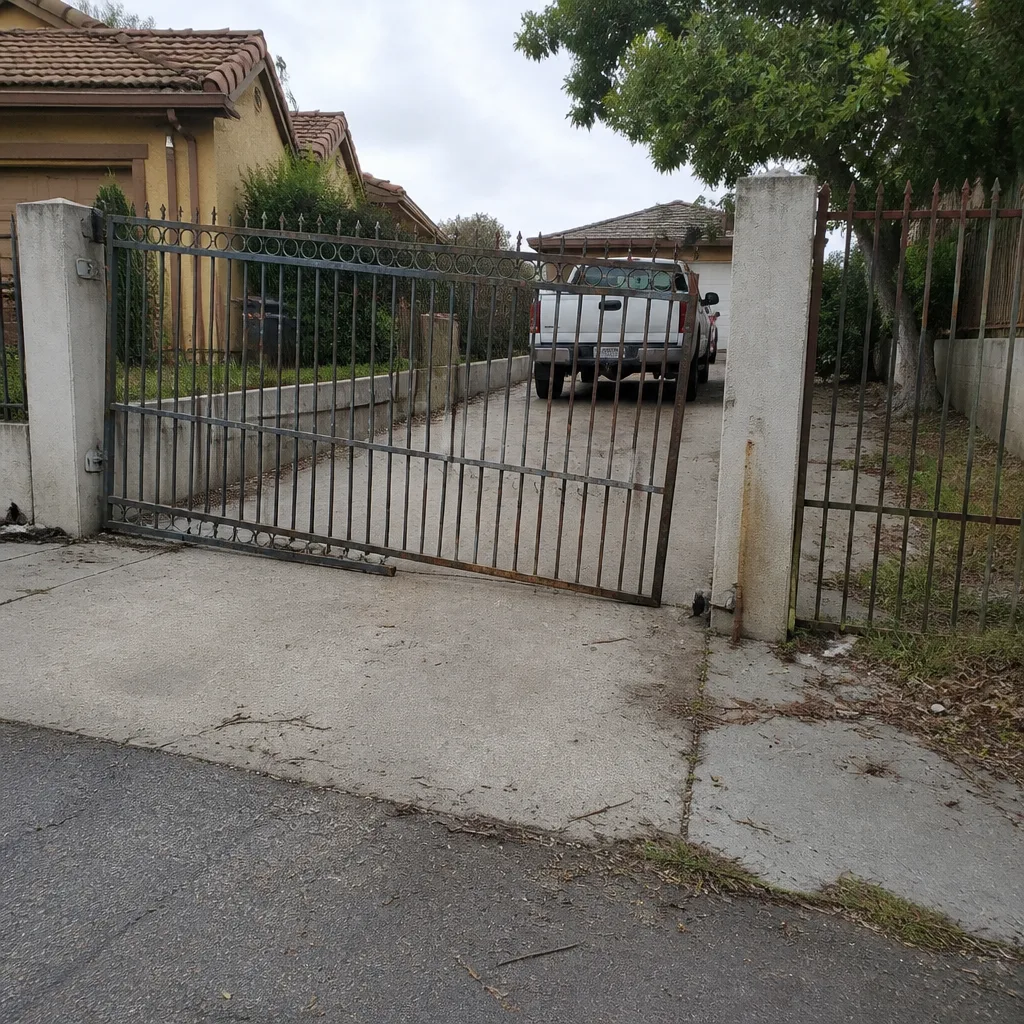 Before
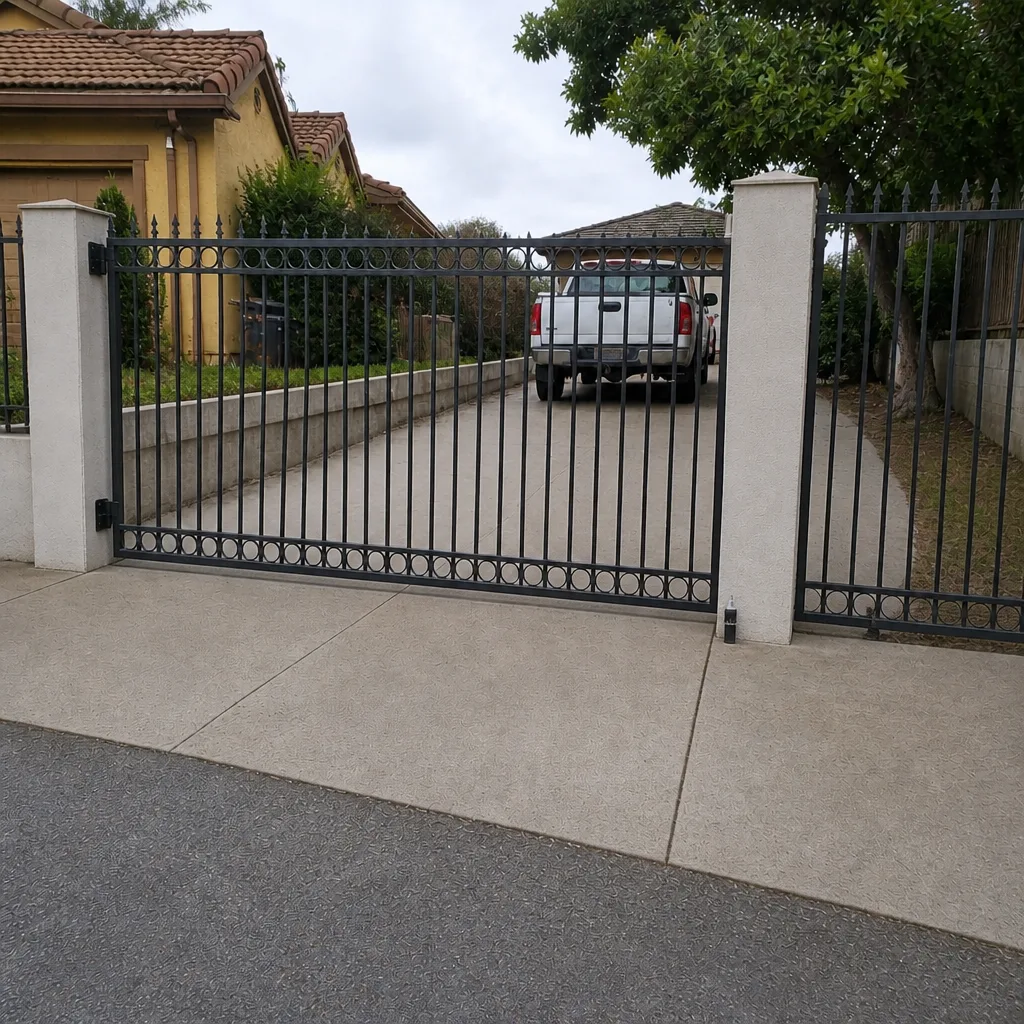 After
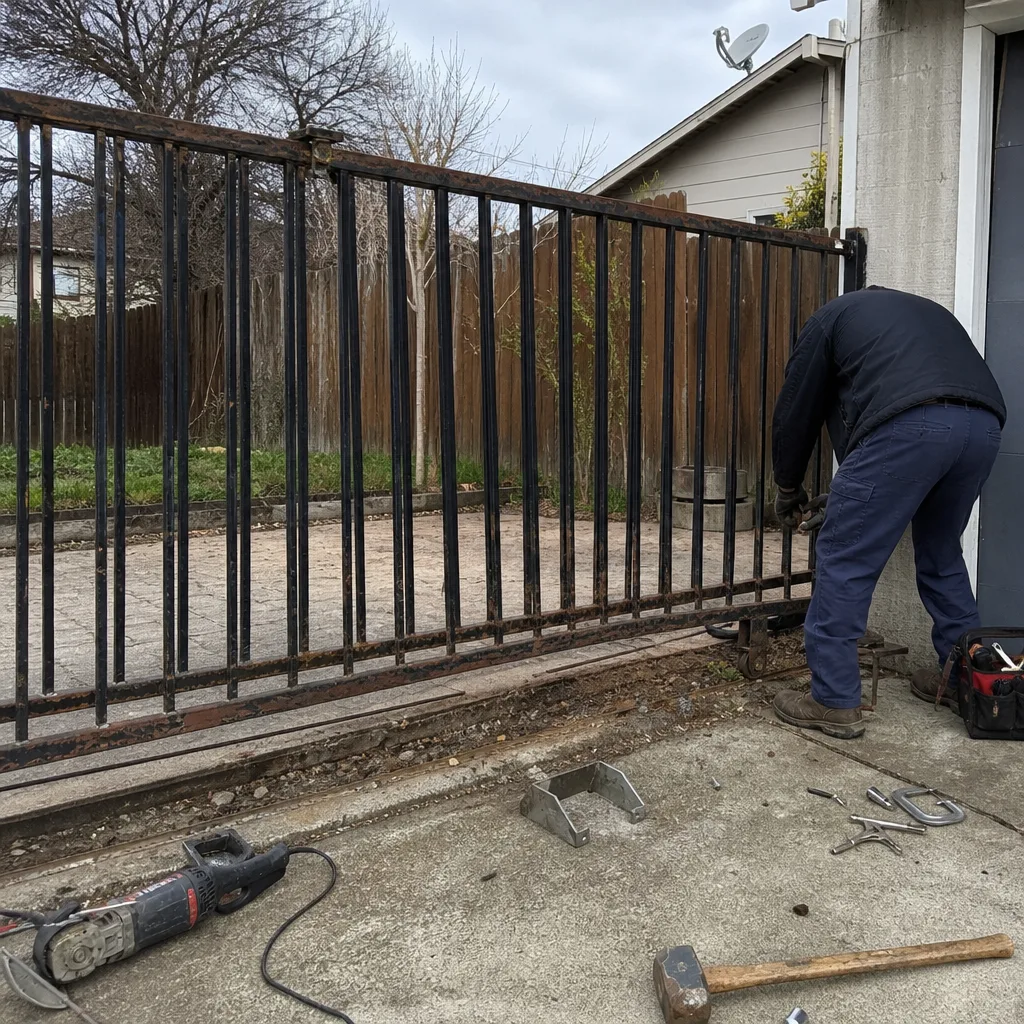 Before
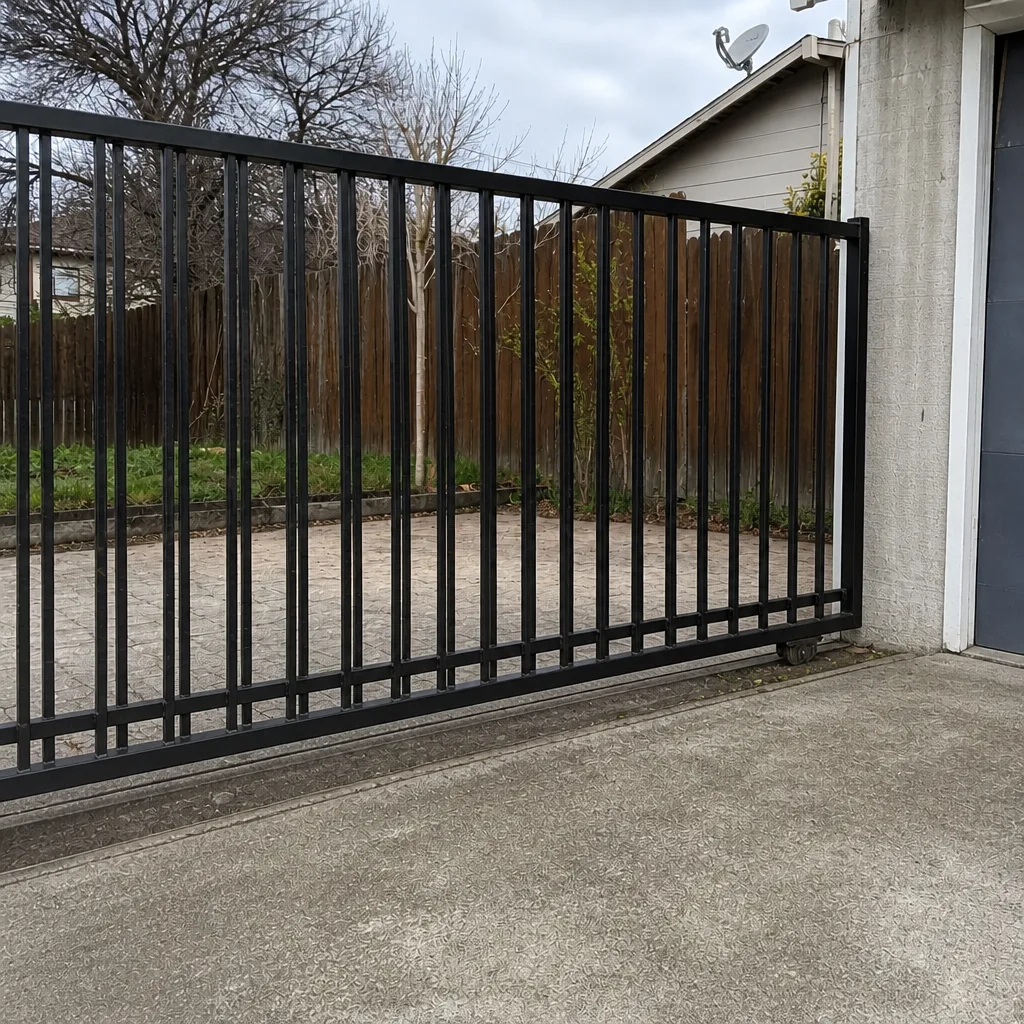 After
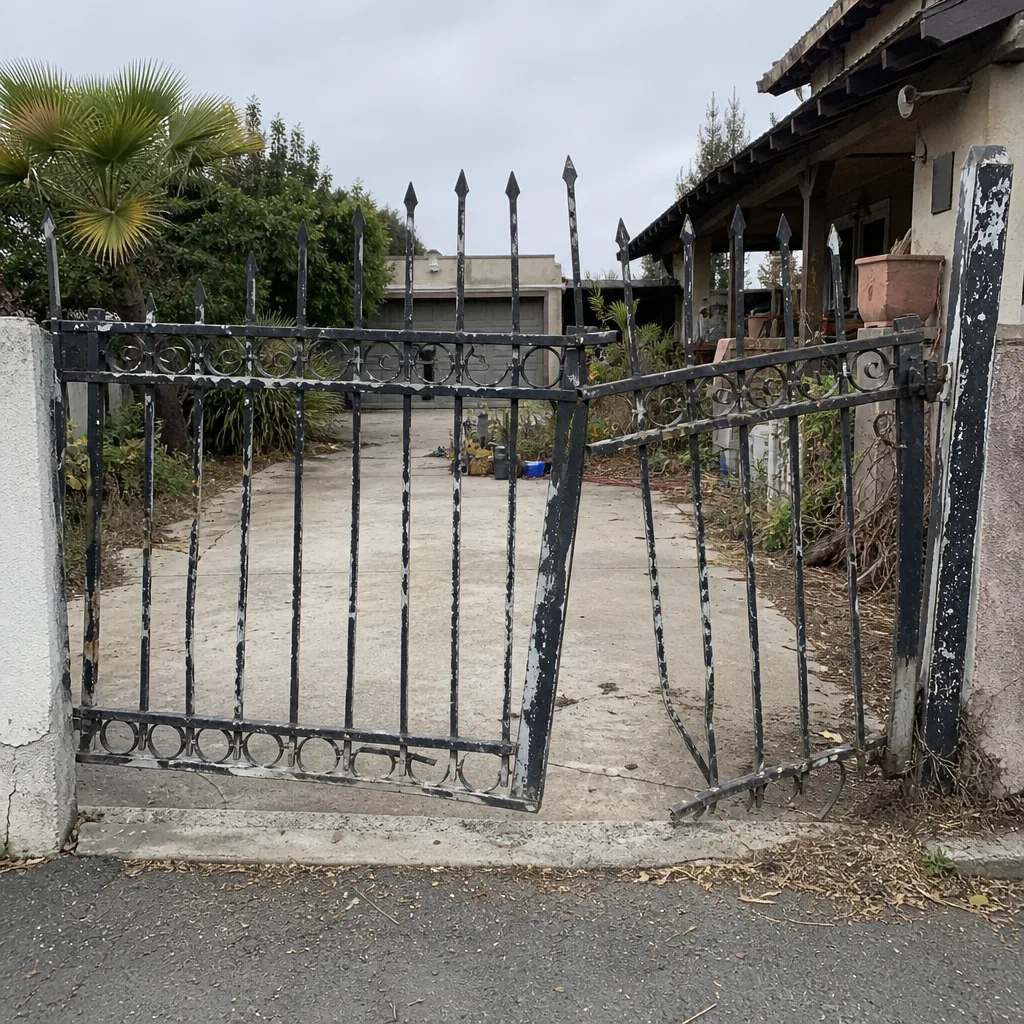 Before
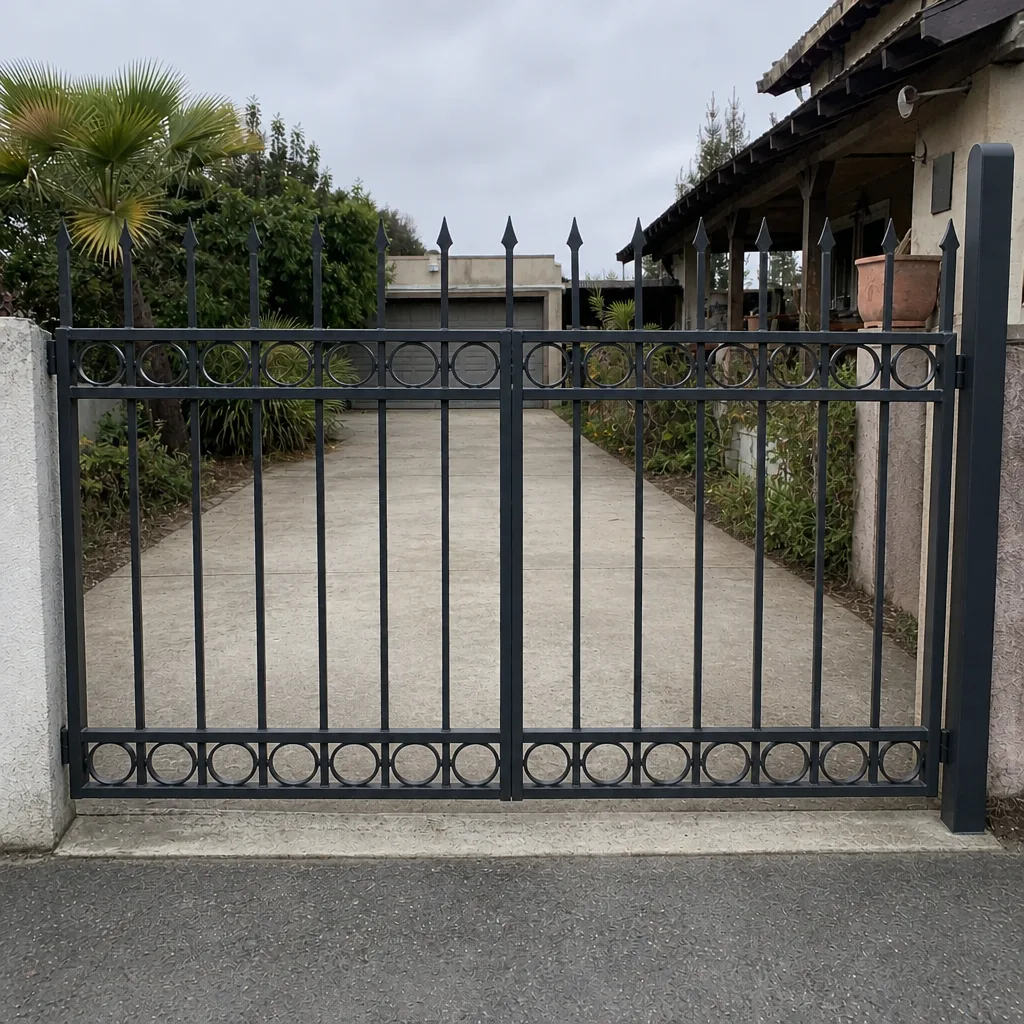 After
When to Call a Professional
Bring in a technician when the gate’s behavior has changed in a way that returns after a reset, when the operator beeps and stops with no obvious obstruction, or when you’ve cleaned and lubricated the gate and the symptom persists. Call when footing or alignment has shifted, when the safety edges or loops aren’t triggering reversal on test, or when the battery’s load test shows a steady decline across two visits. Call any time the problem involves the operator’s control board, the line-voltage connections at the enclosure, or the manual release won’t operate. A gate system carries heavy moving parts and electrical components, and these aren’t safe to diagnose without the right tools and training. Gate Repair Antioch offers free estimates in Antioch – call (855) 799-8573. We answer 24/7, with fast dispatch from 7am to 7pm, Sunday through Friday.
Frequently Asked Questions
Most Antioch gates need a full service once a year with an intermediate check during the dusty season, but the right interval depends on gate type and operator. Roller chains and rack-and-pinion drives in dusty areas need more frequent cleaning and lubrication than swing arms. Build the interval from your maintenance log rather than a fixed calendar.
Same-day repair is often possible on common failures like battery, safety edge, and operator adjustments. Call (855) 799-8573 for an exact timeline and a free estimate.
Manual gate repair covers hinges, welds, alignment, rollers, tracks, and structural issues on gates without automation. Electric gate repair covers the operator, motor, control board, loop detectors, safety sensors, and battery systems. Some issues sit at the boundary – a footing that’s moved can cause both mechanical binding and operator faults – so an accurate diagnosis often covers both sides.
Yes. Solar-powered operators like those from Ghost Controls and Mighty Mule need a specific set of checks: panel angle and dust, charger output, and battery load testing. Resting voltage readings are not enough to confirm a solar battery is healthy. We test under load and record the results.
We work on the equipment from LiftMaster, FAAC, BFT, Linear, Viking, Ghost Controls, DoorKing, Elite, and Mighty Mule, along with the mechanical components on gates that aren’t branded to a specific operator. We don’t need to sell you a new operator to work on yours – diagnose first, then fix.
Not usually, if the gate and operator are accessible without entering the property and you’ve told us about any pets, locked gates, or special access needs ahead of time. Call (855) 799-8573 to set up the visit and we’ll confirm access details when we schedule.
The Bottom Line
A gate maintenance checklist that works in Antioch is built around what fails first here, not what looks tidy on a generic card. Clean before you lubricate, and match the product to the drive type – chain, rack-and-pinion, or swing arm. Watch the footing for signs of movement, load test the battery instead of trusting a resting voltage, and inspect the five corrosion points where failures cluster near the agricultural and tidal corridors of town. Keep a log with dates, symptoms, and test readings; it turns a “random failure” into a pattern a technician can trace. When the gate’s behavior has changed and cleaning, lubricating, and resetting haven’t held, that’s the point to bring in a specialist. Gate Repair Antioch works across the brands you already have, and one call covers the diagnosis and the fix. Call (855) 799-8573 for a free estimate – we answer 24/7, with fast dispatch from 7am to 7pm, Sunday through Friday.
Written by the team at Gate Repair Antioch.