
Last updated November 16, 2026
 Wrought iron
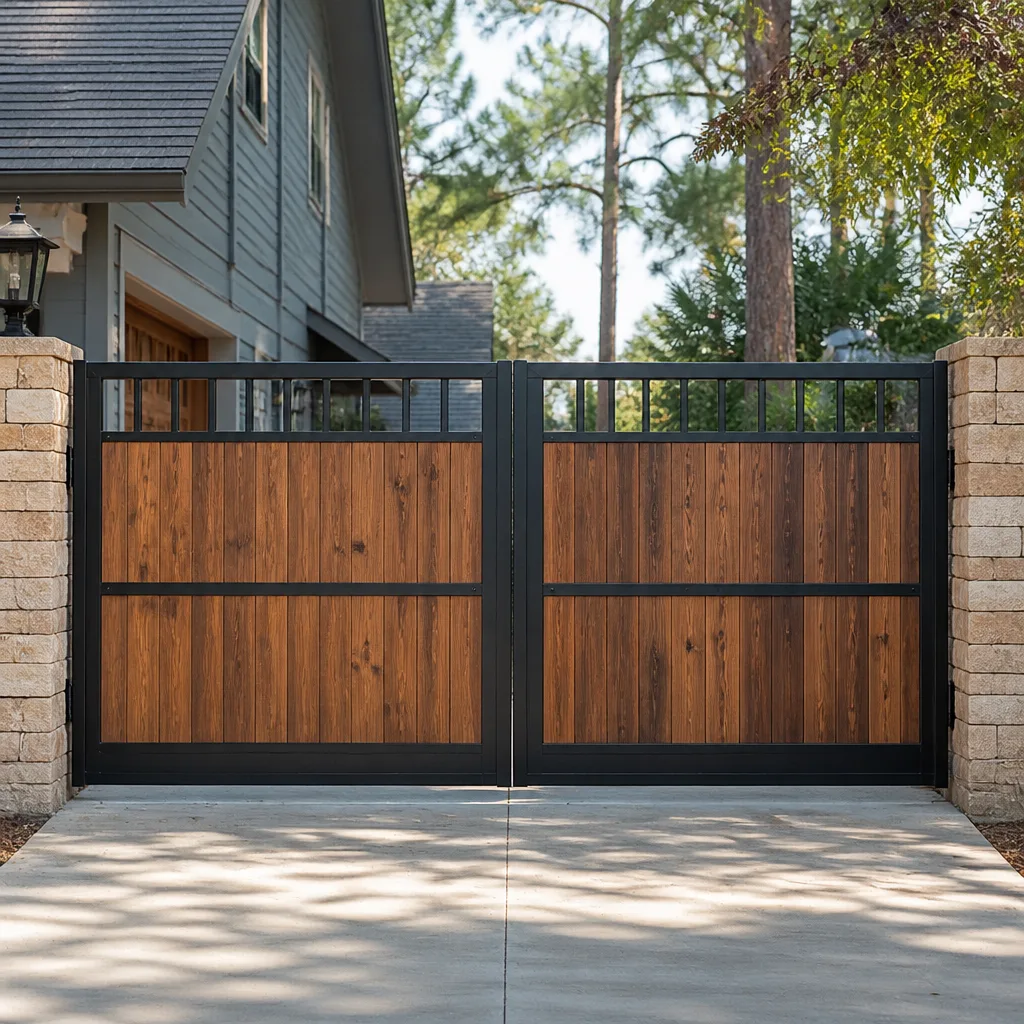 Wood & steel frame
 Farm & ranch
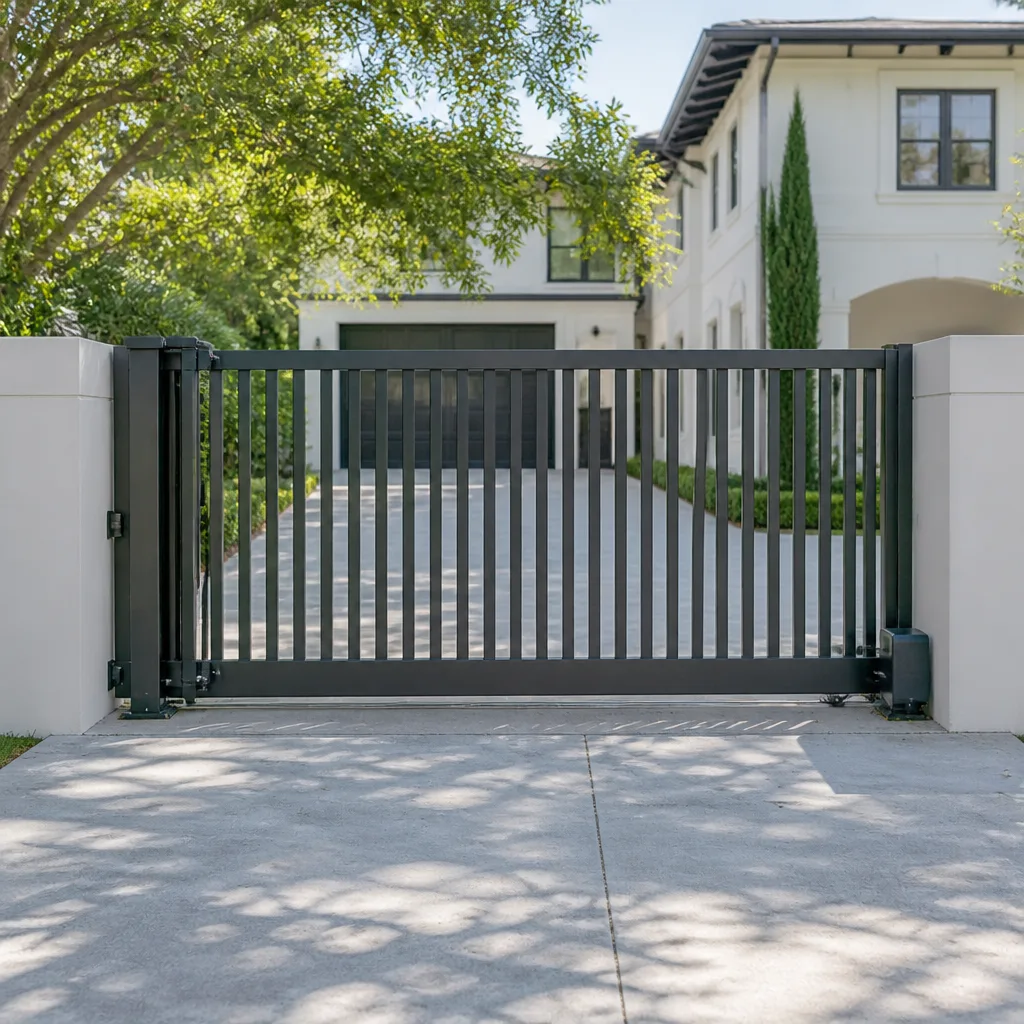 Sliding driveway gates
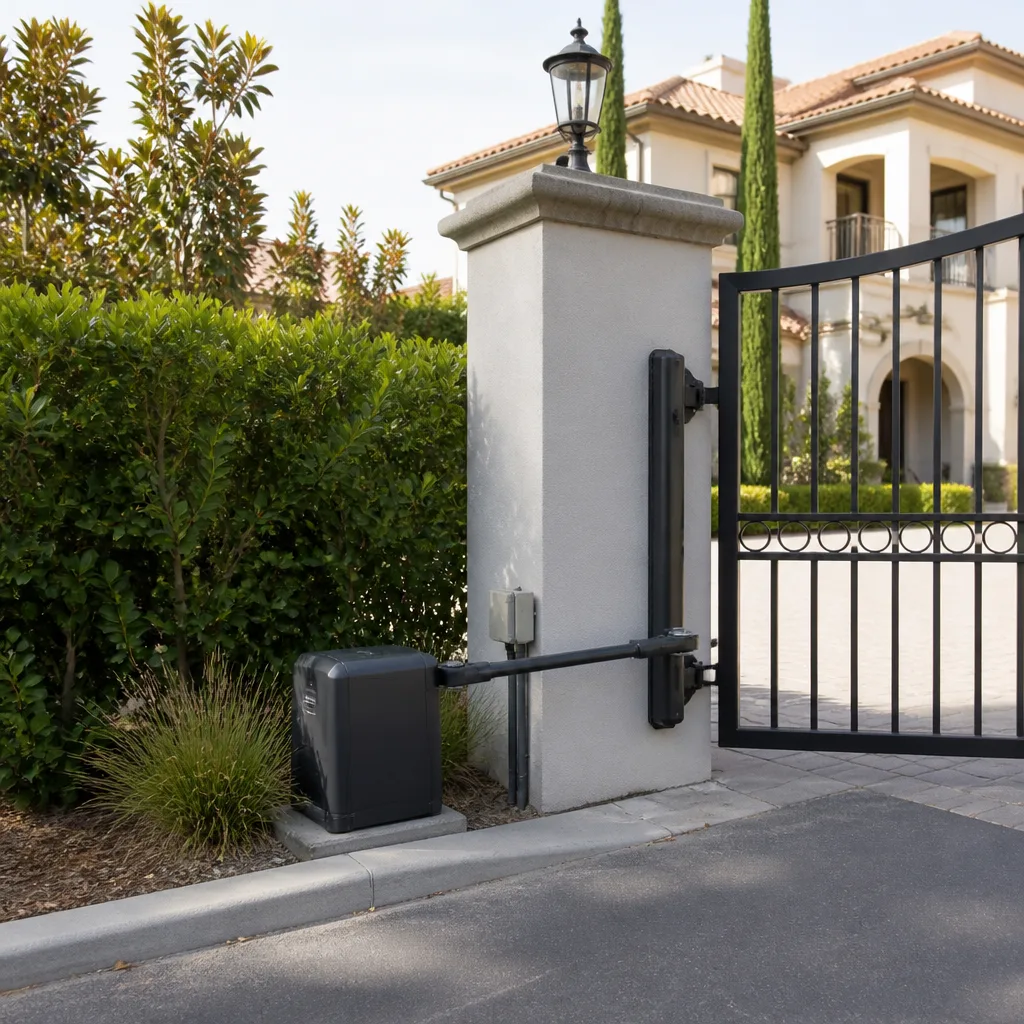 LiftMaster operators
Free on-site gate assessment - hinges, posts, and your LiftMaster or Nice gate operator checked before anything is quoted
The assessment is free and the quote is the invoice.
Get your free estimateSeasonal Gate Repair Care for Antioch: Year-Round Homeowner’s Guide
Most gate failures in Antioch aren’t born in the month they show up. The chain that jumps its sprocket in January was already compromised in September, when Delta wind pushed fine dust into lubricant and three months of daily cycling ground it into an abrasive paste. The operator that overheats in July was sized for a lighter gate load than the one it’s actually pulling, and the post that leans in April was sitting on soil that had been drying and swelling all winter. What follows maps gate care to Antioch’s real seasonal sequence instead of generic quarterly checkboxes, so you can get ahead of the failures that generate most emergency calls.
Quick Answer
In Antioch, the highest-risk gate seasons are fall (wind-blown dust contaminating chains and gears) and spring (soil movement throwing off travel limits and obstruction sensitivity). Protect the hardware with a proper fall cleaning and lubrication, then re-check limit switches and safety sensors each spring before the first heat wave. Summer heat stresses operator duty cycles and winter wet tests batteries and post drainage, so a four-season routine tied to Antioch weather beats any fixed calendar.
Styles & brands we work with
- Wrought iron
- Wood & steel frame
- Farm & ranch
- Sliding driveway gates
- LiftMaster operators
Table of Contents
- Summer: Heat, Duty Cycles, and Thermal Cutout
- Fall: The Delta Wind Dust Window
- Winter: Wet Season, Drainage, and Battery Backup
- Spring: Ground Movement and Travel Limits
- One-Page Seasonal Task Calendar for Antioch
- Which Operator Brands We See Most in Antioch
- Manual Gates Need a Season Check Too
- Common Mistakes to Avoid
- When to Call a Professional
- Frequently Asked Questions
- The Bottom Line
Summer: Heat, Duty Cycles, and Thermal Cutout
Antioch summers run long stretches above 95°F, and that’s the season when operator duty cycle becomes the deciding factor in whether a gate works reliably. Duty cycle is the percentage of an hour an operator is rated to run before it needs to cool. A residential slide gate on a driveway might see ten or fifteen cycles a day, well within a light-duty operator. A commercial gate at a business park in Antioch running fifty or sixty cycles in the heat can push a marginal operator past its rating.
Thermal cutout is the operator’s built-in protection: when it overheats, it shuts down and won’t respond until it cools. If your gate stops mid-cycle on a hot afternoon and works again an hour later, that’s the classic sign. It’s telling you something real about sizing.
What thermal cutout usually means:
- The operator is rated for lighter cycles than the gate is actually running.
- The gate’s mechanical resistance is higher than it should be (worn rollers, dry hinges, a dragging track), forcing the motor to work harder.
- The control board’s thermal sensor is degrading and needs a diagnostic.
- Ventilation around the operator housing is blocked or the housing is in direct afternoon sun.
Sustained heat also dries lubricant fast. Inspect chain and gear lube in midsummer and top off with the grade the operator’s manual specifies. Don’t over-lubricate; excess attracts dust, which sets up the fall problem. And keep vegetation away from the operator housing so heat can shed. If your gate works fine in spring and fails in August, the fix isn’t a bigger motor by default. A trained technician should diagnose first and check whether the gate’s mechanical drag is the culprit before recommending any replacement.
Fall: The Delta Wind Dust Window
The window from October through November is when Antioch gates take the most mechanical wear, and most of it happens quietly. Delta wind carries fine particulate across the region, and any exposed lubricant catches it. Chains, gear racks, roller tracks, and the moving parts inside a slide-gate operator all become dust traps. Once that grit is in place, every cycle grinds, and the eventual failure shows up months later when a chain jumps or an operator starts stalling.
Fall is the one season where an inspection pays for itself in avoided repair. Here’s how we approach it:
- Inspect and clean the chain and gear rack with a rag and a solvent-safe cleaner before re-lubricating.
- Check chain tension; a loose chain picks up vibration and dust faster than a properly tensioned one.
- Wipe down the operator housing and confirm the vents aren’t packed with dust.
- Look at rollers, guide wheels, and the track itself for grit buildup and flat spots.
- Test the safety sensors and check the photo-eye path for debris.
- Confirm the manual release works. If you ever need it in an outage, you want to know now, not when it matters.
This is also the season to look at vegetation. Fallen leaves and dry brush near the gate accumulate against tracks and sensor housings. Clearing a foot around the gate’s travel path cuts the amount of material that gets pulled into the mechanism. If your gate doesn’t get a fall service, the dust-heavy winter and spring cycles accelerate the wear.
Winter: Wet Season, Drainage, and Battery Backup
Antioch’s wet season runs December through February, and it stresses two things the most: post drainage and operator batteries. Post stability is largely determined by what’s under the concrete. A properly footed post sits on soil that drains, and the swell and shrink of wet-to-dry soil around it matters more than the concrete itself. When water pools at the base of a gate post, watch for:
- Tilt that shows up in wet months and doesn’t resolve when soil dries.
- Hairline cracks in the concrete widening over a single season.
- A gate that drags or binds only in wet weather.
- Water visibly standing within a foot of the post after rain.
If water pools consistently, drainage work may be called for before you spend money on gate hardware. A sagging or settling post translates directly into misaligned tracks and operator strain.
Battery backup is the other winter item. Most electric gate operators use a sealed lead-acid battery that loses capacity in cold-soaked conditions, so a battery that holds 30 minutes of backup in July may hold 10 in January. Test the backup under load, not just by voltage. If it fails, replace it with the battery type the operator manual specifies. Operators from brands like Mighty Mule and Ghost Controls commonly run on backup batteries and low-voltage solar assist, and a failed backup shows up as a gate that won’t open on a dark morning after the power blips.
Spring: Ground Movement and Travel Limits
March through May is ground movement season in Antioch. Soil swells and settles through the wet-to-dry transition, and a post that was set true in January can shift enough that the gate’s travel geometry changes. What that means for an electric gate is that the operator thinks it knows where “open” and “closed” are, but the physical gate has moved. Travel limits drift, and the safety edge or obstruction sensor may read resistance it didn’t read before.
Spring check, in order:
- Run the gate fully open and closed. Watch for any change in the position where it stops.
- Test obstruction sensitivity by placing a small object in the gate’s path. The gate should reverse or stop. If it pushes through, the sensitivity needs adjustment.
- Test the safety edges. On a slide gate the leading edge is the highest-risk pinch point; a failed edge sensor is a safety problem, not a convenience problem.
- Check limit switches for drift, especially on operators with mechanical cams.
- Inspect posts for any new lean. A post that moved this spring will move again next spring unless the footing is addressed.
- Re-torque hinges and hinge bolts on swing gates; cold weather loosens them quietly.
Spring is also the season when you want a technician to look at the system if you’ve had any intermittent fault over winter, before summer heat piles another stressor on top. A trained professional should handle limit adjustment and safety-edge testing on any electric gate. Wiring and high-torque mechanisms are genuinely dangerous to work on without training and the right test equipment.
One-Page Seasonal Task Calendar for Antioch
This is the seasonal schedule we recommend for any gate in Antioch, whether manual or automated. It’s tied to Antioch’s actual weather pattern, not to a generic quarterly form.
Summer (June – September)
- Inspect chain and gear lube; top off with manual-specified grade.
- Watch for thermal cutout: repeated mid-cycle shutdowns on hot afternoons point to undersized or overworked operator.
- Clear vegetation from around operator housing and vents.
- Run a cycle count estimate to confirm your operator’s duty rating still fits usage.
Fall (October – November) – highest-priority season
- Clean chain, gear rack, rollers, and track.
- Re-lubricate with the specified grade; wipe excess.
- Check and adjust chain tension.
- Clear fallen leaves and debris from the gate’s travel path.
- Test manual release and safety sensors.
Winter (December – February)
- Confirm post base drainage; correct any pooling.
- Load-test operator battery backup; replace if failing.
- Inspect concrete for new cracks.
- Check for any wet-weather-only drag or binding.
Spring (March – May)
- Test travel limits and obstruction sensitivity.
- Test safety edges.
- Re-torque hinges and hardware.
- Inspect posts for lean; address footing if any movement.
- Diagnose any intermittent faults carried over from winter.
Fitting inspections to that order does more for reliability than any single service. If fall dust is cleaned and re-lubricated, winter strain is lower and spring measurements are more accurate.
Which Operator Brands We See Most in Antioch
One question we hear a lot is whether a given brand can even be serviced here. It can. We work on the brand you already have, and the systems we see across Antioch include common residential brands and light commercial operators alike. LiftMaster is the most common automated residential operator, DoorKing shows up frequently on HOA and commercial entrances, Mighty Mule covers the DIY-installed end of the residential market, and Ghost Controls and Elite show up on newer installs. FAAC, BFT, Linear, and Viking round out what we regularly diagnose and repair.
What matters more than the brand name is whether the technician has seen the specific control board before. Two things fail most often across all brands:
- Control boards – thermal damage, moisture ingress, or simple age-related component failure. Diagnosis is what separates a board replacement from a wiring problem.
- Loop detectors and safety sensors – vehicle loops and photo-eyes both degrade over months of weather. A gate that opens at random usually has a failing loop or a misaligned sensor, not a broken operator.
If your brand isn’t on the shortlist above, call anyway. We diagnose across the full spectrum of gate automation rather than defaulting to one ecosystem. Our technicians have up to 11 years of experience across manual and automated gates, and the diagnostic approach is the same on any brand: understand the actual fault before recommending parts.
Manual Gates Need a Season Check Too
The seasonal calendar applies to manual gates as well, just with a narrower set of failure points. A manual swing gate’s main enemies are hinge wear, post movement, and sag, and all three are influenced by Antioch’s wet-dry cycle. Check:
- Hinges for wobble or binding. A hinge that needs a wrench to move is a hinge that’s about to fail.
- Sag at the latch side; a sagging gate drags on the ground and strains the frame.
- The latch bolt alignment to the receiving post, which drifts quietly after a wet season.
- Post base condition for any new lean.
Manual gates that get neglected tend to fail all at once: a hinge finally gives, and suddenly a gate that’s been “fine” needs full rebuilding. A single inspection between September and November catches most of that before it becomes a repair. For the automated side, electric gate repair covers a broader set of failure modes than most homeowners expect, from motors and control boards to loop detectors and safety sensors.
Common Mistakes to Avoid
- Skipping the fall clean-and-lube. It’s tempting when the gate seems fine, but that’s exactly when dust is quietly grinding the mechanism. Three months of contaminated cycling turns a cheap service into a chain or gear replacement.
- Over-lubricating to “protect” the gate. More grease holds more dust. Use the grade and amount the operator manual specifies, and wipe excess rather than layering it on in Antioch’s windy months.
- Resetting thermal cutouts as a workaround. If the gate keeps shutting itself off in summer heat, resetting it doesn’t solve the underlying duty-cycle mismatch or mechanical drag. Address the cause rather than the symptom.
- Ignoring wet-weather post drainage. Standing water at the base of a gate post is a spring movement problem waiting to happen. Deal with drainage before you spend money on gate adjustments.
- Never testing battery backup. A backup that fails silently is worse than no backup because you plan around it. Test under load each winter.
- Skipping the spring safety-edge and obstruction test. These are the parts that protect people, not just the gate. They deserve a full test once a year, especially after winter.
- Letting a small intermittent fault ride. A gate that occasionally sticks or reverses on its own is telling you something. Get it diagnosed before it hard-fails.
When to Call a Professional
Seasonal care handles most routine wear. There are some situations where a trained technician should be doing the work, and it’s worth being clear about them. Any adjustment to control boards, high-voltage wiring, or safety sensor logic on an electric gate involves electrical hazard and serious injury risk. Post footing work and structural gate repairs need someone who can assess the load and install correctly.
Call in the following cases:
- The gate stops mid-cycle and doesn’t restart on its own.
- A gate reverses at random or opens on its own.
- A safety edge or obstruction sensor isn’t tripping when tested.
- A post shows lean or movement after the wet season.
- Battery backup has failed or won’t hold a load.
- Any fault persists after your seasonal inspection.
Gate Repair Antioch offers free estimates in Antioch. Call (855) 799-8573. We answer 24/7. Fast dispatch from 7am to 7pm, Sunday through Friday.
Frequently Asked Questions
The fall cleaning and re-lubrication of chains, gear racks, and rollers. Delta wind carries fine particulate from October through November, and cleaning the mechanism then protects it through winter and spring. If you do only one task a year, do that one.
That’s thermal cutout, the operator’s built-in overheating protection. It usually means the operator’s duty rating is below what the gate is actually pulling, either from too much traffic or from mechanical drag the gate shouldn’t have. A technician can measure which one it is. Call (855) 799-8573 for an exact quote; estimates are free.
Wet-weather-only drag points to post movement, drainage problems, or roller and track contamination. The wet season swells the soil, and that movement shows up in the gate’s travel. A spring inspection catches it before the gate compounds the problem.
Load-test it, don’t just check voltage. A battery that measures full charge can still fail under a real load test, especially in winter when cold reduces capacity. If it drops significantly under load, replace it with the type the manual specifies.
Yes. Spring is when soil movement is most active in Antioch, and the gate’s open and closed positions can drift after winter. Testing limits, obstruction sensitivity, and safety edges in March through May catches drift before it causes a hard failure.
We service nine major brands, including LiftMaster, FAAC, BFT, Linear, Viking, Ghost Controls, DoorKing, Elite, and Mighty Mule. If your brand isn’t listed, call anyway. We diagnose across the full spectrum of gate automation. Our technicians have up to 11 years of experience. Call (855) 799-8573 for an exact quote; estimates are free.
The Bottom Line
Gate failures in Antioch follow the seasons more than most homeowners expect. Fall dust sets up winter strain. Winter wetness sets up spring movement. Spring misalignment shows up as summer thermal cutout. Break that chain with a fall clean-and-lube, a winter battery and drainage check, and a spring limits and safety test, and you’ll head off most of what would otherwise become an emergency call. For anything electrical, safety-related, or structural, bring in a trained technician. The full range of work we take on lives under gate repair, from manual hinge-and-weld jobs to full operator diagnosis, and if you’re just starting to research options in the East Bay, the Gate Repair Antioch homepage outlines the core services and lets you reach us quickly.
Contact Us for a Free Estimate
If your gate has been sitting through a season without a check, now is the right time to change that. Whether you’re dealing with a failing operator, an intermittent sensor fault, or a post that moved after the wet season, we can diagnose it and set a clear plan. Call (855) 799-8573 for a free estimate. The price is quoted and agreed before any work starts. We answer 24/7. Fast dispatch from 7am to 7pm, Sunday through Friday. Still weighing up whether to repair or replace? Call us today and we’ll give it to you straight, on-site in Antioch, with a written estimate you can hold us to.
Written by the team at Gate Repair Antioch.
See the difference
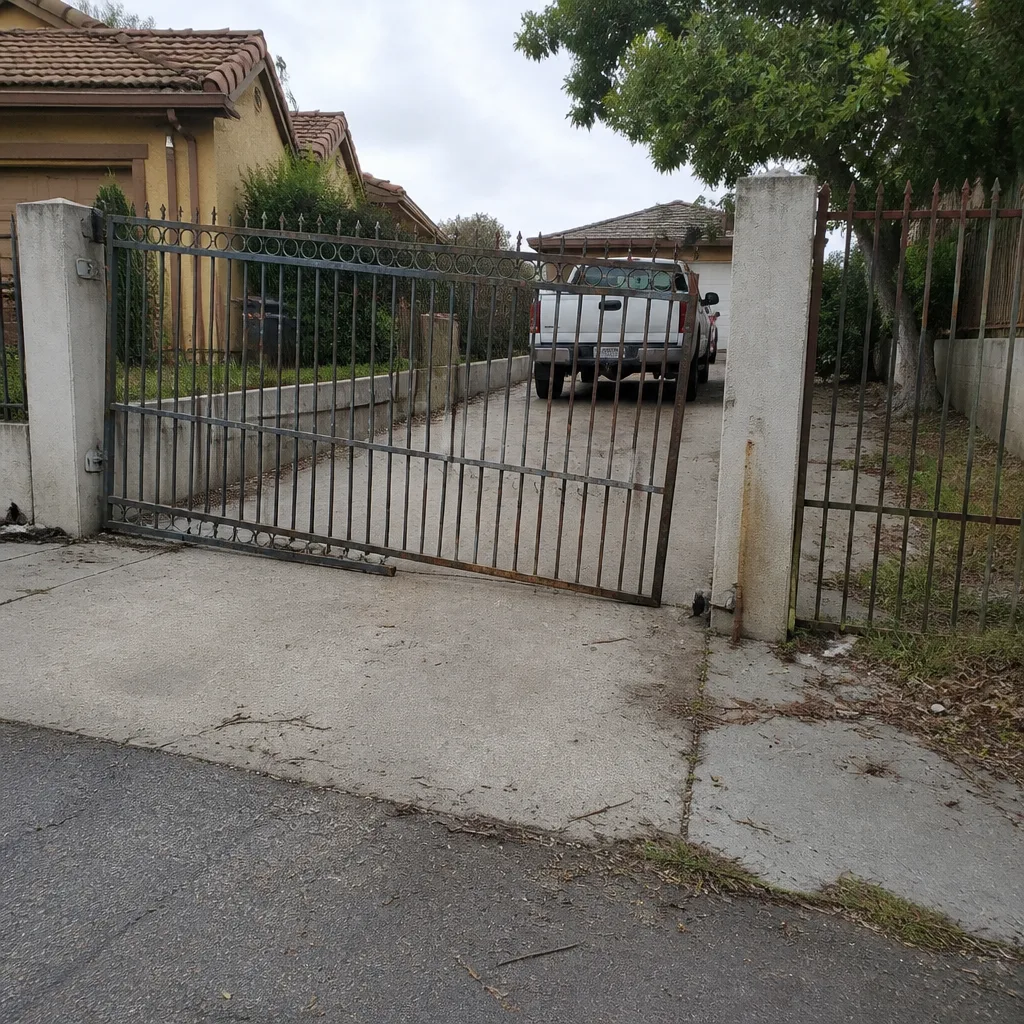 Before
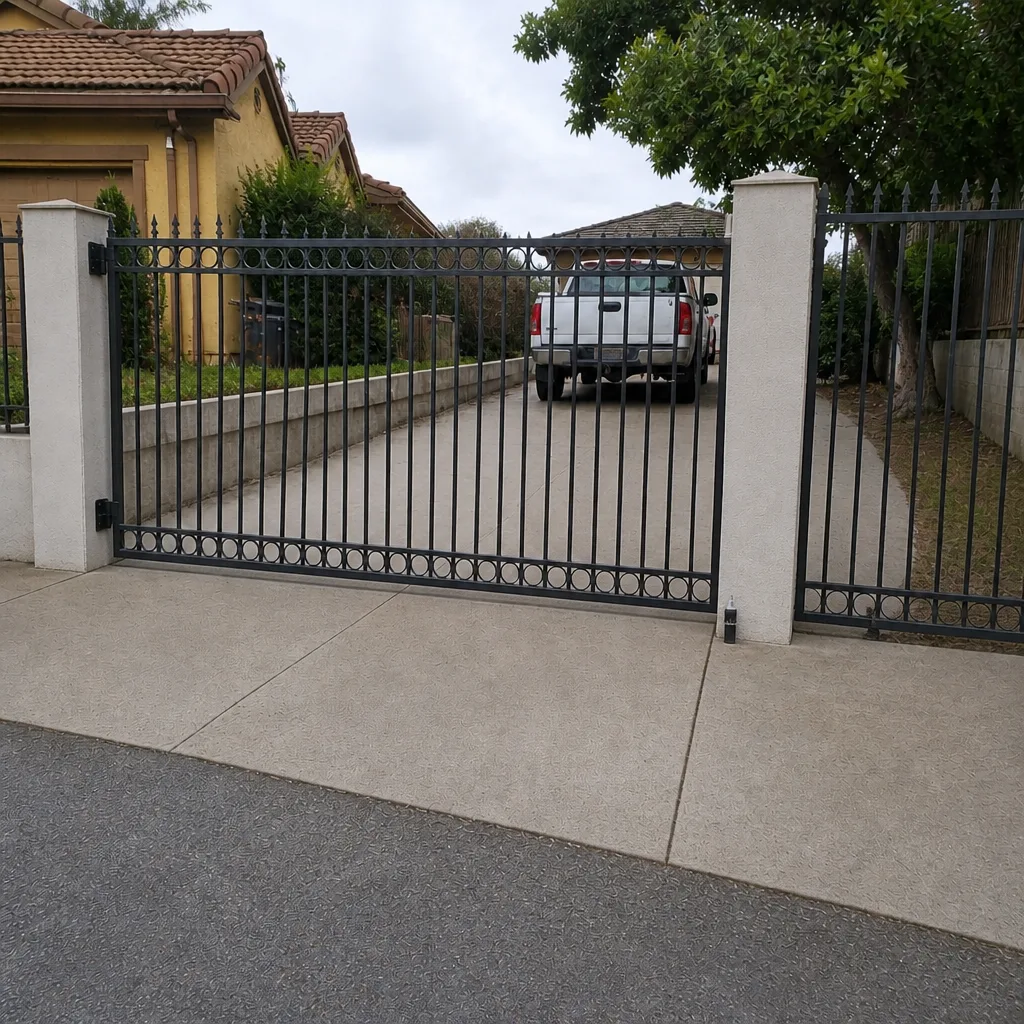 After
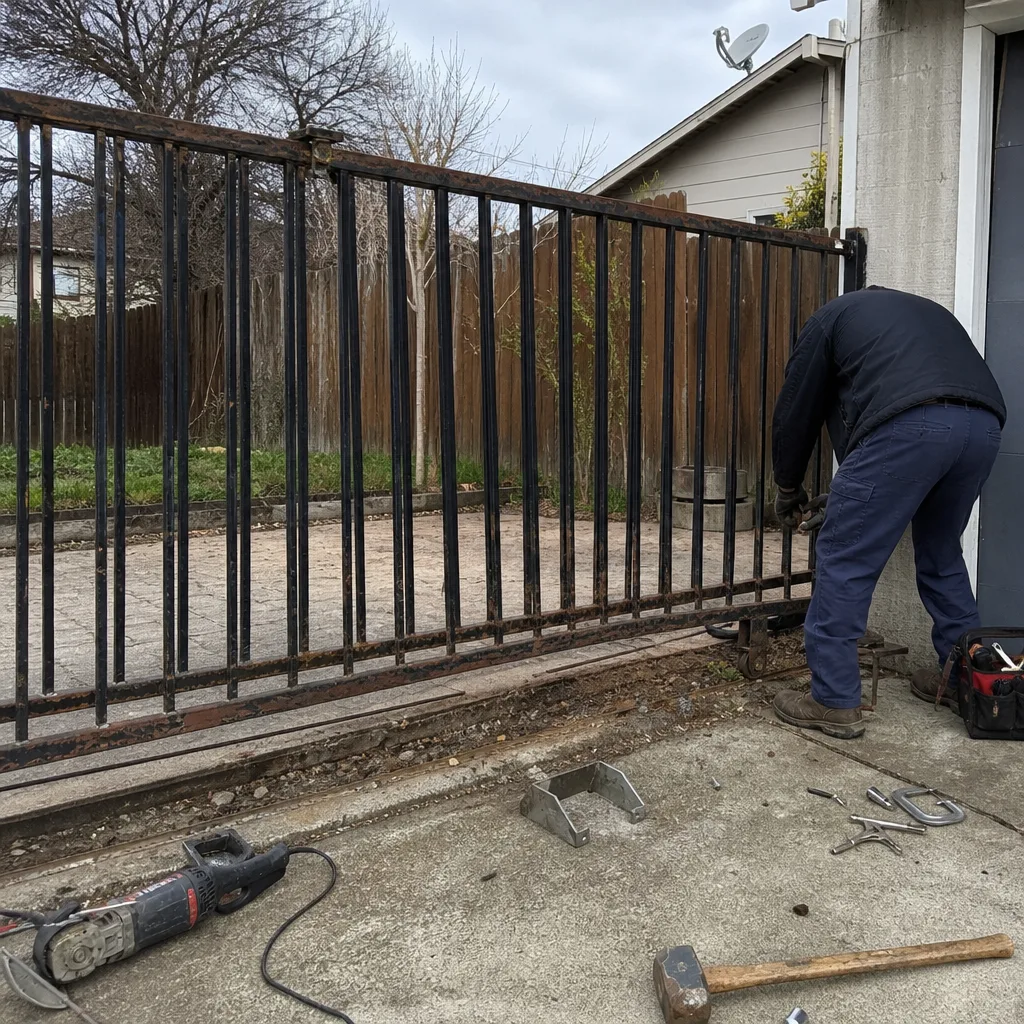 Before
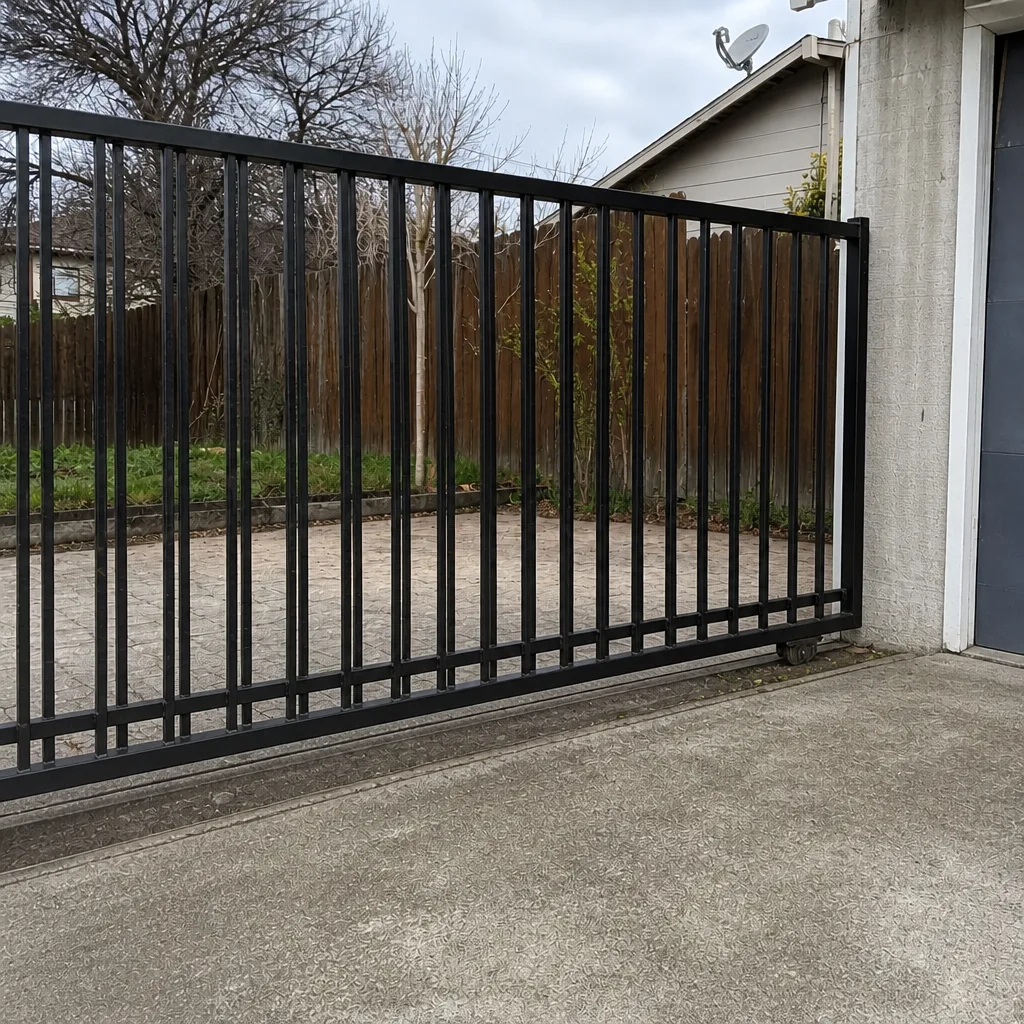 After
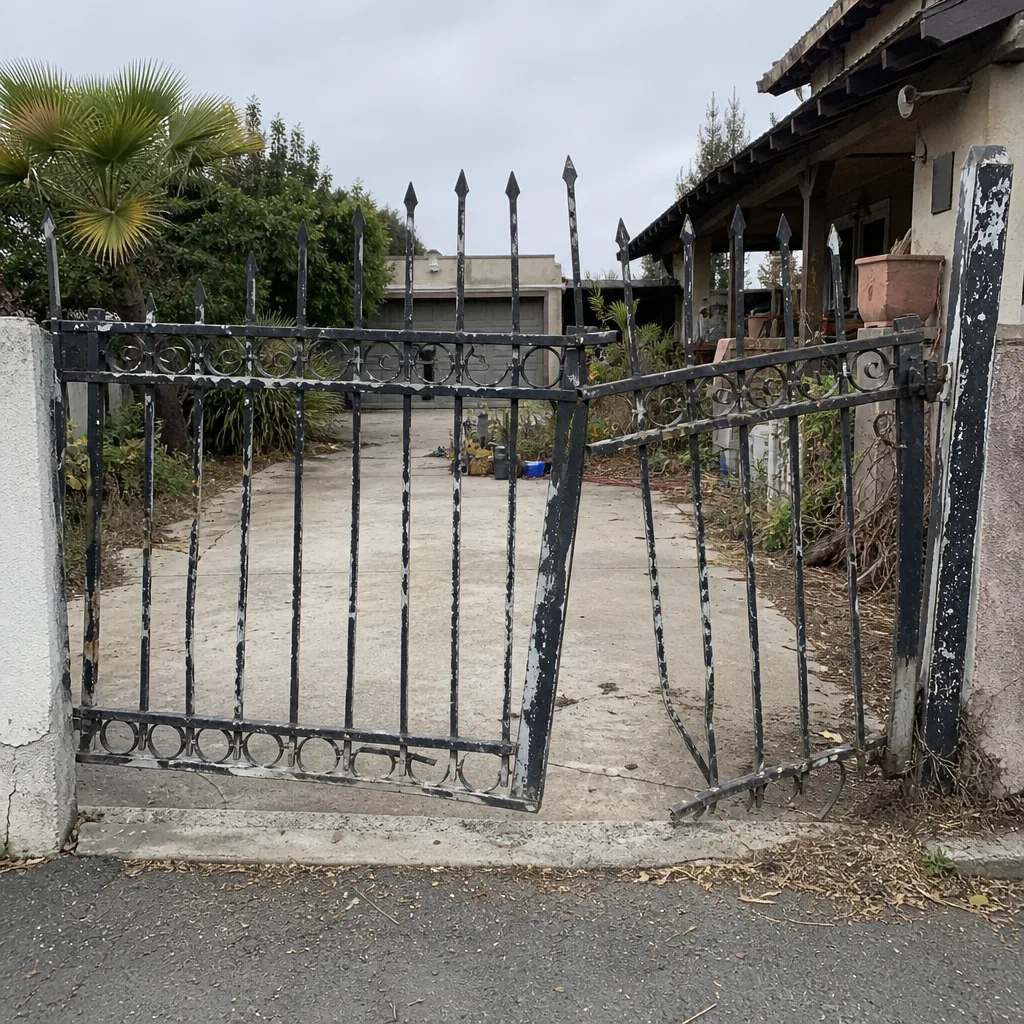 Before
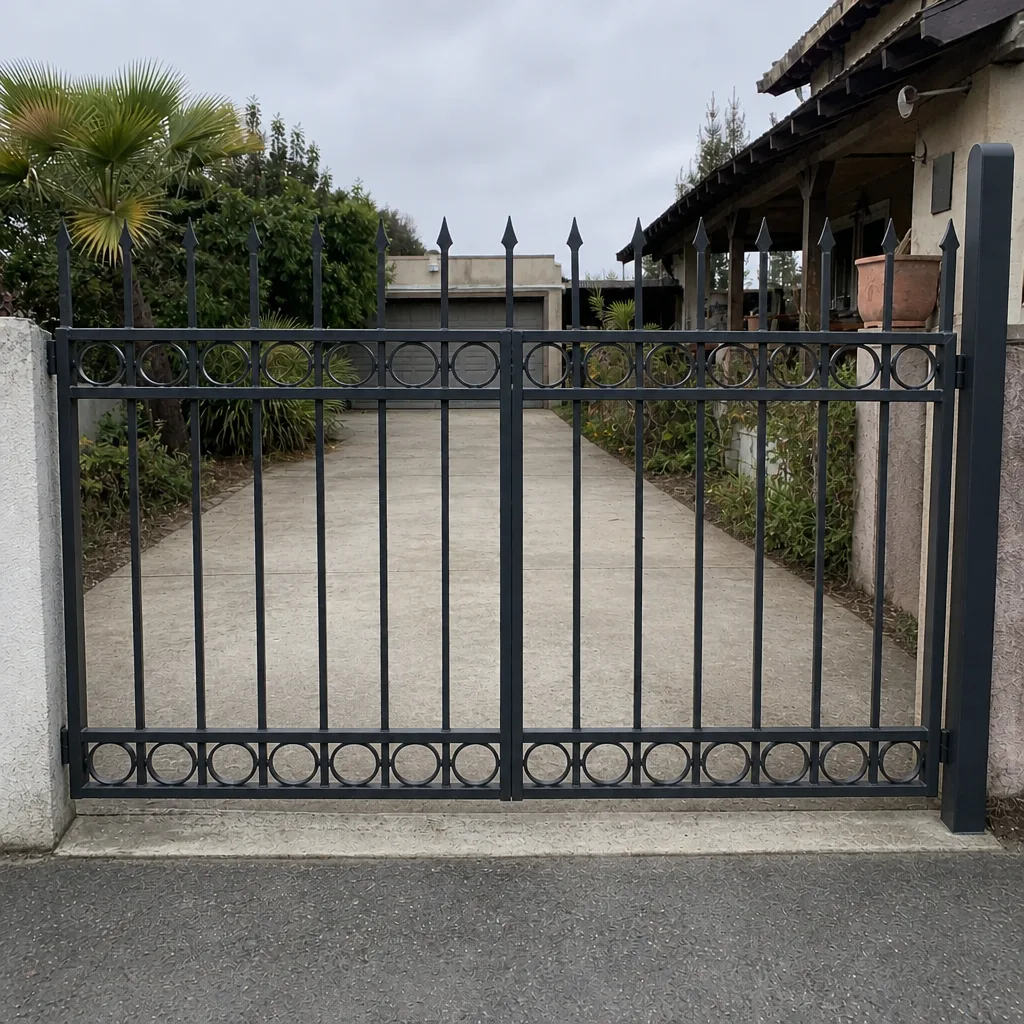 After