
Last updated November 16, 2026
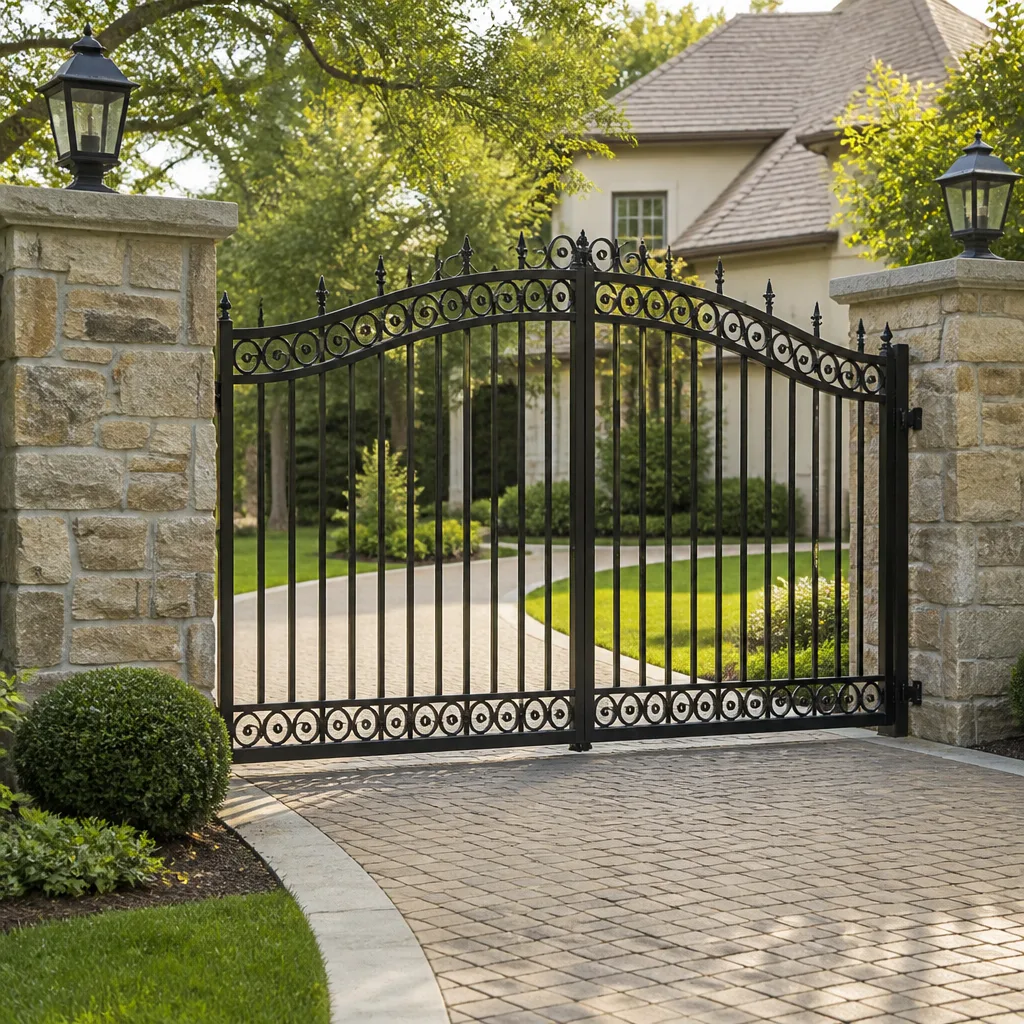 Wrought iron
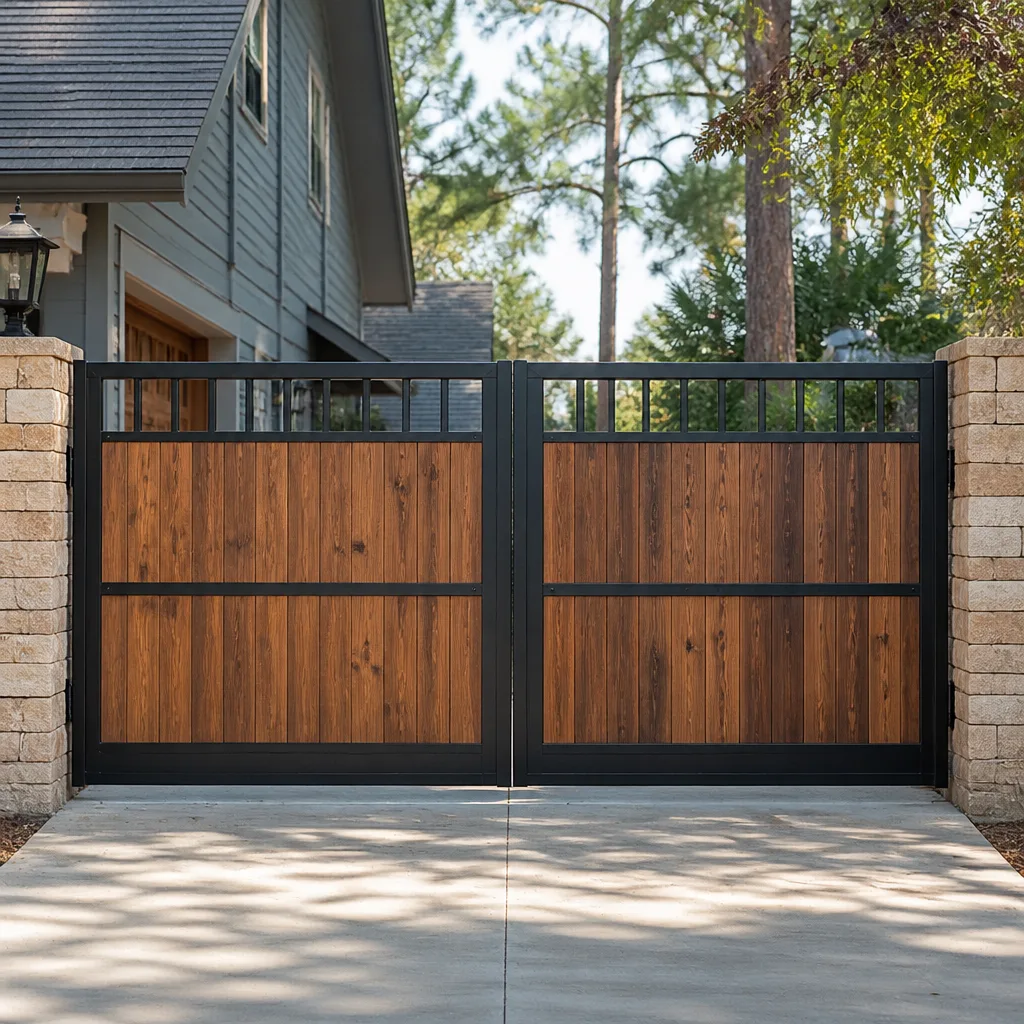 Wood & steel frame
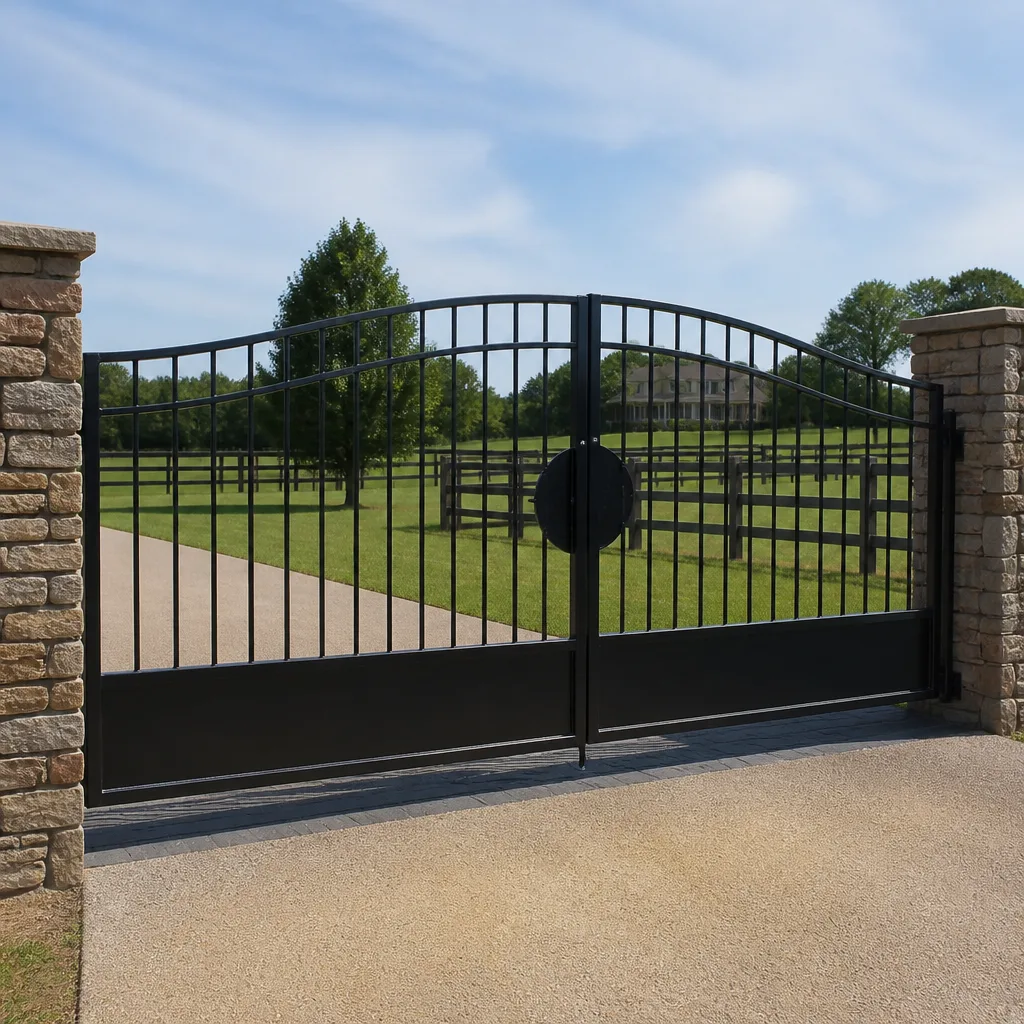 Farm & ranch
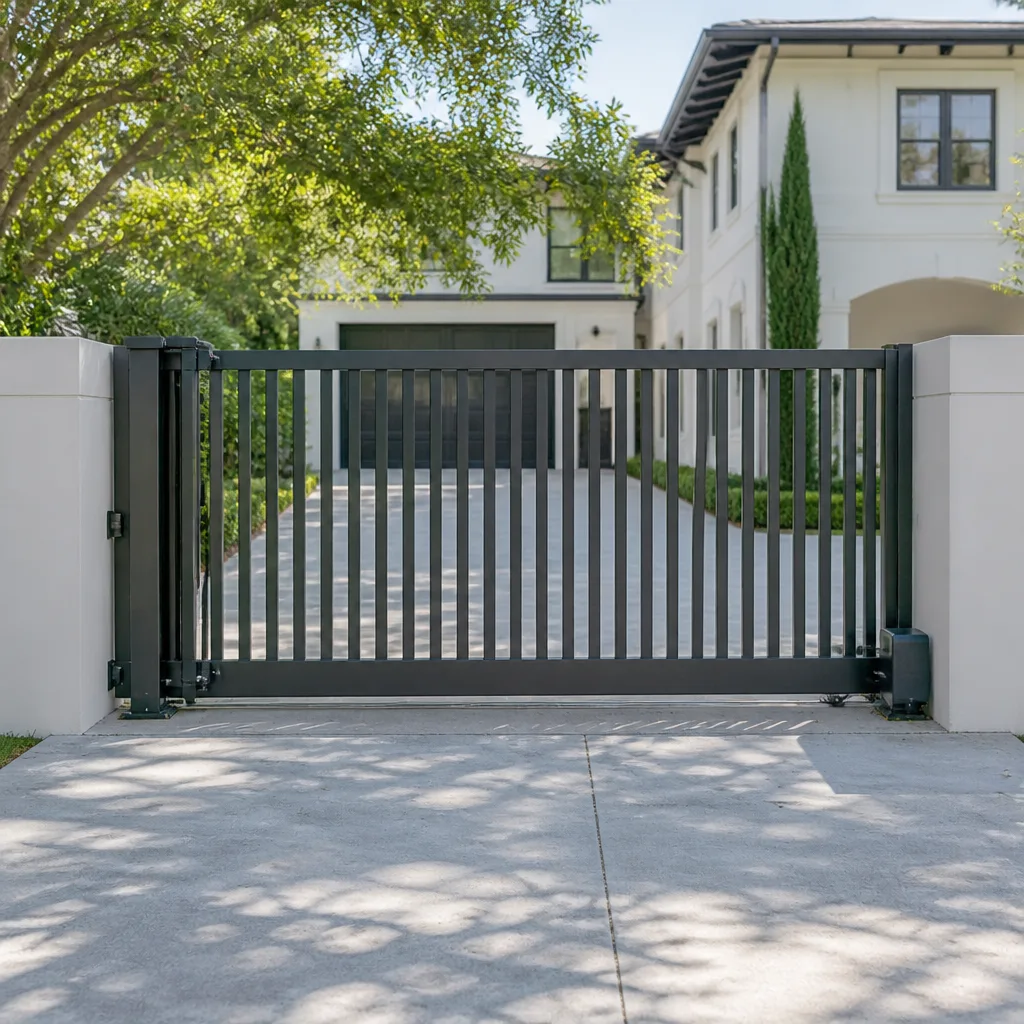 Sliding driveway gates
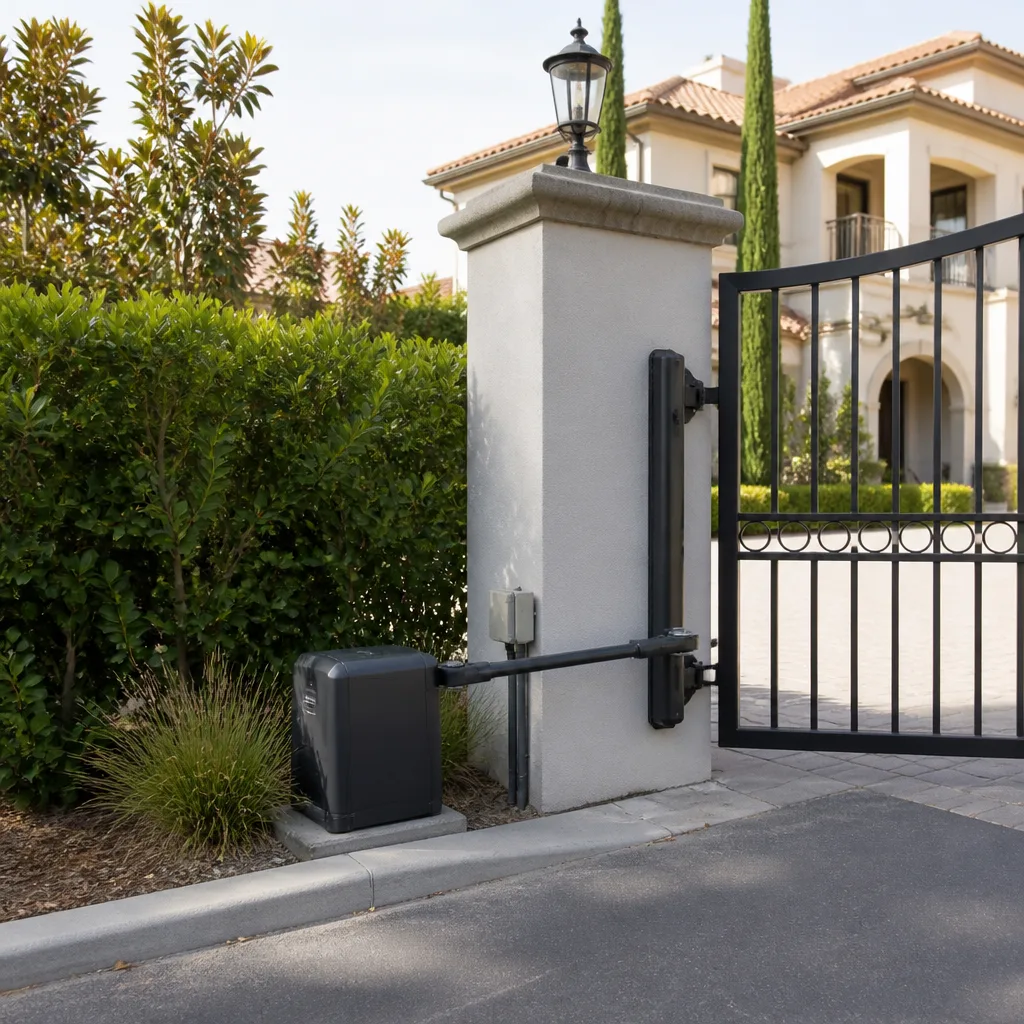 LiftMaster operators
Free on-site gate assessment - hinges, posts, and your LiftMaster or Nice gate operator checked before anything is quoted
The assessment is free and the quote is the invoice.
Get your free estimateThe Complete Guide to Gate Repair in Antioch
Most gate calls we diagnose in Antioch that get labeled “operator failure” are actually footing or hinge problems that have been quietly wearing out the motor for months. The motor is simply the last part to give out. Homeowners replace it, the new one fails too, and nobody looks down at the ground where the real problem lives. This guide maps the failure modes we see across Antioch to their actual causes and the repair path that ends the cycle. You’ll learn how the Delta breeze affects specific hardware, how to tell a repair from a footing problem, what each major operator brand tends to do when it fails, and when to repair versus replace.
Quick Answer
Gate repair in Antioch usually means one of three things: a mechanical problem (hinges, latches, alignment, post footings), an electric problem (motor, control board, loop detector, safety sensors), or a full system that’s reached the end of its economic life. Diagnosing which one you have before spending money is the whole game. A trained technician can tell you in a single on-site visit, and that visit typically costs nothing because the estimate is free.
Styles & brands we work with
- Wrought iron
- Wood & steel frame
- Farm & ranch
- Sliding driveway gates
- LiftMaster operators
Table of Contents
- Why Antioch Gates Fail Differently Than Inland Contra Costa Gates
- Repair Problem or Footing Problem? How to Tell the Difference
- Brand-by-Brand Failure Patterns in Antioch Subdivisions
- Wrought Iron on Antioch’s Sloped Lots: A Different Set of Alignment Problems
- What Electric Gate Repair Actually Involves
- The Decision Tree: Repair, Partial Replacement, or Full Replacement
- New Gate Installation: What a Complete Job Covers
- Keeping a Gate in Service Between Repairs
Why Antioch Gates Fail Differently Than Inland Contra Costa Gates
The Delta breeze is the single biggest factor in how gate hardware ages in Antioch. That daily push of moist air off the waterways moves through the city in cycles, wetting metal in the cool hours and drying it as the day warms. That wet-dry rhythm is harder on specific components than the drier air a few miles inland. What suffers most:
- Hinge pins and bushings. Moisture works into the pin, corrosion builds, and the hinge stops swinging freely. The gate starts to sag because the hinge is seizing, not because the gate is heavy.
- Latch and strike hardware. Corroded latches drag, gates stop latching cleanly, and homeowners start forcing them closed. That force transfers to the frame and the hinges.
- Exposed steel on older wrought iron. Where paint has chipped, the wet-dry cycle lifts more paint around the chip, and the rust spreads under the finish where you can’t see it.
- Operator control boxes and wiring connections. Moisture in a control enclosure shows up as intermittent faults, phantom opens, and safety sensors that trip for no obvious reason.
Inland Contra Costa cities get the same sun without the same moisture cycling, so hardware there tends to wear from friction and load rather than corrosion. That distinction matters because it changes what the technician looks at first. On an Antioch gate, corrosion at the pivot points is often the real story. On a gate in a drier city, it’s usually load, alignment, or footing. Our technicians have up to 11 years of experience reading that difference on sight, and it shortens the diagnostic step considerably.
The practical takeaway: if you live in Antioch and your gate has started to stick, sag, or fight you, the failure is likely at the hinge and pivot line, not in the mechanism that opens and closes it. Find the corrosion first. That’s where the fix usually starts.
Repair Problem or Footing Problem? How to Tell the Difference
Here’s the pattern that costs Antioch homeowners the most money: a gate post shifts, the gate drops or drags, the operator works harder to move it, and eventually the operator fails. You replace the operator, and within a season it fails again because the footing was never the issue you fixed. If you’re wondering whether your gate needs gate repair or footing work, the symptoms are usually distinguishable without digging.
Signs the problem is a repair, not the footing
- The gate swings freely by hand and only drags in one direction.
- The sag appeared suddenly after a specific event, like a hard bump or a wind gust.
- The gate closes cleanly some days and not others, depending on temperature.
- You can see looseness at the hinge itself when you push the gate up and down.
Signs the footing has moved
- The gate drags along the ground the same way every time, no matter the weather.
- The gate post itself is visibly out of plumb when you look at it against a wall or fence line.
- The gate sits low at the latch side and there’s a widening gap that wasn’t there before.
- The gate has been repaired more than once for the same sag or drag.
Antioch’s older neighborhoods and its newer subdivision phases don’t have the same soil behavior, and footing movement shows up differently depending on what the post was set into and how much water the ground holds through the wet season. A gate on a well-set footing with a genuine hinge failure is a straightforward repair. A gate whose post has moved needs the footing addressed, or the repair simply won’t hold. That’s the single most important distinction in this guide, and it’s the first thing a technician should assess on any gate call in Antioch.
If your gate keeps breaking the same part, stop repairing it until someone has checked the post. The pattern is telling you what the actual failure is.
Brand-by-Brand Failure Patterns in Antioch Subdivisions
Most operators installed in Antioch residential subdivisions come from a handful of brands, and each has habits that show up repeatedly. Knowing them is what lets a technician skip the language-barrier phase and go straight to the likely cause. These are general tendencies we see, not guarantees about any specific unit:
LiftMaster
Common in residential driveways. Failures often trace to the control board, the safety sensor alignment, or the battery in battery-backup units. Sensors knocked out of alignment are frequent after any physical jolt to the gate, and that looks like a dead operator when the operator is fine.
Viking
Real workhorses on residential swing gates. When they stop working, the cause is often a limit switch that’s drifted or a hinge-side drag the operator can no longer overcome. A Viking operator that suddenly struggles usually has a mechanical problem feeding it, not an electronic one.
DoorKing
Common on commercial and HOA installations. Loop detectors, access control integration, and wiring are the usual failure areas. A DoorKing system that stops responding to a keypad or card reader often has a loop or wiring problem, not a motor problem.
FAAC
Common on heavier swing and slide gates. Failures often involve the encoder or the control board’s fault reporting. On a FAAC system, the control board’s own diagnostics tell you a lot about what’s actually wrong, which makes a proper diagnostic visit worth doing rather than guessing.
The point is not that one brand is better than another. It’s that we work on the brand you already have, and we work on LiftMaster, FAAC, BFT, Linear, Viking, Ghost Controls, DoorKing, Elite, and Mighty Mule across the full range of residential and commercial systems. When a technician arrives and already knows what to check on that brand, the diagnostic step is faster and cheaper for you.
Wrought Iron on Antioch’s Sloped Lots: A Different Set of Alignment Problems
Antioch has plenty of homes on sloped lots, and a wrought iron gate on a grade creates alignment problems you won’t see on flat ground. The gate has to swing through an arc on a slope, which means gravity is always trying to pull it one way, and the hinges carry that load every time it opens. A few failures follow from that geometry:
- Hinge wear accelerates on the downhill side. The gate is heavier through half of its swing, so the hinge that’s bearing the load wears faster than its partner.
- Latch strike misalignment shows up first. The gate stops catching cleanly because the slope pulls it slightly out of square as it closes.
- An operator has to work harder on a slope, and its duty cycle matters more. An operator sized for a flat gate can be working near its limit on a sloped one, which shortens its life.
- Sliding gates on a slope need a different track and footing approach than flat-install sliding gates, and mismatch there shows up as the gate jumping its track.
These are mechanical alignment problems, and they need a mechanical fix. On sloped lots in East Antioch and similar terrain, we look at the hinge line, the latch alignment, and the operator’s rated load before touching the electronics. If the mechanical geometry is wrong, no operator swap fixes it.
When a sloped-lot gate starts to fail, the answer is often a proper alignment service rather than a part replacement. Get the hinge and latch geometry right first, then confirm the operator is still within its load rating.
What Electric Gate Repair Actually Involves
When people say “my gate stopped working,” they’re usually describing an electric or automated gate problem. The mistake most people make is assuming the motor is the problem. In our experience, the motor is usually the last thing to fail. electric gate repair is a diagnostic process, and it runs through the system in a specific order:
- Power and control voltage. Confirm the operator is receiving power and the control board is awake before anything else.
- Safety sensors and loop detectors. These fail more often than motors. A misaligned sensor or a failing loop tells the operator to stop, and the gate behaves like it’s dead when it’s actually obeying a bad input.
- The control board. Modern operators report faults on the board. Reading those faults is faster and more accurate than testing parts one at a time.
- The motor and drive train. Only after the electronics and inputs check out do we test the motor and drive train for load and current draw.
- The mechanical system behind the operator. If the motor is drawing high current or the operator is tripping out under load, the cause is usually a mechanical problem: a dragging hinge, a misaligned gate, a footing shift, or a track problem on a slide gate.
That sequence matters because it’s what stops a parts-swap cycle. Every time we look at Gate Repair Antioch and the surrounding area, this is the order we follow: diagnose first, then fix. The safety side of this is serious. The operator’s wiring carries live power, the heavy panels of a gate can crush, and a sliding gate that’s left a track can be genuinely dangerous. That’s not a job where a homeowner should be reaching into a control box. Safety sensors, loop detectors, wiring, and heavy gate movement are all jobs for a trained professional, and the diagnostic visit is what confirms the fix rather than guessing at a part.
Call (855) 799-8573 for a free estimate. We answer 24/7, with fast dispatch from 7am to 7pm, Sunday through Friday.
The Decision Tree: Repair, Partial Replacement, or Full Replacement
Once a technician has diagnosed the gate, the next question is always the same: is this a repair, a partial replacement, or does the whole system need to go? Anyone quoting a full replacement without answering that question first is selling, not diagnosing. Here’s the framework we use:
Step 1: Is the mechanical structure sound?
If the posts, frame, hinges, and track are structurally sound, a repair is almost always the economical answer. Mechanical failures on a sound gate are straightforward to fix and the fix holds.
Step 2: Is the failure isolated to one component?
A single failing component (one hinge, one sensor, one control board) on an otherwise healthy system is a repair. Walk away from anyone who says you need a whole new operator because one sensor is misaligned.
Step 3: Is the footing or post compromised?
This is where the decision gets harder. If the post footing has moved repeatedly or the frame is failing at more than one point, repairing individual parts becomes a cycle. That’s when partial replacement, or replacing the gate itself while keeping the automation, usually makes more sense than continuing to repair a structure that keeps failing.
Step 4: Is the operator beyond its economic life?
An operator that’s failing under load, has had repeated control board failures, and is no longer supported for parts is a candidate for replacement. An operator with one clean failure is a repair candidate.
Step 5: Is the whole system cohesive?
If the gate is failing mechanically and the operator is failing electrically, doing both as separate repairs can cost more in the long run than replacing the system as one piece. That’s a judgment call a technician should make with you on site, not a script.
The honest position: most gates in Antioch need a repair, not a replacement. The right call depends on what the diagnostic finds. A free estimate tells you which step of the tree you’re on.
New Gate Installation: What a Complete Job Covers
If you’re planning a gate repair versus a new installation, the second scenario is usually chosen when a gate has reached the point where repairing it is throwing good money after bad, or when a homeowner or property manager wants automation for the first time. New gate installation is not a same-day job, and no honest contractor will tell you it is. It’s measured, ordered, and scheduled. A complete job covers both the mechanical system and the automation, under one contractor:
- Site measurement and a written scope. The gate is measured in place, the swing or slide path is confirmed, and the scope of work is written down before anything is ordered.
- Mechanical installation. Posts and their footings to proper depth, frame and panels, hinges and latches, and the gate swing or slide set correctly against the grade.
- Automation and controls. The operator, control board, safety sensors, loop detectors where applicable, and the access method (keypad, remote, or intercom integration).
- Power and safety wiring. The electrical run to the operator and the safety edge and sensor wiring are part of the job, not an add-on. This is where a licensed, insured technician matters most, because the wiring carries live power and the moving gate is a genuine crush hazard.
- Testing and handover. The completed system runs through a full open-close cycle with the sensors and safety edges tested, then gets walked through with the owner.
Because we handle both the mechanical and automation sides, you don’t need to coordinate between a gate fabricator and an electric gate company. One call covers it, and the written estimate sets the price before any work starts.
Keeping a Gate in Service Between Repairs
The best gate maintenance is simple and cheap: catch the small failures before they load the operator and cause bigger ones. These are one-time checks, not a subscription, and any of them can be handled on a single visit at your request:
- Walk the gate by hand and feel for drag at the hinges. If it doesn’t swing freely, address the hinge before it becomes an operator problem.
- Look for rust and paint chips at the pivot points and touch them up. The Delta breeze will lift paint around a chip, and rust spreads under the finish where you can’t see it.
- Keep the gate’s swing path clear of dirt and debris, so the gate doesn’t have to force its way through at the bottom of the arc.
- Watch for a gate that’s starting to sit low or drag at the same spot every time. That’s the early sign of footing movement, and it’s cheapest to catch early.
- After any hard bump or storm, check the operator’s safety sensors with a pass-through test. A sensor that’s out of alignment stops the gate just like a dead motor does.
If any of those checks turn up something that isn’t right, the diagnostic visit tells you what it is and what it costs. The estimate is free, and no work starts until you’ve agreed to a written price.
Common Mistakes to Avoid
- Replacing the operator before checking the footing. If the post has moved, a new operator will fail the same way the old one did. Check the ground first, every time.
- Assuming a dead gate is a dead motor. A misaligned safety sensor or a failing loop detector looks exactly like a motor failure and costs far less to fix. Diagnose, don’t guess.
- Forcing a gate that’s dragging. Pushing a dragging gate closed transfers force into the hinges and the frame. If it’s dragging, stop using it and have it looked at.
- Skipping the touch-up on rust at the pivot points. In Antioch, a small rust patch at a hinge pin spreads under the finish through the wet-dry cycle. Touch it up early.
- Having two contractors install a gate, one mechanical and one electrical. The coordination is where gates go wrong. Use a single source for the mechanical system and the automation.
- Accepting a quote for a full system replacement without a diagnosis. On a structurally sound gate with one isolated failure, a repair is the economical answer. A full replacement without a diagnosis is a red flag.
- Reaching into a control box or moving a heavy gate to test it yourself. The operator’s wiring carries live power, and a sliding gate off its track can crush. That’s a trained-professional job.
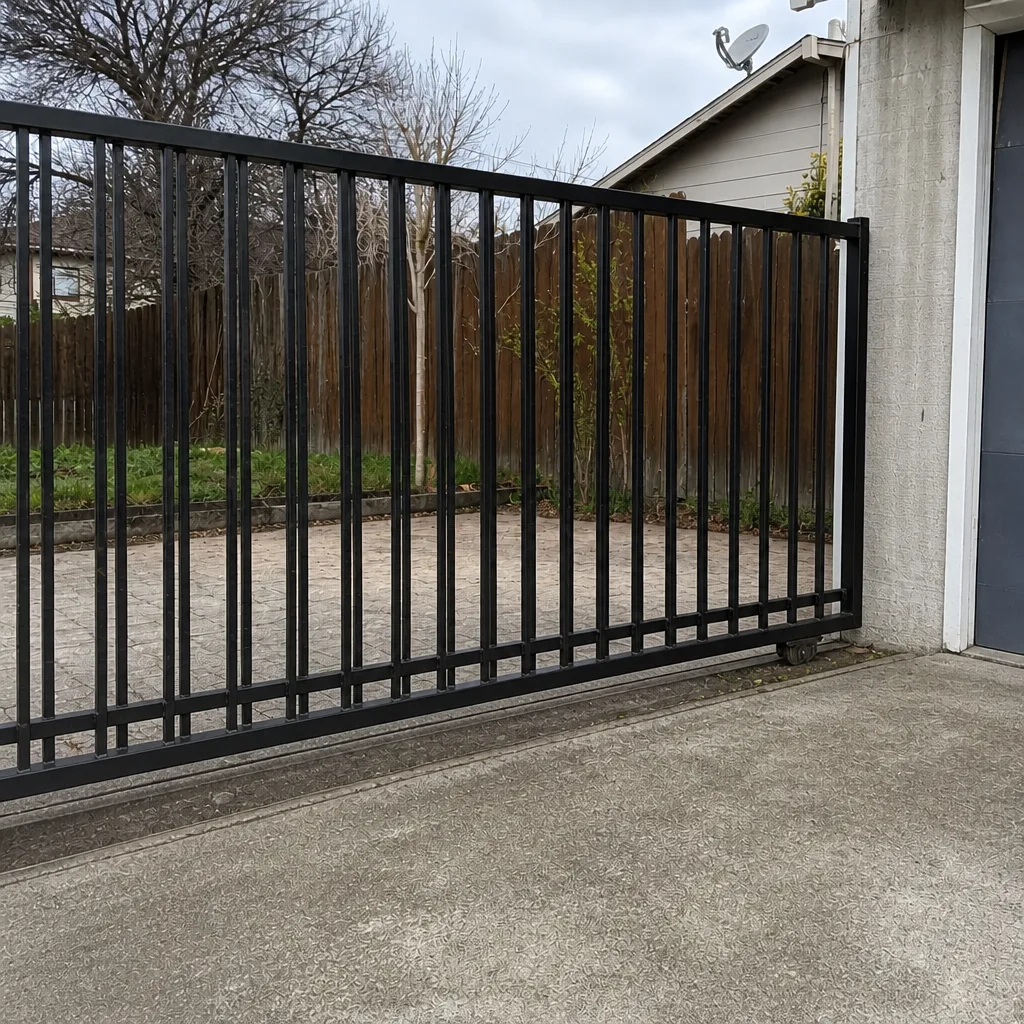
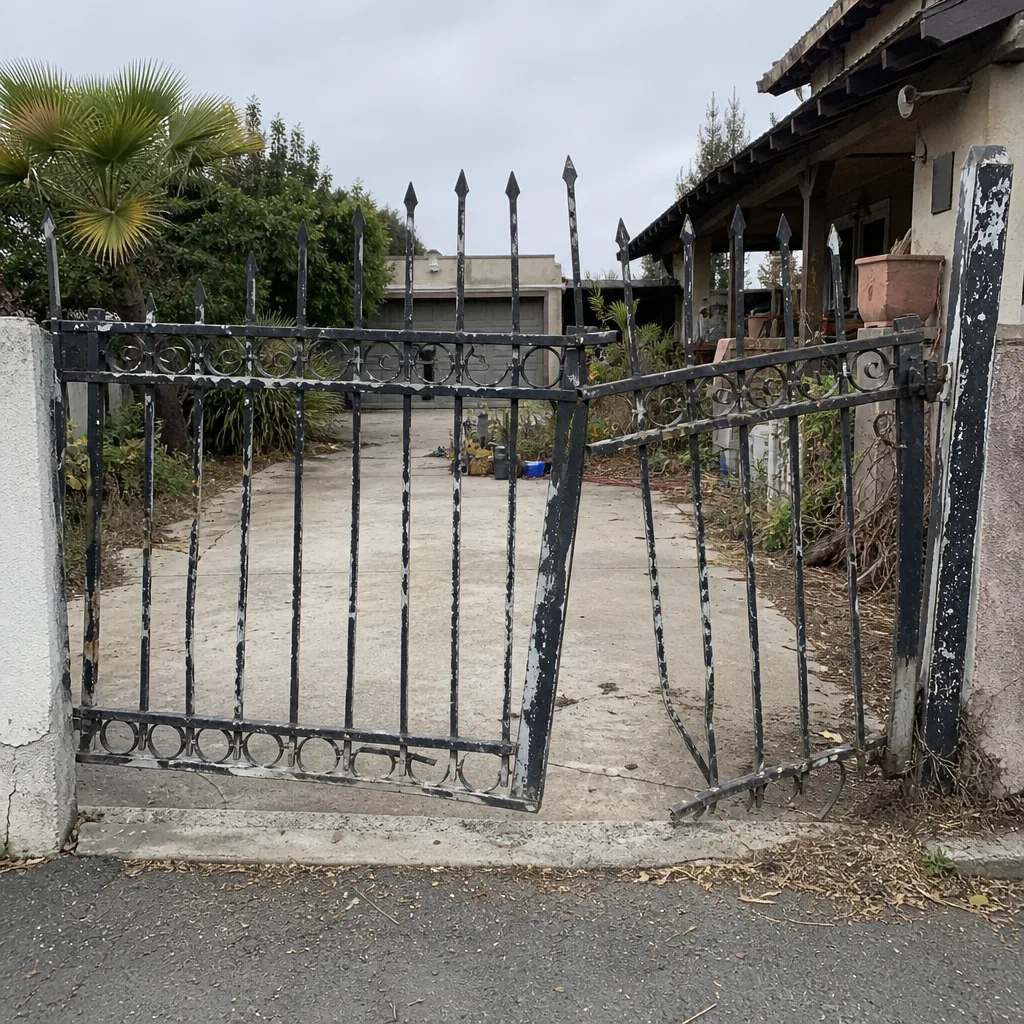
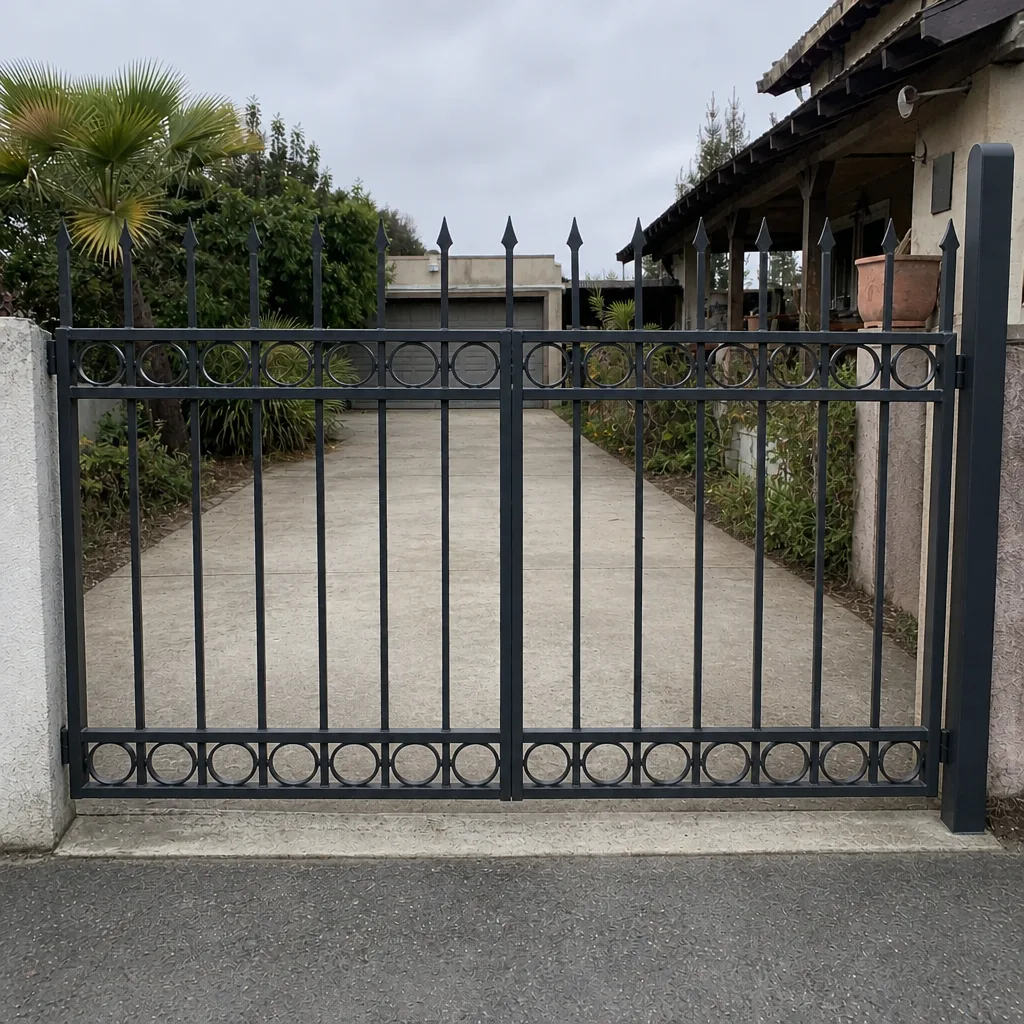
See the difference
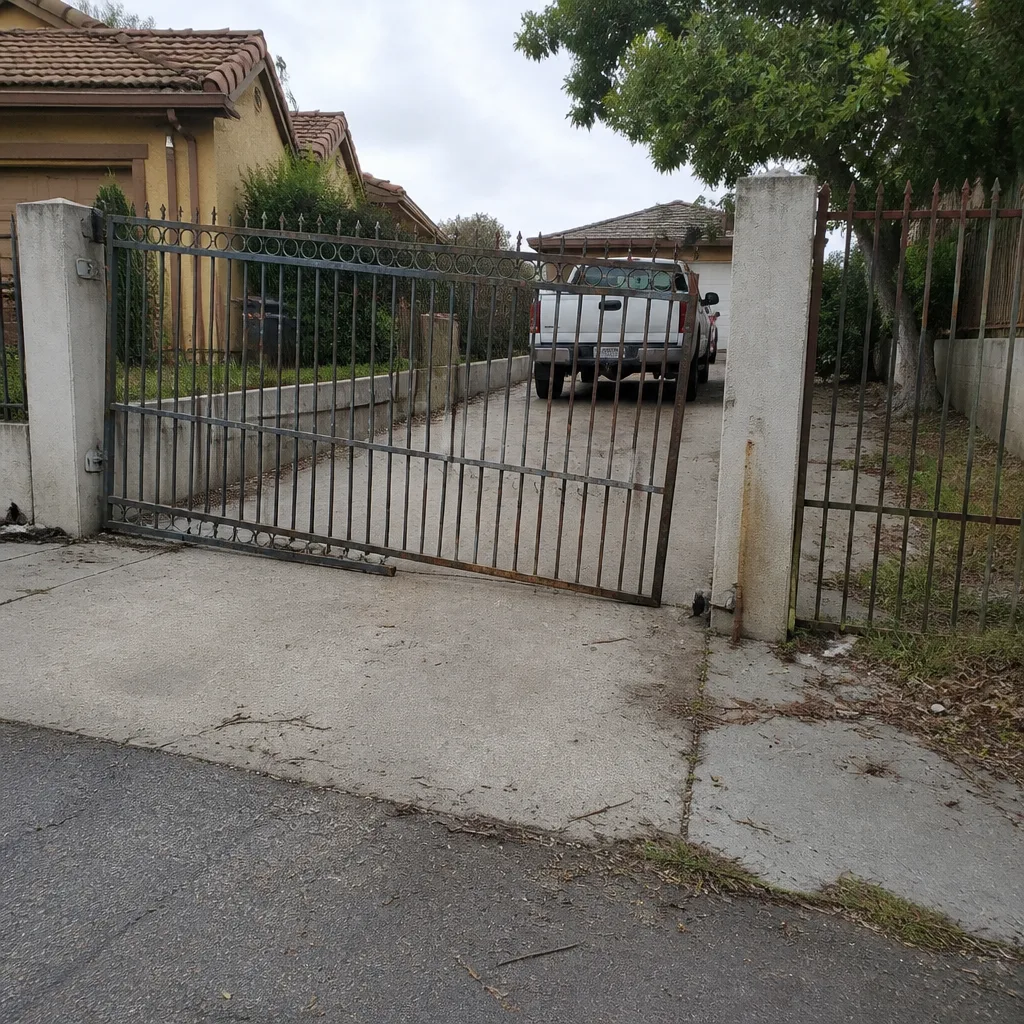 Before
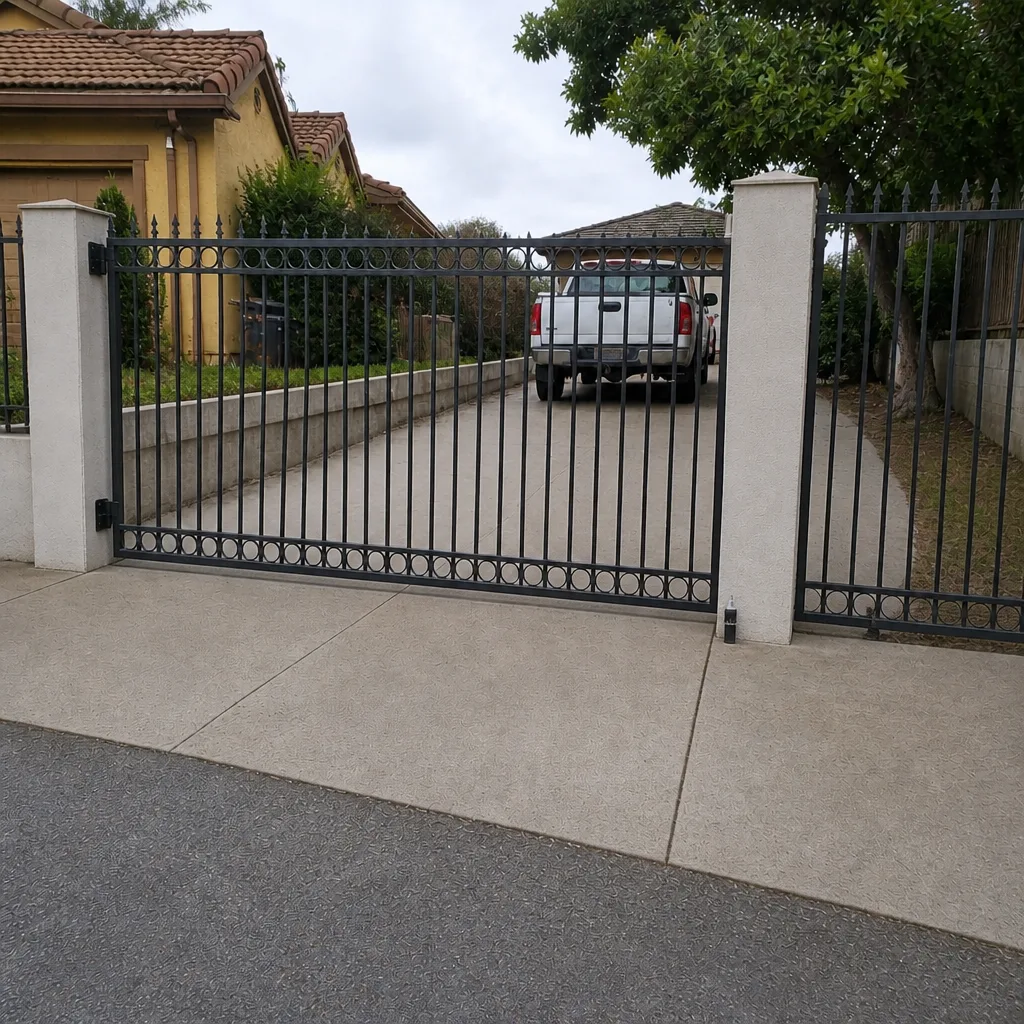 After
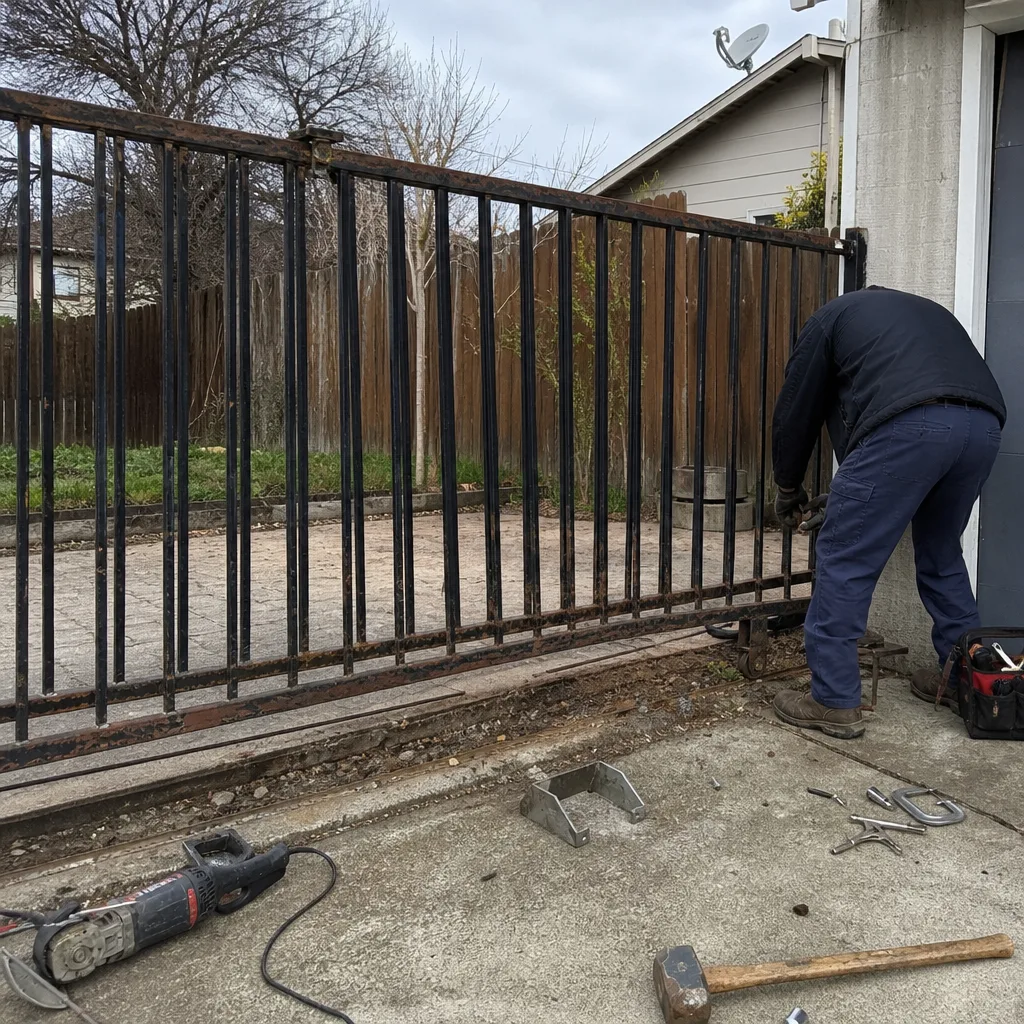 Before
 After
 Before
 After
When to Call a Professional
Some problems are worth a call rather than a weekend project. An electric gate that behaves erratically, opens on its own, or refuses to open at all is a call. So is a gate that’s started to drag consistently, or a gate with a post that’s visibly out of plumb. If you have a commercial or HOA system (a DoorKing access control setup, for example), a single failing component can lock out an entire property, and that’s worth a professional diagnostic. And if a safety sensor or loop detector isn’t stopping the gate reliably, treat that as urgent, because it’s a safety issue rather than a convenience one.
We work on the brand you already have. Gate Repair Antioch offers free estimates in Antioch, and if you’re outside the immediate area, our Antioch service covers the local neighborhoods. Call (855) 799-8573 for a free estimate. We answer 24/7, with fast dispatch from 7am to 7pm, Sunday through Friday.
Frequently Asked Questions
Cost depends on what the diagnostic finds: a hinge repair, a sensor alignment, a control board, or a footing fix are all priced differently, and there’s no single number that fits every gate. The written estimate is free and sets the final price before any work starts. Call (855) 799-8573 for an exact quote, and the estimate costs nothing.
Usually not. In our experience, a motor is the last thing to fail. Safety sensors, loop detectors, control boards, and dragging hinges shut down a working motor far more often. A diagnostic visit confirms which part is failing. Call (855) 799-8573 for a free estimate.
Yes. We work on LiftMaster, FAAC, BFT, Linear, Viking, Ghost Controls, DoorKing, Elite, and Mighty Mule systems across residential and commercial gates, so the brand isn’t something you need to identify first. A technician can identify it on site. Call (855) 799-8573 for a free estimate.
The diagnosis decides it. If the gate is structurally sound and one component has failed, a repair is the economical answer. If the post has moved repeatedly or the whole system is at the end of its life, the replacement path makes more sense. Call (855) 799-8573 and we’ll walk through the decision tree with you on site.
Yes. A complete installation covers both the mechanical gate and the automation, including the power run, control board, safety sensors, loop detectors, and safety edges. We handle both sides so you don’t need to coordinate separate contractors. Call (855) 799-8573 for a free written estimate.
A gate that drags at the same point every time usually has a footing or post alignment problem rather than an isolated part failure. Replacing the failed part won’t hold if the post underneath it has shifted. Call (855) 799-8573 for a free estimate and we’ll check the footing before we quote a repair.
The Bottom Line
Most gate failures in Antioch follow patterns, and the patterns point to the real cause. The Delta breeze’s wet-dry cycle attacks hinges, latches, and paint at specific points. Footing movement masquerades as operator failure, and every repair made before checking the post just repeats. Brand tendencies (LiftMaster control boards, Viking limit switches, DoorKing loops and access control, FAAC encoders) shorten the diagnostic step for a trained technician. Sloped-lot wrought iron needs mechanical alignment, not a new operator. Electric gate repair is a diagnostic process that starts at the power, sensors, and control board, then moves to the motor and the mechanical system behind it. And the repair-or-replace decision comes from the diagnosis, never from a sales pitch. We work on the brand you already have, across repair, electric gate repair, and installation.
Call (855) 799-8573 for a free estimate. We answer 24/7. Fast dispatch, 7am-7pm, Sunday through Friday. The price is quoted and agreed before any work starts.
Written by the team at Gate Repair Antioch.