
Last updated November 16, 2026
 Wrought iron
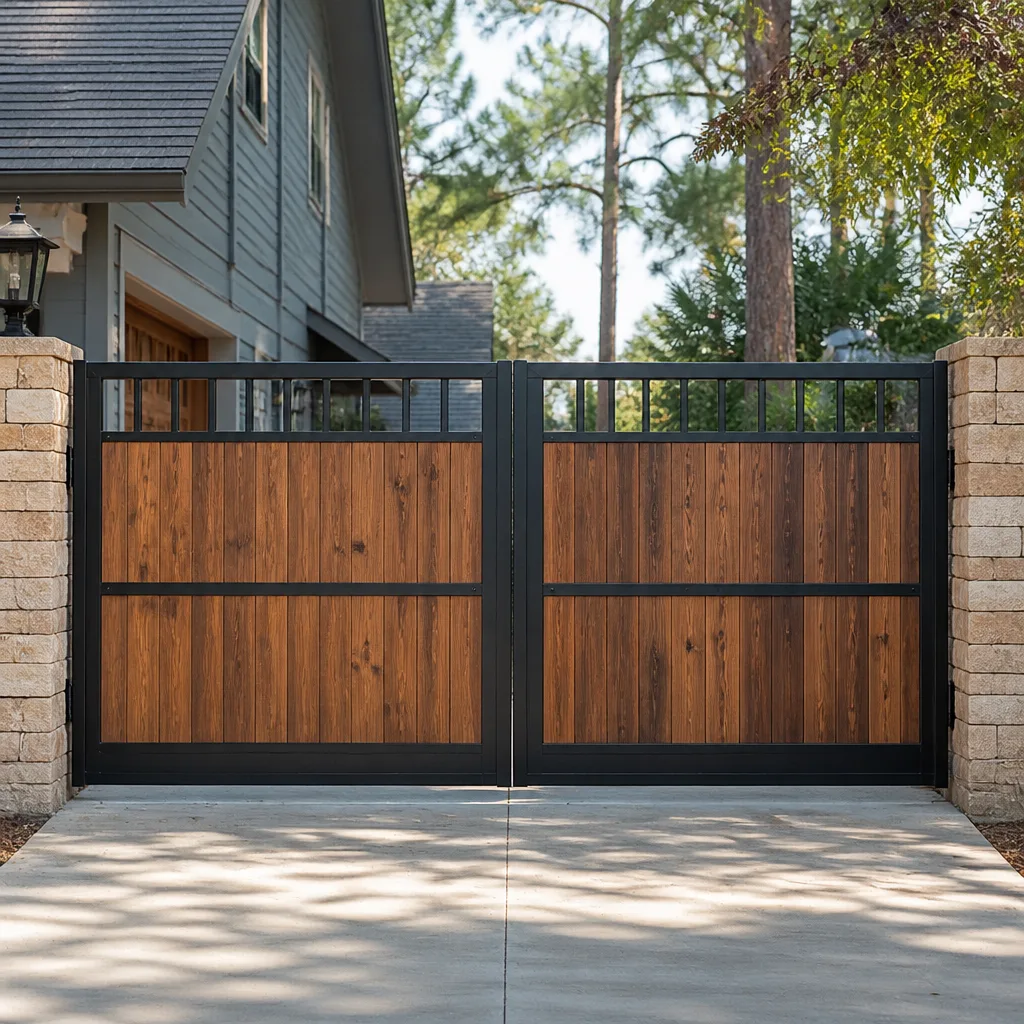 Wood & steel frame
 Farm & ranch
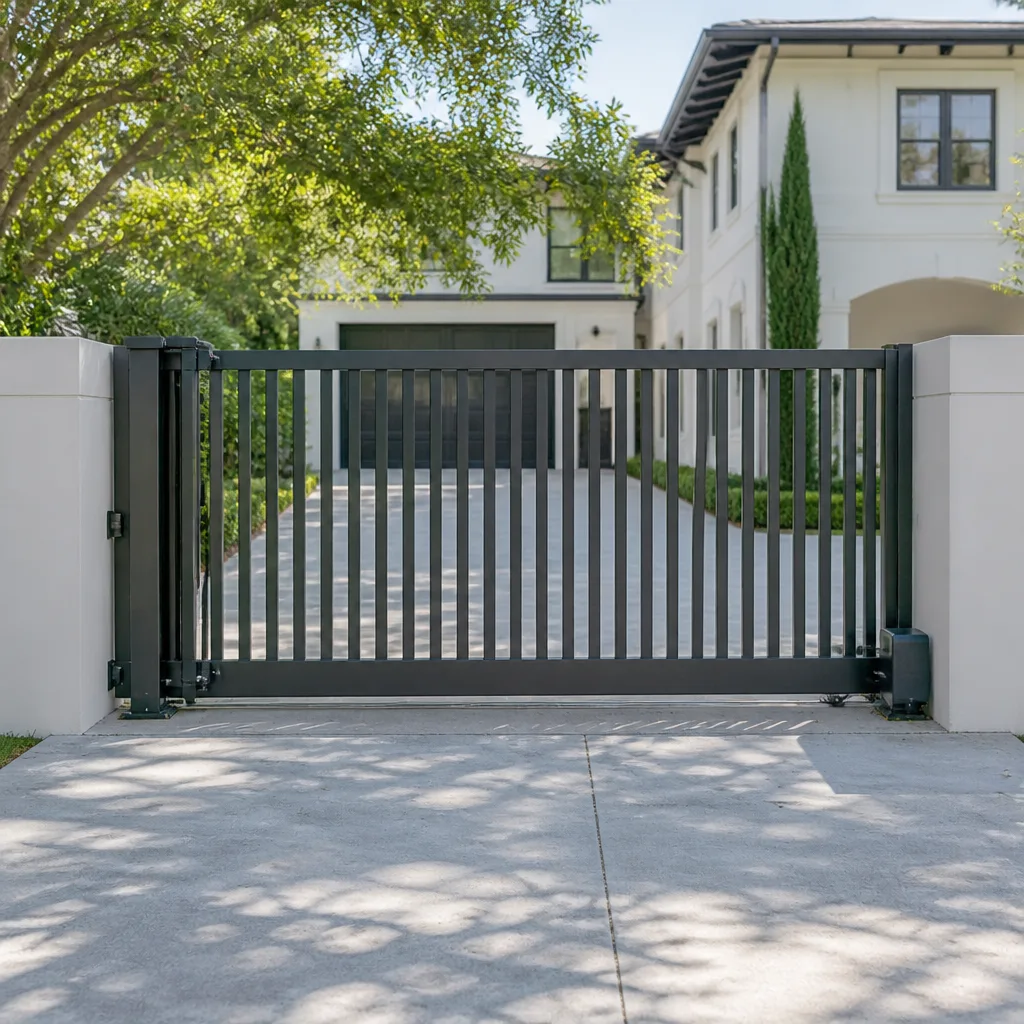 Sliding driveway gates
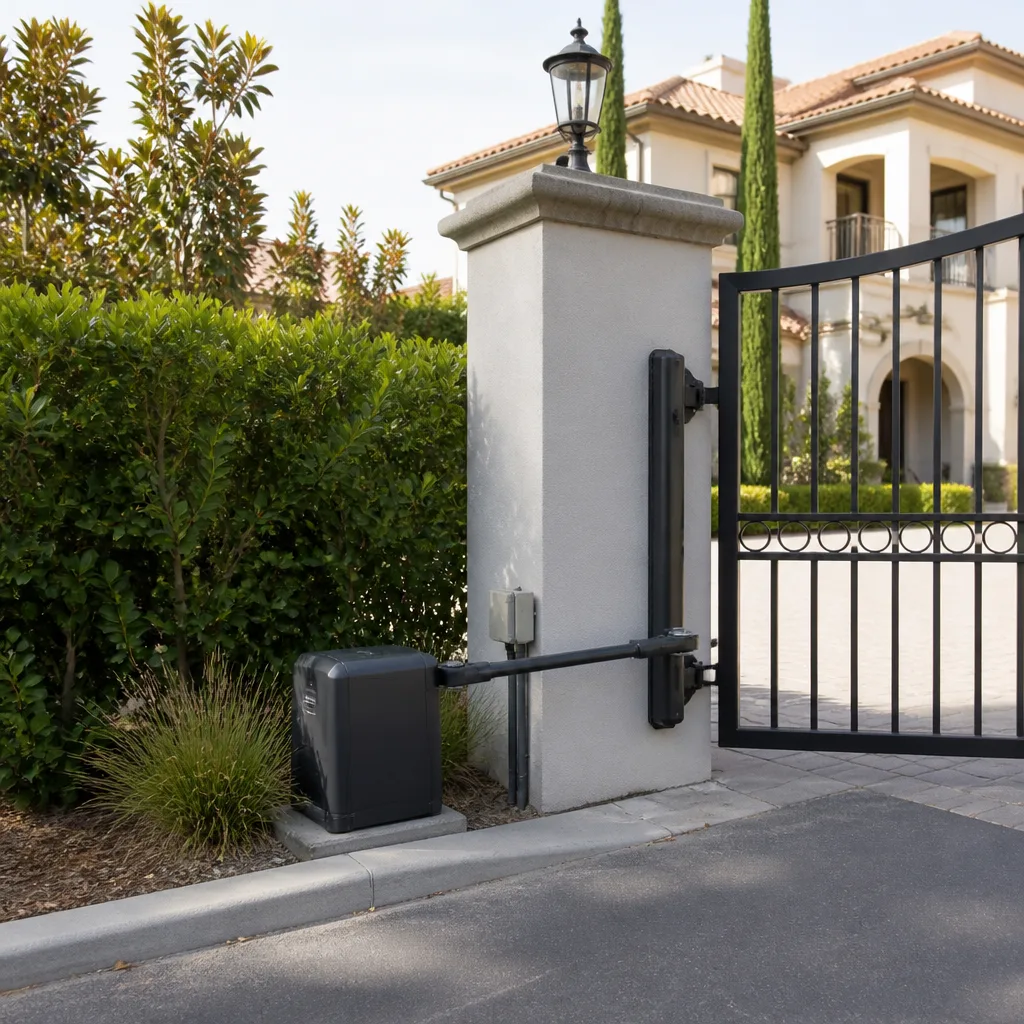 LiftMaster operators
Free on-site gate assessment - hinges, posts, and your LiftMaster or Nice gate operator checked before anything is quoted
The assessment is free and the quote is the invoice.
Get your free estimateDIY vs Professional Gate Repair: The Antioch Homeowner’s Decision Guide
The most common mistake we see isn’t homeowners attempting repairs they can’t handle. It’s homeowners assuming every gate problem requires a technician, then paying for a service call on a task a prepared person could finish in ten minutes. Gate work sits on a spectrum. Replacing a remote battery is firmly at one end. Recalibrating the entrapment force on an automated operator is at the other, and it’s a setting that, done wrong, is a safety and liability problem. This guide draws that line in the right place, task by task, so you can decide what to handle yourself in Antioch and what genuinely needs a trained technician.
Styles & brands we work with
- Wrought iron
- Wood & steel frame
- Farm & ranch
- Sliding driveway gates
- LiftMaster operators
Quick Answer
Safe DIY gate tasks include remote reprogramming, manual release operation, tightening visible hinge bolts, and routine visual inspection. Tasks that require a professional include entrapment protection calibration, any 120V wiring, control board or motor diagnosis, and structural repairs involving gate posts or heavy panel loads. For anything involving an automated operator’s safety settings or line-voltage electrical work, call a technician. The rest, a prepared homeowner can reasonably handle.
Table of Contents
- Why Gate Repair Isn’t a Yes-or-No Question
- The Tasks That Are Genuinely Safe to DIY
- The Tasks That Require a Technician
- UL 325 Entrapment Protection: Why This Is the Real Line
- The Diagnostic Problem: Why Homeowners Buy the Wrong Part
- How DIY Repairs Affect Your Operator Warranty
- The Cost-Honest Comparison
- Common Mistakes to Avoid
- When to Call a Professional
- Frequently Asked Questions
- The Bottom Line
Why Gate Repair Isn’t a Yes-or-No Question
The usual framing of DIY versus professional gate repair asks whether you’re “handy enough.” That’s the wrong question. Handiness varies from person to person, but the risk attached to a specific task doesn’t. Some gate repairs have failure modes so mild that getting them wrong costs you a little time. Others have failure modes that involve an operator’s safety settings, live wiring, or a heavy gate panel that can crush, and those failures don’t announce themselves until someone gets hurt.
We work on gates across Antioch, from older manual swing gates on residential lots to automated slide gates on commercial properties, and the pattern is consistent: the small tasks are almost always manageable, and the dangerous ones look deceptively simple. A control board swap looks like plugging in a component. A force sensitivity setting looks like turning a dial. Neither is.
Here’s the practical way to think about it. Every gate task falls into one of three buckets:
- Safe to DIY: No line voltage, no safety-critical calibration, no structural load. Reversible, low-risk, and easy to un-do if you get it wrong.
- DIY only with the manufacturer’s documentation: Involves the operator but not the wiring or the entrapment protection. Programming a new remote, for example, if you have the manual.
- Professional only: Involves 120V electrical, entrapment protection calibration, control board diagnosis, motor replacement, or gate post and structural repairs.
The rest of this guide sorts specific tasks into those buckets, explains why the dangerous ones are dangerous, and gives you a cost-honest picture of what DIY actually saves versus what it costs when a misdiagnosis sends you in the wrong direction. Our goal here is not to talk you out of touching your gate. It’s to make sure any task you do take on is one where a mistake won’t hurt anyone.
The Tasks That Are Genuinely Safe to DIY
A prepared homeowner can handle the routine maintenance and programming work on most residential gates without a technician. These tasks carry no electrical danger, no safety-critical calibration, and they’re reversible if something goes wrong. If you have the operator’s manual and a few basic tools, these are within reach.
- Reprogramming a remote or keypad. The procedure varies by brand, but it’s a programming sequence, not a repair. If you have a LiftMaster or Linear operator, the manual spells out the button sequence; follow it exactly and test the remote from several distances before you rely on it.
- Operating the manual release. Every automated gate has a manual release lever or key so you can open the gate during a power outage. Knowing where it is and how it works is the single most useful thing you can learn about your own gate. Test it while the gate is idle, not in an emergency.
- Tightening visible hinge bolts. If a hinge is loose and wobbling, snugging the bolts with a wrench is a legitimate five-minute fix. Check that the hinge isn’t cracked or stripped first.
- Visual inspection. Walk the gate line and look for rust at the weld points, worn hinge pins, a sagging panel, a chain with visible slack, or a slide gate track with debris in it. Catching these early prevents bigger failures later.
- Clearing the travel path. A slide gate that’s behaving erratically is sometimes just hitting a rock, a build-up of dirt, or vegetation in the track. Clearing the path is free and solves more problems than people expect.
- Replacing remote batteries. The most common “my gate stopped working” call is a dead remote battery. Swap it, re-test, and rule it out before anything else.
Notice what these tasks have in common: none of them touch the operator’s safety systems, none involve live wiring, and none require you to judge whether a gate panel is structurally sound. If you’re honest with yourself about which bucket a task belongs in, most of the superficial work on a residential gate in Antioch is manageable.
The Tasks That Require a Technician
Some repairs look like the tasks above but aren’t. A force sensitivity adjustment on an automated operator is a dial or a menu setting, but it controls how much resistance the gate needs to feel before it reverses. Set it too high and the gate won’t reverse when it contacts a person or an animal. That’s not a handiness problem; it’s a safety calibration problem, and it’s the exact category where a DIY attempt can injure someone.
The following require a trained technician:
- Entrapment protection calibration. Photo-eye alignment beyond a basic wipe-down, edge sensor testing, force sensitivity tuning, and reversal timing are all part of the operator’s safety envelope. This is the domain of electric gate repair, not routine maintenance.
- Any 120V wiring. Running power to a new operator, replacing a transformer, or correcting a wiring fault at the control board all involve line voltage. That’s electrician territory, full stop.
- Control board and motor diagnosis. A board that won’t power up, a motor that hums without moving, or intermittent faults that come and go are diagnostic problems. Replacing a board on a guess is how homeowners end up with two non-working boards and one working gate that cost more than a technician visit.
- Structural repairs. A gate post that’s leaning, a hinge that’s torn out of the frame, or a heavy slide gate that’s come off its track are load-bearing problems. A gate panel that swings unexpectedly is a crushing hazard.
- Operator replacement or new automation. Setting up a new operator means matching the system to the gate’s weight, travel, and geometry. Picking the wrong operator for the gate is a common and expensive mistake.
If you’re unsure which bucket a task falls into, err toward the professional side. A technician can look at the gate and tell you in minutes whether it’s a five-minute fix or a safety issue. Our technicians have up to 11 years of experience, and part of that experience is knowing when not to touch something without proper testing equipment.
UL 325 Entrapment Protection: Why This Is the Real Line
UL 325 is the safety standard that governs automated gate operators in the US, and it’s the reason entrapment protection is not a DIY task. The standard requires automated gates to have a means of detecting an obstruction and reversing, whether through a photo eye, a safety edge, or the operator’s built-in force sensing. If any of those systems is miscalibrated, the gate can fail to reverse on contact with a person, a pet, or a vehicle.
This is where the DIY question stops being about skill and starts being about liability. A gate that closes on a child or traps a pet is a catastrophic outcome, and a homeowner who adjusted the force sensitivity themselves and got it wrong has created the conditions for that outcome. The same goes for a photo eye that’s been re-aimed at a slightly wrong angle and no longer detects a small body in its path. You can’t see that failure visually. It only shows up when it matters.
This is also the part of gate repair where homeowner’s insurance gets tricky. An insurer covering a gate-related injury will look at whether the gate was functioning as designed. A miscalibrated safety system that a homeowner adjusted is not functioning as designed, and a claim denial is a real possibility. The cost of a technician visit to test and recalibrate entrapment protection is a fraction of that exposure.
We test entrapment protection on every automated gate we service, and the failures we find most often are exactly the kind a homeowner couldn’t have spotted: a photo eye that’s drifted out of alignment, a force setting that’s been nudged higher over time because the gate was “being annoying,” and safety edges that stopped reporting to the control board. The gate looks fine. It isn’t.
The Diagnostic Problem: Why Homeowners Buy the Wrong Part
The biggest hidden cost of DIY gate repair isn’t the work. It’s the misdiagnosis. In our experience, homeowners who self-diagnose an automated gate failure identify the wrong component often enough that it’s the single strongest argument for having a technician look at the gate before you order anything. The reason is structural: gate systems fail in ways that imitate each other.
Consider the symptoms and their real causes:
- Gate won’t open. Could be a dead remote battery, a tripped breaker, a failed control board, a bad limit switch, a stuck manual release, a photo eye blocking the cycle, or a motor that’s failed. Buying a remote doesn’t fix a bad limit switch.
- Gate opens but won’t close. Often the safety system is doing its job and detecting an obstruction: a misaligned photo eye, a safety edge that’s reporting a fault, or debris in the travel path. Replacing the operator won’t fix it.
- Gate moves partway and stops. Could be a limit switch that needs adjusting, a slipping clutch, a motor thermal cutoff, or a control board that’s lost its programming. Different parts, different fixes.
- Gate is sluggish. Could be a failing motor, a binding hinge, a track that needs cleaning, or a battery backup system that’s weak on a DC operator like a Ghost Controls or Mighty Mule unit.
A technician with testing equipment diagnoses by reading the control board’s fault codes, testing the limit switches, and verifying sensor states before ordering anything. That’s the “diagnose first, then fix” approach, and it’s why we work on the brand you already have rather than steering you toward a replacement. Whether your operator is a LiftMaster, a FAAC, or a BFT system, the diagnosis has to come before the parts order, or you’re spending money on guesses. Browse our full range of gate repair services if you’d rather have someone diagnose it in person.
How DIY Repairs Affect Your Operator Warranty
If your gate operator is still under the manufacturer’s warranty, DIY repairs carry a risk most homeowners don’t consider: they can void the coverage on the parts you work on. Operators from brands like LiftMaster, FAAC, BFT, and Linear come with warranty terms that typically require installation and service by a qualified technician, and a repair done outside those terms can be grounds for denying a later claim on the same component.
This matters most in three scenarios:
- You’re still in the warranty period. Before you open the operator housing or touch the control board, check the warranty terms. A covered board replacement costs you nothing; a DIY attempt that voids the coverage costs you the full part.
- You’re replacing a component. A motor, a control board, or an operator mechanism swapped out by a homeowner is often excluded from warranty coverage going forward, even if the original failure would have been covered.
- You’re adjusting the operator’s settings. Some manufacturers treat any unauthorized adjustment to safety-relevant settings as outside the warranty envelope. That’s another reason the force sensitivity is a hands-off task.
The safe rule: if the operator is under warranty, have a technician service it and document the work. If it’s out of warranty, the DIY calculus changes. You’re no longer risking coverage, only the cost of a misdiagnosis, which brings us to the cost comparison.
The Cost-Honest Comparison
Here’s the honest version of what DIY saves on a gate. On the tasks in our safe list, the savings are real and the risk is low. Reprogramming a remote, tightening a hinge, clearing a track, or replacing a remote battery is a few minutes of your time and no parts beyond a battery. A technician visit for those tasks would cost you the price of the visit whether you needed it or not.
On the tasks in the professional list, the math flips. A DIY attempt on a misdiagnosed problem means buying a part that doesn’t fix it, then buying a second part when the first doesn’t work. If you’ve bought a control board, a remote, and a limit switch for a problem that turned out to be a photo eye out of alignment, you’ve spent more than a single technician visit would have cost, and you still have a broken gate. Add the risk of voiding the operator warranty, and the DIY route can easily cost more than the professional one.
The clearest way to think about it is this: DIY pays when you know what’s wrong and the fix is trivial. DIY stops paying the moment you’re guessing at the cause or touching a safety system. There’s no free lunch on a gate, only a choice between paying for a diagnosis once or paying for parts several times.
We quote a flat, written estimate per job before any work starts, so you know the number before you decide. If you want a professional assessment on a gate in Antioch, a free estimate takes the guesswork out of the equation entirely. See how we handle Antioch properties and what a service visit involves.
Common Mistakes to Avoid
- Adjusting force sensitivity to stop “nuisance” reversals. If your gate keeps reversing, the safety system is likely detecting an obstruction. Turning up the force disables the protection instead of fixing the cause. Have a technician test the photo eyes and safety edges, and diagnose what’s actually triggering the reversal.
- Pressing the manual release while the gate is running. The release is for power outages when the gate is idle. Pulling it mid-cycle can drop a heavy panel or damage the operator’s gear train. Always disengage the manual release with the gate stopped.
- Ordering parts before diagnosing. Buying a remote, a battery, or a control board on a guess is the most common way to spend more on DIY than on a professional repair. Test and confirm the failing component first, or have a technician diagnose it.
- Wiring the operator yourself. Running power to an automated operator means working with line voltage. That’s not a project for a homeowner with a voltage tester. Any electrical work on the operator should be handled by a trained technician.
- Ignoring a leaning gate post. A post that’s moving is a structural problem, not a cosmetic one. A gate that swings or slides on a compromised post can come off its track or fall, especially on a heavy panel. This needs professional attention and shouldn’t be shimmed or braced as a permanent fix.
- Assuming the brand’s “one ecosystem” applies. A gate is a mechanical assembly, an operator, and a set of sensors, and any one of them can be the failure. Diagnose the system, not the brand. If your operator is a Linear or a BFT and the panel is failing, the operator brand is irrelevant to the fix.
- Skipping the visual inspection. Ten minutes walking the gate line once a season catches loose hinges, rust at weld points, and track debris before they become failures. It’s the cheapest maintenance a gate can get.
When to Call a Professional
Call a professional if the gate won’t reverse when it contacts an obstruction, if the photo eyes or safety edges aren’t reporting correctly, if the operator needs any 120V wiring, if the control board or motor isn’t behaving, if a gate post is leaning or a hinge has torn out of the frame, or if you’re unsure what’s wrong. Also call if the operator is still under warranty and you don’t want to risk the coverage. In each case, a technician can diagnose the gate in person and give you a written price before any work starts. Gate Repair Antioch offers free estimates in Antioch. Call (855) 799-8573.
Frequently Asked Questions
Yes, for a specific set of tasks: remote reprogramming, manual release operation, tightening visible hinge bolts, clearing the travel path, and routine visual inspection. These carry no electrical danger and no safety-critical calibration. Anything involving 120V wiring, entrapment protection calibration, motor or control board diagnosis, or structural repairs needs a technician. Call (855) 799-8573 for an exact quote on the professional side; estimates are free.
No. The force sensitivity setting controls how much resistance the gate needs to feel before it reverses, so a misadjustment can stop the gate from reversing on contact with a person or pet. It’s a UL 325 safety calibration and should be tested and set by a technician with proper equipment. Call (855) 799-8573 to schedule a safety test and calibration; estimates are free.
It can. Operator warranties from major brands usually require service by a qualified technician, and an unauthorized repair or component replacement can void coverage on the affected part. If your operator is still under warranty, have a technician service it and document the work. Call (855) 799-8573 to discuss your operator and get a free estimate.
Your safety system is likely detecting an obstruction rather than the gate being broken. The usual causes are a misaligned photo eye, a safety edge that’s reporting a fault, or debris in the travel path. Don’t turn up the force setting; have the safety components tested and the actual trigger diagnosed. Call (855) 799-8573 for a diagnostic visit in Antioch; estimates are free.
Gate repair costs vary by the failure, the operator brand, and the parts needed, so the only reliable number is a written estimate after a technician looks at the gate. We quote a flat price per job before any work starts, so you know the number up front. Call (855) 799-8573 for a free estimate.
In most cases, yes. We work on the brand you already have, including LiftMaster, FAAC, BFT, Linear, Viking, Ghost Controls, DoorKing, Elite, and Mighty Mule systems, along with manual gates. A brand-agnostic diagnosis means we assess what the gate actually needs rather than steering you toward a replacement. Call (855) 799-8573 and tell us the brand and the symptom; estimates are free.
The Bottom Line
The DIY line on gate repair isn’t about how handy you are. It’s about failure modes. Remotes, manual releases, hinge bolts, visual inspection, and path clearing are safely in the homeowner’s column. Entrapment protection calibration, 120V wiring, control board and motor diagnosis, and structural repairs are not, because a mistake on any of them involves a safety system, live wiring, or a crushing hazard. Diagnose before you buy parts, protect your operator’s warranty if it’s still active, and remember that a misdiagnosed DIY attempt often costs more than a professional diagnosis would have. For the tasks on the professional side, a free written estimate removes the guesswork. Start with the team at Gate Repair Antioch.
Call (855) 799-8573 for a free estimate on your gate repair in Antioch. We answer 24/7. Fast dispatch from 7am to 7pm, Sunday through Friday.
Written by the team at Gate Repair Antioch.
See the difference
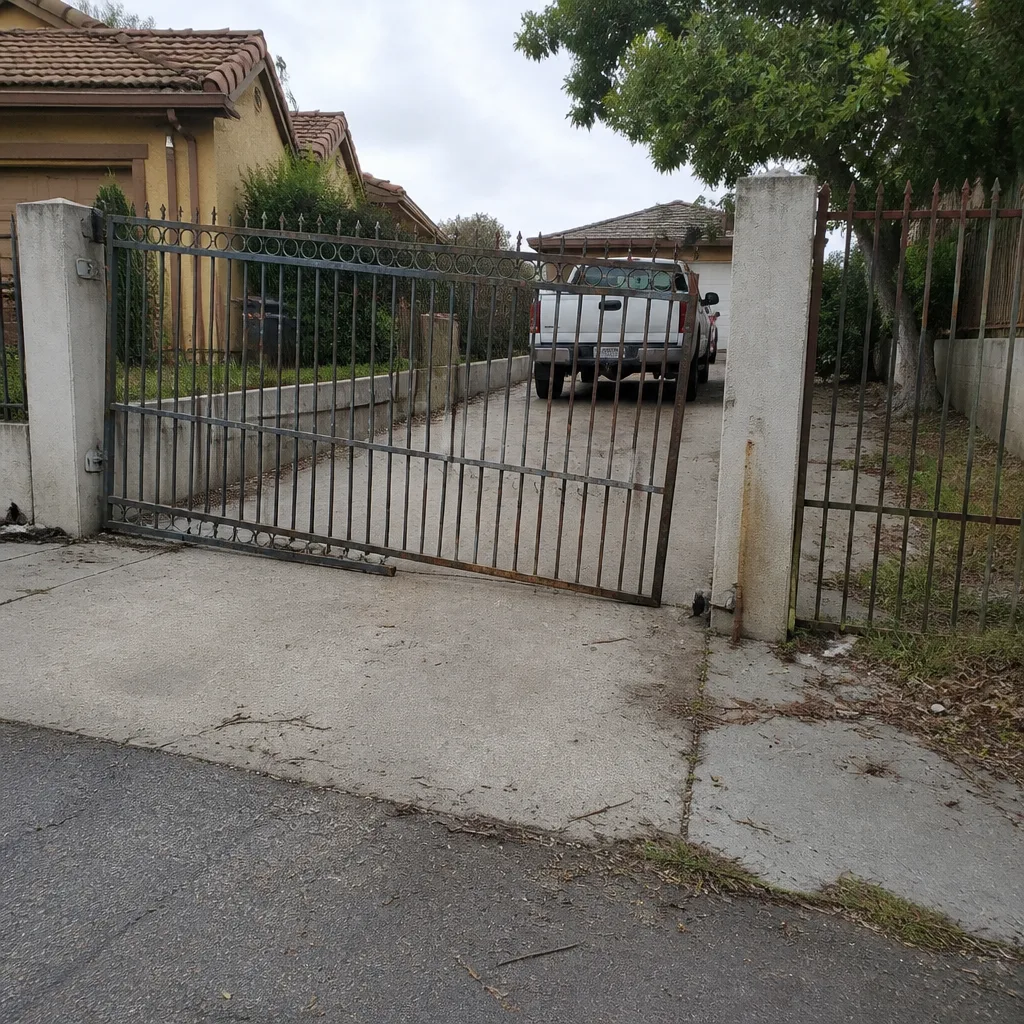 Before
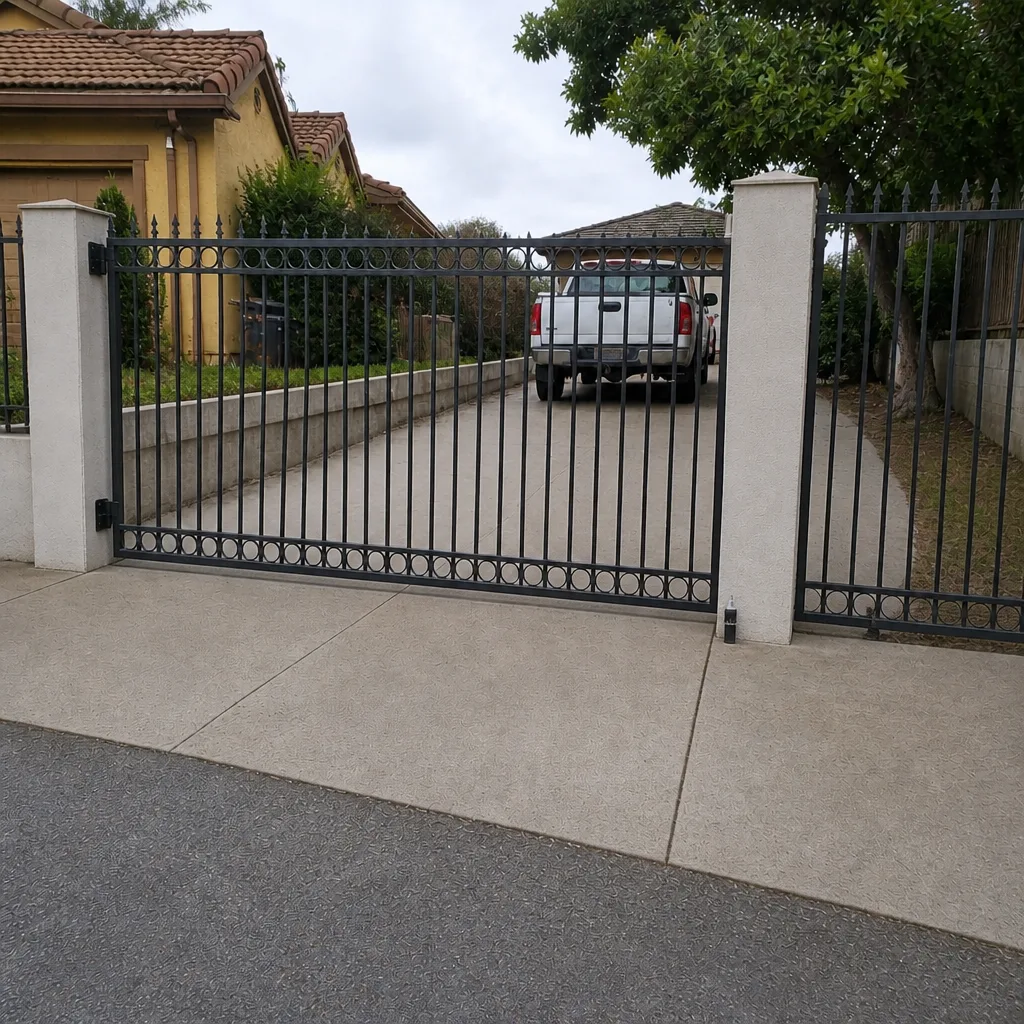 After
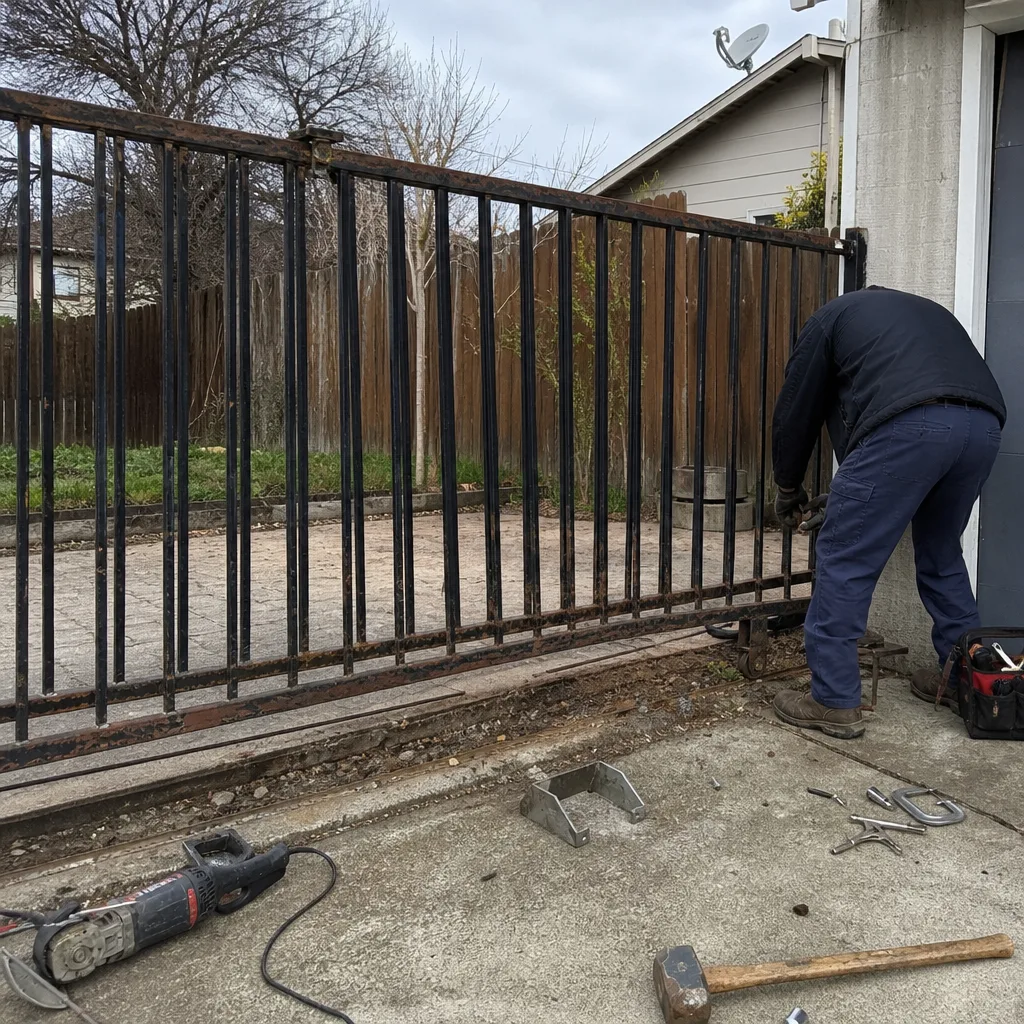 Before
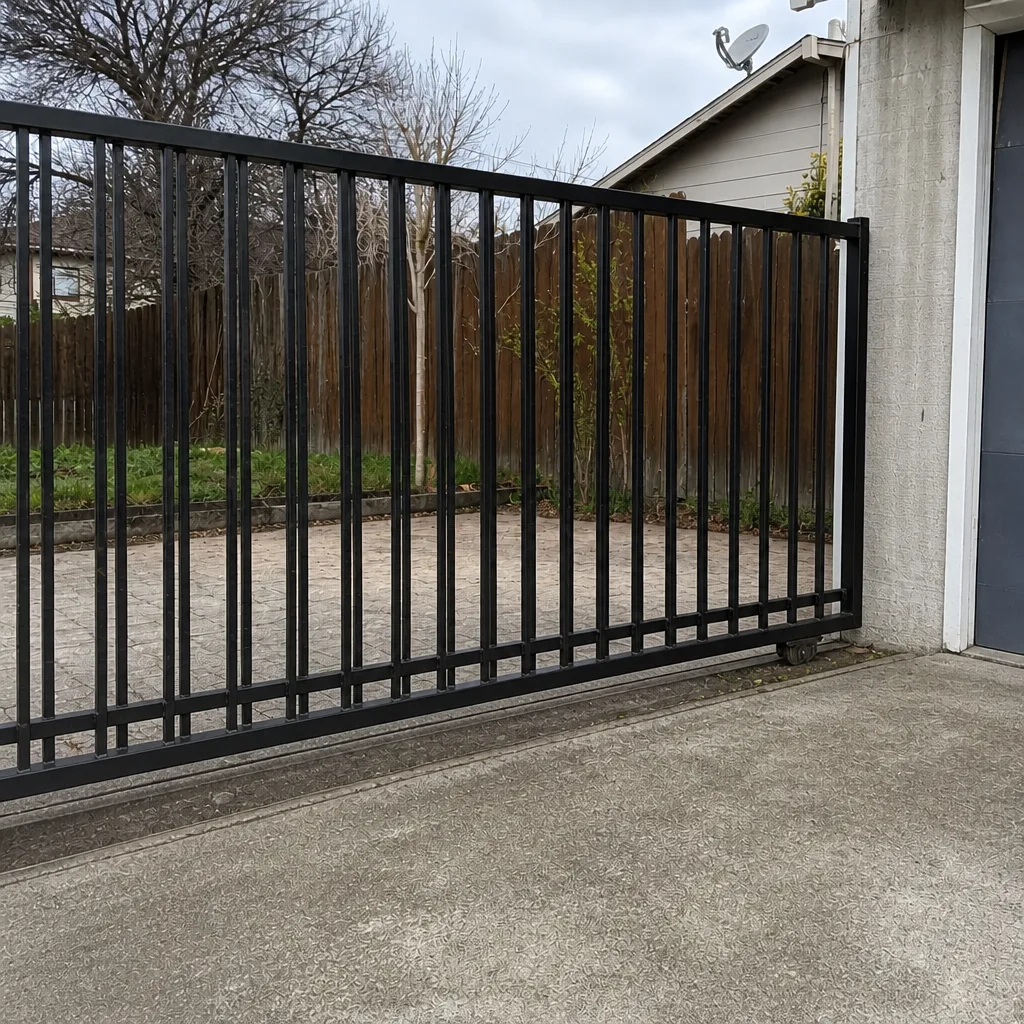 After
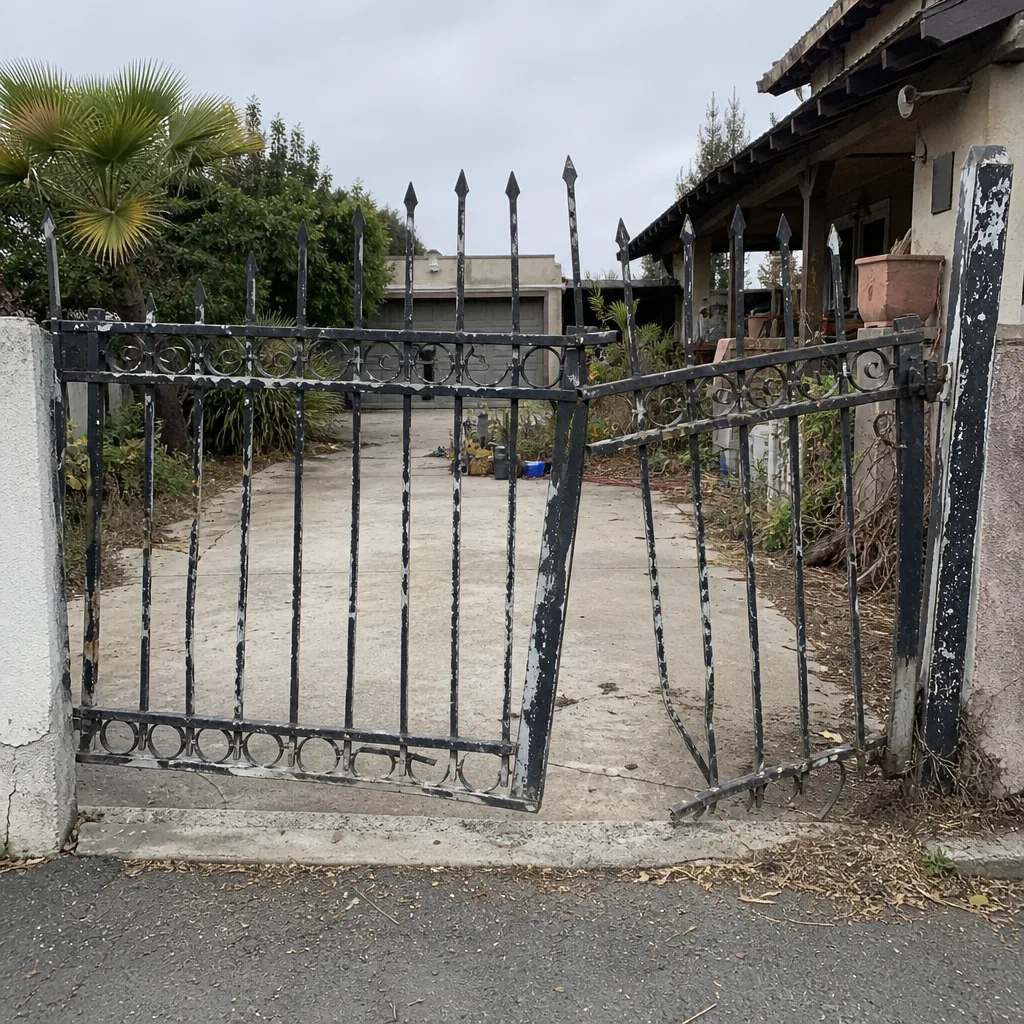 Before
 After